
They’re calling it “plant maximalism” now, as if it’s some revolutionary new idea. I had to laugh when I read that article. I’ve been cramming plants into every corner of my home for forty-five years, long before anyone put a fancy name on it. My daughters used to joke that you couldn’t set down a coffee cup without moving three pots first. But here’s what I’ve learned from decades of living in what amounts to an indoor jungle: more plants aren’t just trendy, they’re transformative. There’s something about being surrounded by living, growing things that changes how a space feels. It becomes alive. So if you’ve been holding back, wondering if another pothos is “too much,” let me tell you—it’s not. Let me show you how to layer plants like you mean it, creating those dramatic jungle corners that make you happy every time you walk into a room.
What Plant Maximalism Really Means (And Why It Works)
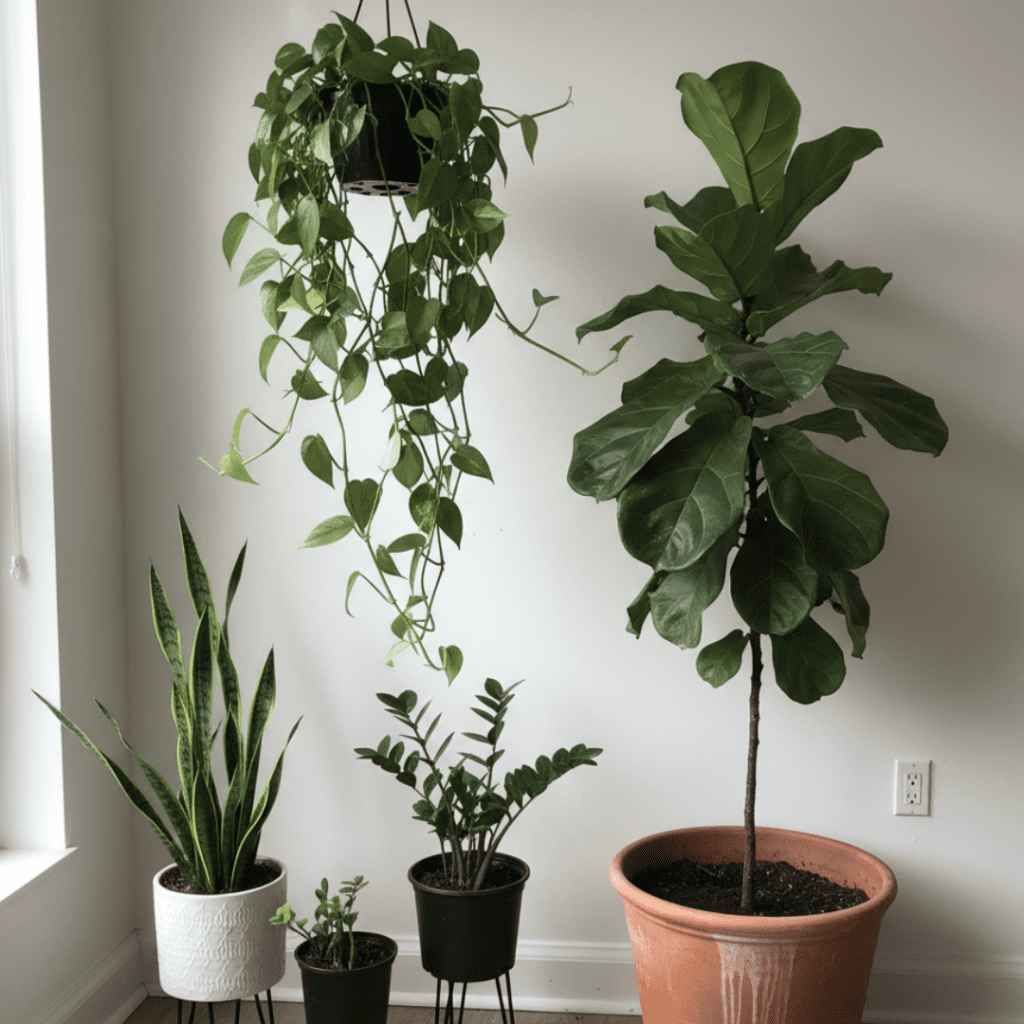


Plant maximalism isn’t about randomly stuffing plants everywhere until your home looks like a greenhouse exploded. It’s about intentional abundance. The idea is to create layers of greenery that draw the eye up, across, and through a space. I’ve always thought of it like creating a living painting—you need foreground, middle ground, and background. The trailing plants cascade down from shelves and hangers, the medium plants sit at eye level on stands and tables, and the floor plants anchor everything with their height and presence. This layering trick is what separates a cluttered mess from a lush, inviting space. In my living room right now, I count seventeen plants in one corner alone, and it doesn’t feel overwhelming because they’re arranged at different heights. The Boston fern hangs from the ceiling, my monstera stands six feet tall in its corner, and three smaller pothos and philodendrons sit on varying height plant stands between them. It creates depth, and somehow, it makes the room feel bigger, not smaller.
The Art of Layering: High, Middle, and Low
Let me break down how I approach layering, because this is where most people get stuck. Start with your high-level plants first—these are your ceiling hangers and top-shelf residents. I’m talking about trailing plants like pothos, string of pearls, philodendron brasil, or my personal favorite for drama, a rhipsalis. These should hang or drape from at least seven to eight feet up if you’ve got the ceiling height. They create that cascading effect that draws the eye upward and makes your ceilings feel taller. I use ceiling hooks rated for at least fifteen pounds, positioned twelve to eighteen inches away from the wall so the plants have room to trail without brushing against everything. For your middle layer, think about plants at three to five feet high. This is where I put my larger potted plants on stands—maybe a bird of paradise, a fiddle leaf fig, or a substantial peace lily. These are your statement makers, the plants with personality. Finally, your low layer sits at one to two feet off the ground. Small pots on short stands, plants arranged on low bookshelves, or even floor plants that stay compact like snake plants or ZZ plants. The key is making sure each layer is visible from your main viewing angle. When I sit on my couch, I can see plants at all three heights without any one layer blocking the others.
Mixing Textures for Maximum Drama
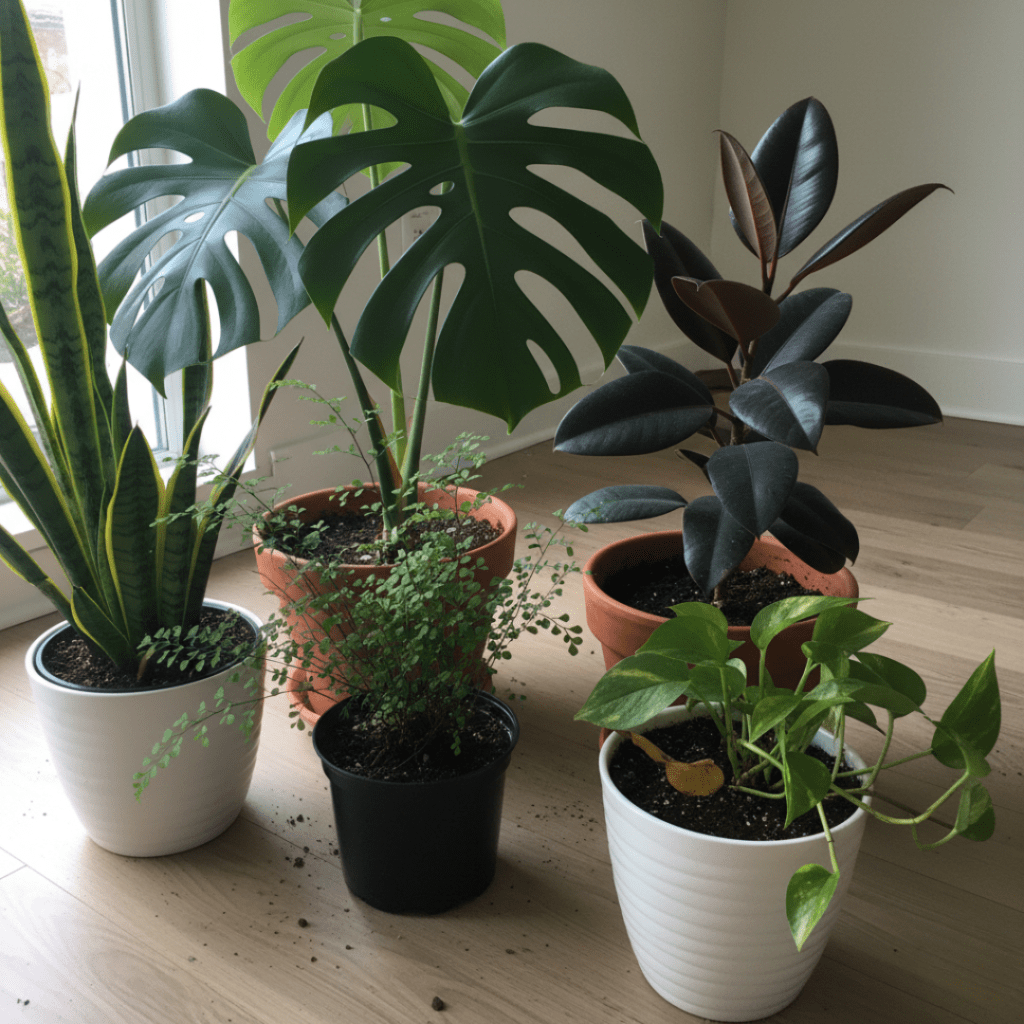
Here’s where plant maximalism gets really fun, and it’s something I stumbled into by accident thirty years ago. I kept buying plants I liked without thinking about how they’d look together, and one day I realized my collection looked fantastic precisely because nothing matched. The secret is texture contrast. Pair your big, glossy monstera leaves with delicate, feathery asparagus ferns. Put a spiky dracaena marginata next to a soft, round-leaved pilea. I’ve got a rubber plant with thick, waxy leaves sitting right beside a maidenhair fern that looks like green lace. The contrast makes both plants look better. Same goes for color variation—don’t just stick with all-green. I mix in darker foliage like my burgundy rubber plant and my nearly-black raven ZZ plant with bright lime pothos and silvery satin pothos. The varied colors create visual interest that keeps your eye moving around the space. And don’t forget about growth habits. Upright growers like snake plants look phenomenal next to sprawling plants like certain philodendrons. I’ve learned that three to five different leaf textures in one grouping hits that sweet spot where things look intentional and abundant without becoming a jumbled mess.
Creating Your Jungle Corners Without the Chaos
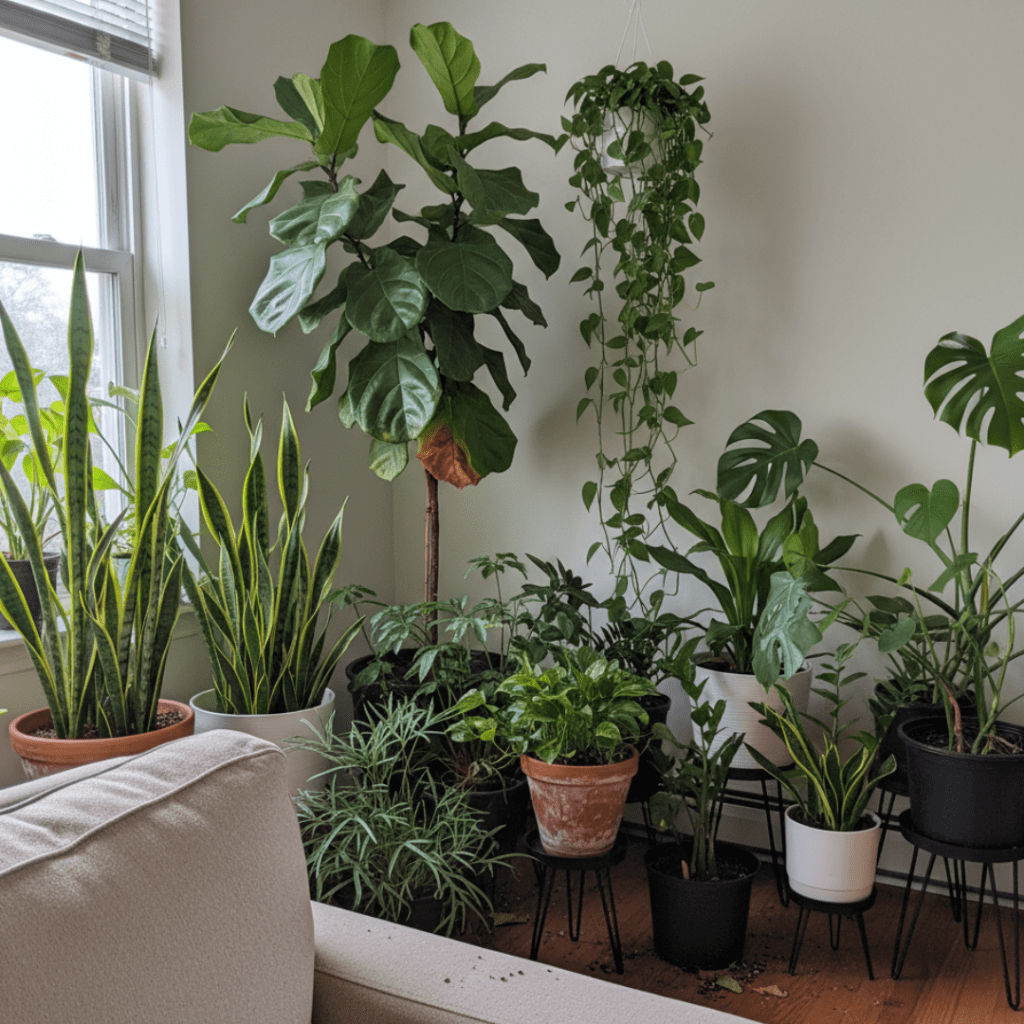
The phrase “jungle corner” sounds wild and untamed, but the best ones are actually quite thoughtful. I always start with the corner itself—you need at least a four by four foot area to really make this work. Pick a corner that gets decent light, ideally bright indirect light from a nearby window. Then I establish my anchor plant first. This is your tallest, most substantial plant, and it goes in the actual corner or just in front of it. For me, this is usually something five to seven feet tall like my fiddle leaf fig or my large bird of paradise. Everything else builds around this anchor. Working outward, I add medium-height plants in a loose arc, creating a semi-circle of greenery that extends about two to three feet from the corner. These should be at varying heights—some on stands, some on the floor, maybe one on a small side table. Then I fill in the gaps with smaller plants, tucking them between the larger ones. The goal is to create a gradual transition from tall in the back to shorter in the front, like a living wall that fades into your regular furniture. I also bring in one or two trailing plants hung from the ceiling or a nearby shelf to cascade over the whole arrangement. The effect should feel lush and full, but you should still be able to reach every plant for watering without moving everything around. I leave eight to twelve inches between pots for air circulation and access.
The Care Reality Check: Can You Handle More?
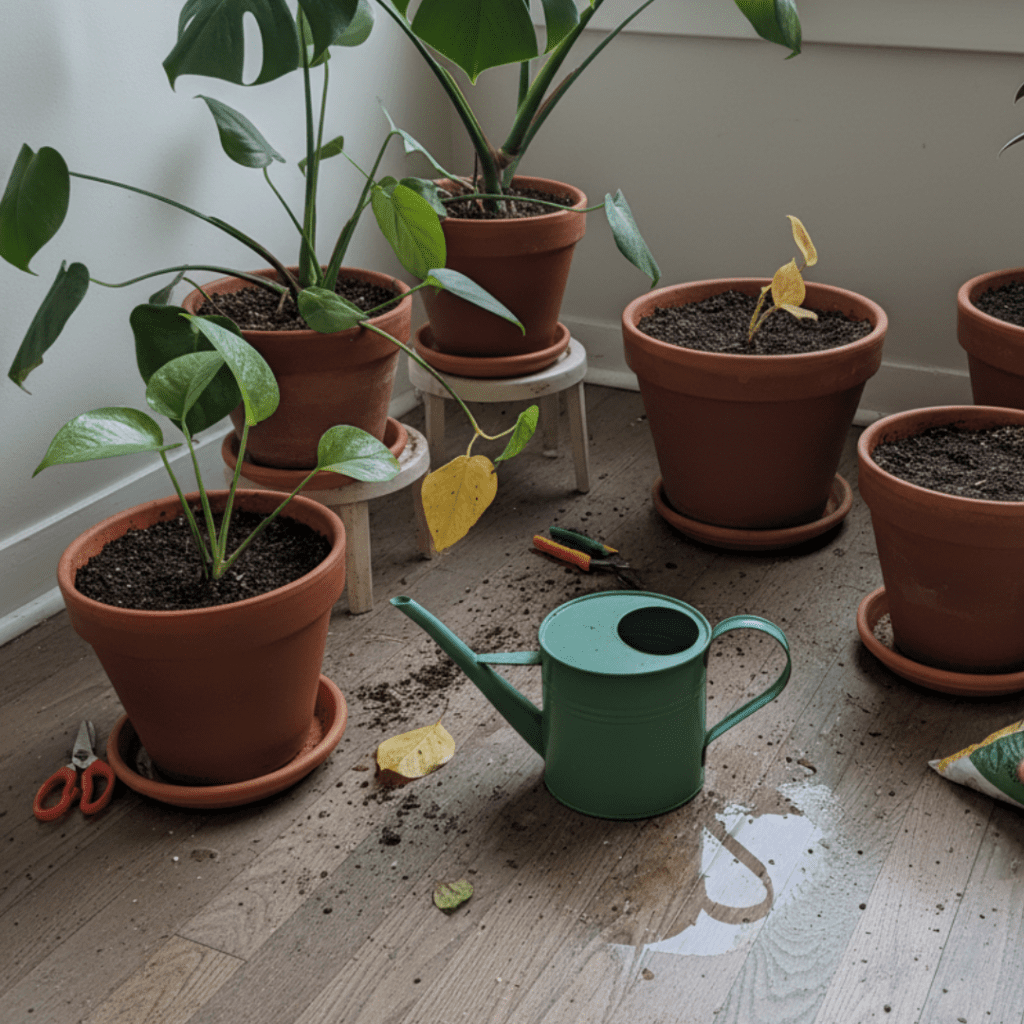
Now, let’s talk honestly about maintenance, because this is where plant maximalism can become plant chaos if you’re not careful. I’m not going to pretend that seventeen plants in one corner take the same time as three plants on a windowsill. My Sunday morning watering routine takes me about forty-five minutes to an hour, and that’s with years of practice knowing exactly who needs what. When you’re building your plant collection, I always recommend adding just three to five new plants at a time, living with them for a month, and then deciding if you’re ready for more. Group plants with similar watering needs together—this saves you from doing a million different watering schedules. All my pothos and philodendrons get watered on the same day, about once a week when their soil is dry two inches down. My ferns and calatheas, the drama queens who need consistent moisture, get checked every three to four days. I’ve also learned to embrace self-watering pots for some of my larger floor plants. They’re not cheating—they’re smart. My six-foot monstera sits in a fifteen-inch self-watering pot that I fill every two weeks instead of dragging a watering can up a ladder three times a week. Maximalism works when you’re realistic about what you can maintain.
Quick-Fire FAQ
Q: Won’t too many plants make my space feel cluttered?
A: Only if they’re randomly scattered. When plants are grouped intentionally with height variation and clustered in specific zones like corners or along walls, they actually make spaces feel more organized and alive, not cluttered.
Q: How do I keep all these plants alive without spending hours on care?
A: Stick with easy-care varieties like pothos, snake plants, and philodendrons for at least seventy percent of your collection, group plants with similar needs together, and water on a schedule rather than randomly throughout the week.
Q: What’s the difference between maximalism and just… messy?
A: Maximalism has intentional groupings, varied heights, and clear focal points—you can still see your furniture and walk through the space. Messy is when plants block pathways, hide surfaces completely, or look randomly dumped rather than arranged.
Q: Do I need expensive pots to pull this off?
A: Absolutely not. I use simple terracotta pots for most of my plants and save decorative pots for the few plants at eye level that really show. When you have this many plants, it’s the greenery people notice, not matching ceramics.
— Grandma Maggie