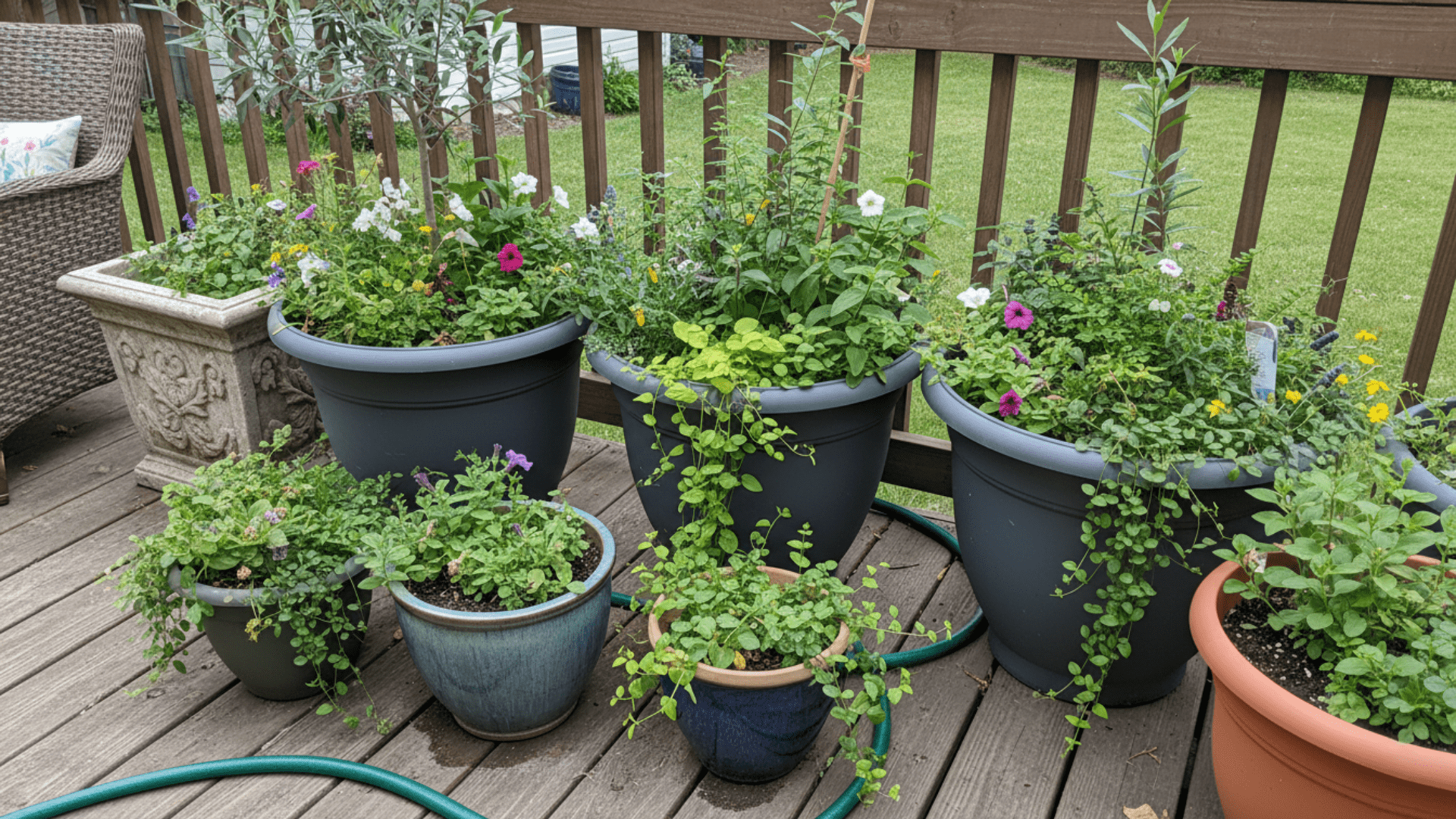
Thirty years ago, when my husband and I moved into a townhouse with nothing but a narrow balcony, I thought my gardening days were behind me. I’d always had proper beds, room to spread out, space for a compost pile. But that spring, I bought three terracotta pots on a whim, filled them with petunias and geraniums, and something clicked. By summer’s end, I had seventeen containers crowding that little balcony, and I was hooked. Container gardening isn’t a compromise—it’s its own art form, one that lets you create lush, layered gardens in the smallest spaces. And here’s the secret I’ve learned through hundreds of pots and countless experiments: you can have that abundance without spending every evening with a watering can. Let me show you how to build a container garden this spring that’ll give you months of beauty without demanding all your time.
Why Container Gardens Transform Outdoor Living Spaces
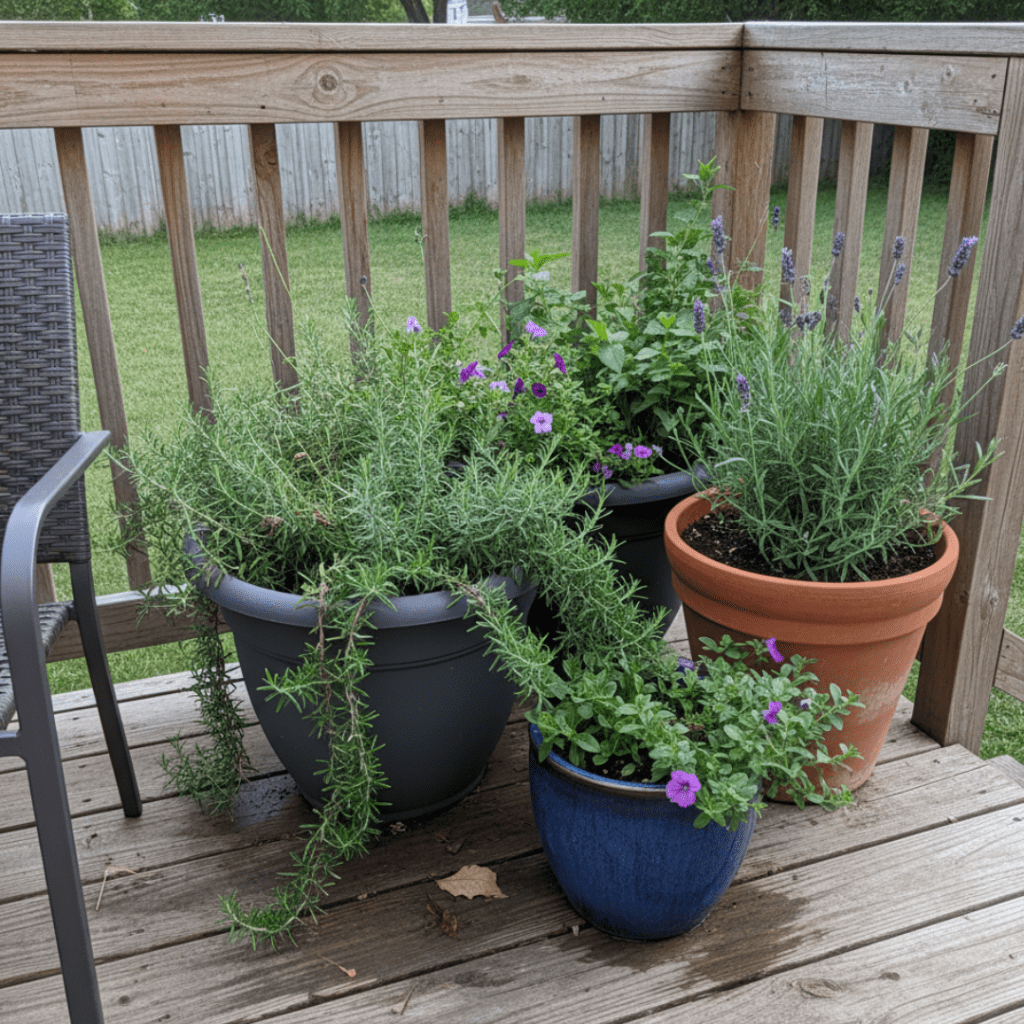


Container gardens do something ground beds never can—they bring the garden up to where you actually live. On a patio or deck, you’re not looking down at plants from a distance. You’re sitting among them, breathing their fragrance, watching pollinators work the blooms at eye level. I’ve found this proximity changes everything about how you experience your outdoor space. A well-placed pot of lavender means you brush against it every time you step outside. Trailing rosemary spills over the edge of a planter right where you can pinch off a sprig for dinner. You’re not maintaining a garden, you’re living in one.
The practical benefits run deeper than aesthetics. Containers give you complete control over soil quality, something I could never achieve in my clay-heavy backyard beds without years of amendment. You can position sun-loving plants in the brightest corner and shade-lovers under the eaves. When one plant fades, you swap in something fresh without disturbing anything else. And if you’re renting or might move, everything goes with you. I still have a Japanese maple I started in a container twenty-three years ago—it’s moved with me twice and now lives in a thirty-inch pot on my current patio, perfectly shaped and thriving.
The Foundation: Choosing Containers and Soil That Set You Up for Success
Container Selection for Low Maintenance
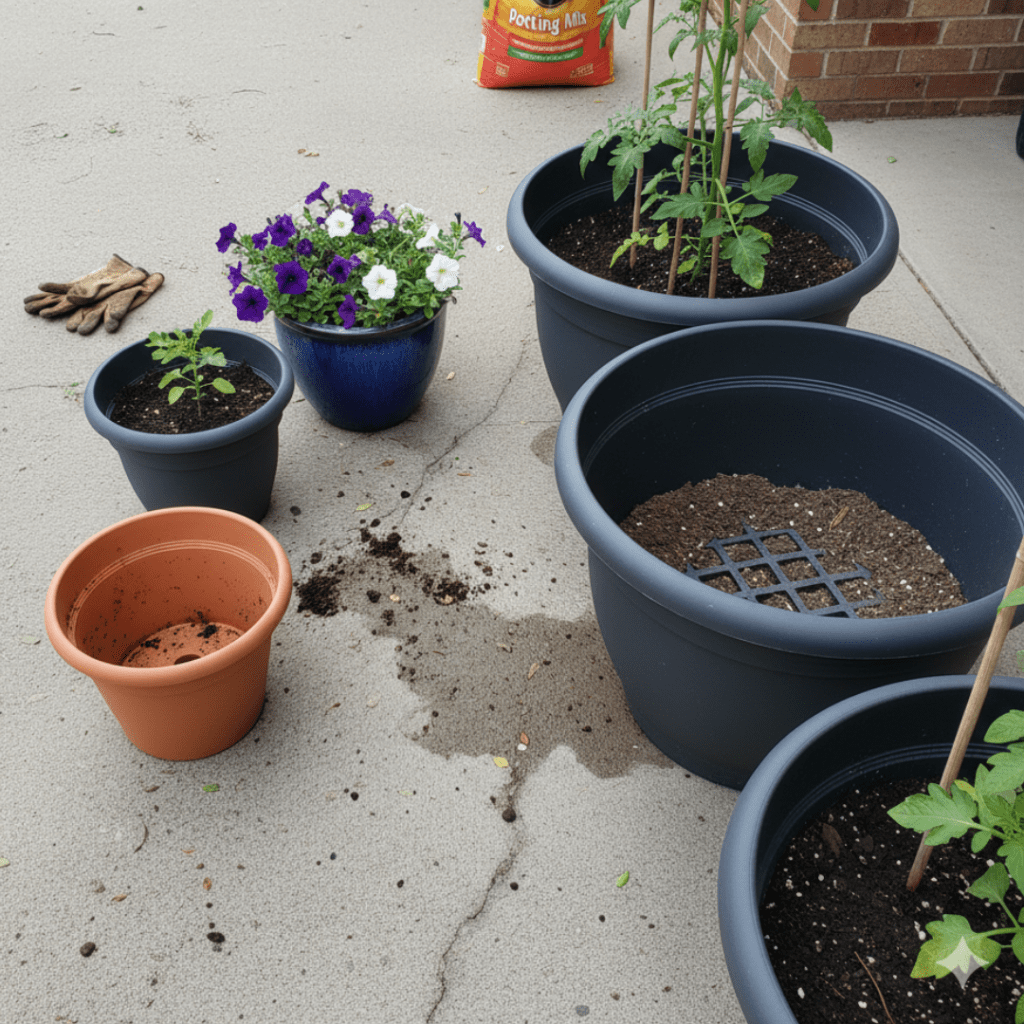
Size matters more than anything else when it comes to reducing maintenance. Small pots—anything under twelve inches in diameter—dry out so quickly in summer heat that you’re watering twice a day. I learned this the hard way my first season, when I filled my balcony with adorable eight-inch pots that looked charming but demanded constant attention. Now my rule is simple: for annuals and seasonal displays, I use containers at least fourteen to sixteen inches across. For perennials, small shrubs, or anything I want to last multiple years, I go to twenty inches or larger. The extra soil volume holds moisture dramatically longer and gives roots room to develop without becoming pot-bound within months.
Material choice affects your watering schedule as much as size does. Terracotta looks beautiful and I still use it for Mediterranean herbs that prefer drier conditions, but it breathes moisture out through the clay walls. You’ll water terracotta pots one and a half to two times as often as the same plant in plastic or glazed ceramic. For low-maintenance gardening, I rely on resin containers that mimic ceramic or stone. They’re lightweight enough to move when needed, don’t crack in winter freezes, and hold moisture reliably. I have a set of faux-stone resin planters that are going on their eighth year and still look brand new. Whatever you choose, make absolutely certain every container has drainage holes. I drill extra holes in purchased pots if they’re skimpy—three to five quarter-inch holes minimum for a sixteen-inch pot.
The Soil Mix That Practically Waters Itself
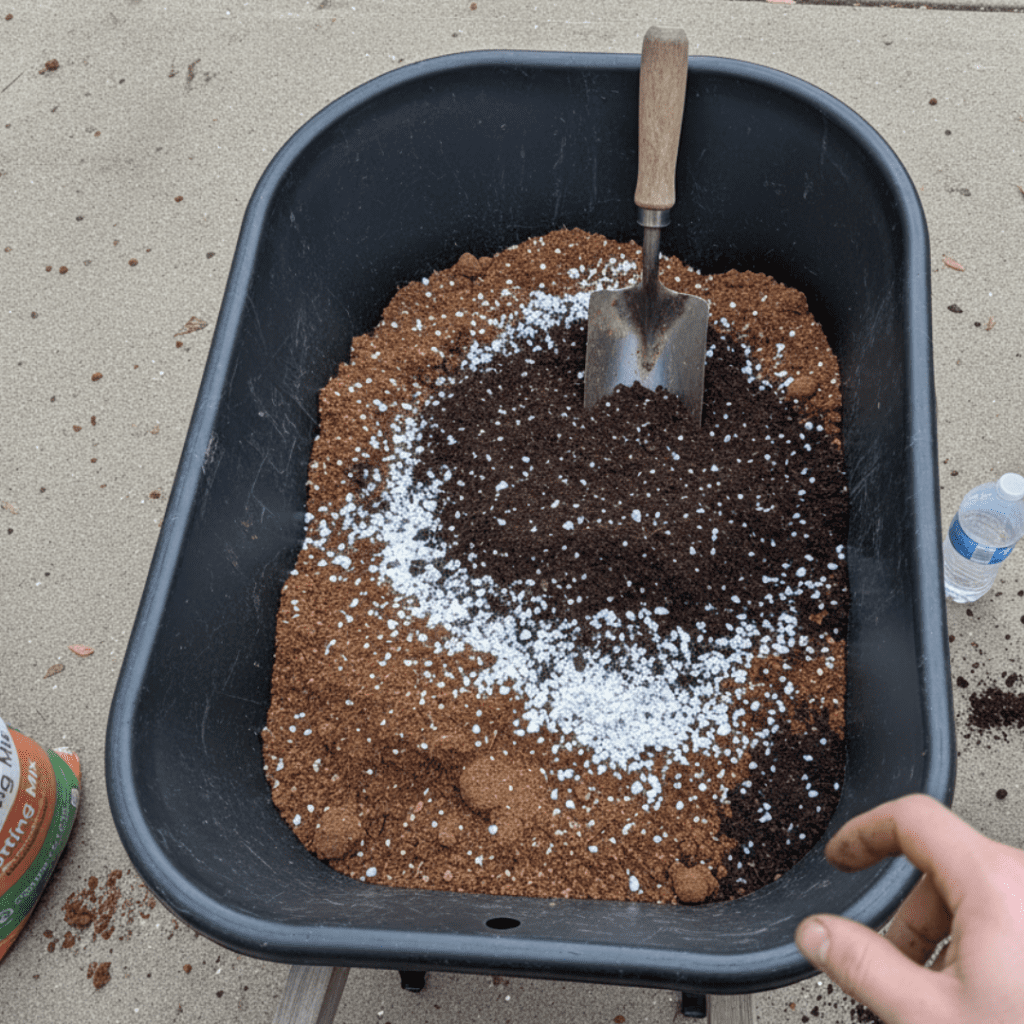
This is where most container gardens fail or succeed, and it’s the one place I insist you not cut corners. Regular garden soil compacts in containers, squeezing out air pockets and creating a dense mass that either sheds water or stays soggy. I spent my first three years using whatever was cheapest, and my plants showed it—weak growth, frequent wilting, constant battles with root rot. Then I learned to build my own mix, and everything changed.
My go-to formula for low-maintenance containers is sixty percent quality potting mix, twenty percent perlite or pumice for drainage, and twenty percent compost for slow-release nutrition. The potting mix provides the base structure, the perlite keeps it from compacting, and the compost feeds plants gradually over the season. For larger containers where I’m growing vegetables or heavy feeders, I add a quarter cup of slow-release organic fertilizer per five gallons of soil mix. This single addition means I fertilize maybe twice all season instead of every week. I mix everything in a wheelbarrow or large tub, moistening it thoroughly before filling pots. Dry potting mix is nearly impossible to wet properly once it’s in the container.
One ingredient that’s transformed my summer watering is polymer moisture crystals. I was skeptical for years—it seemed gimmicky. But after testing them in half my pots one season, the difference was undeniable. The crystals absorb water when you irrigate, then release it gradually as the soil dries. Containers with crystals went three to four days between waterings, while identical plants without them needed water every other day. I use one tablespoon per gallon of soil mix, stirred in dry before planting. They’re not magic, but they buy you that extra day or two before plants wilt, which makes all the difference when life gets busy.
Layering Magic: Building Dimension in Your Pots
The Thriller-Filler-Spiller Formula That Actually Works
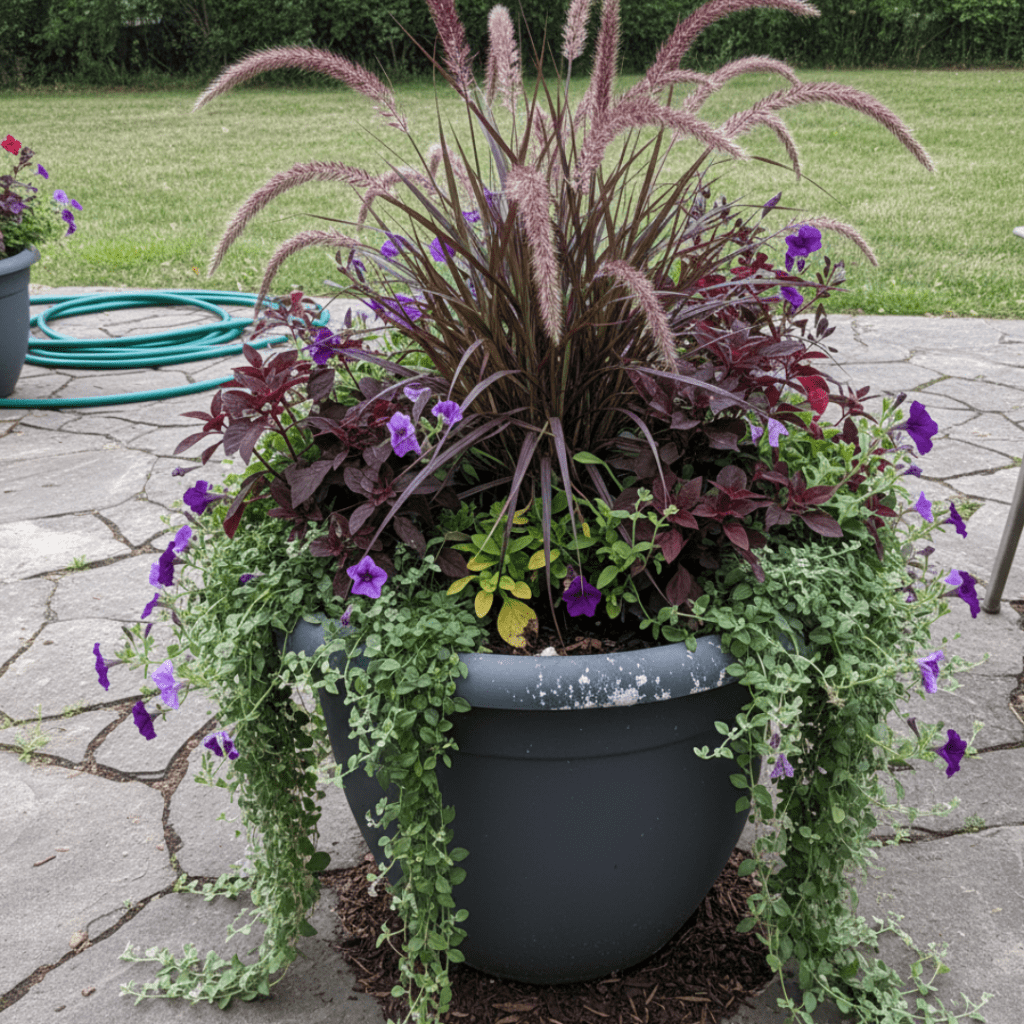
You’ve probably heard this formula before, but I’m going to tell you how it really works in practice, not in magazine photos. The thriller is your tall, structural plant—it anchors the composition and draws the eye up. The fillers surround the thriller with mass and color, filling the middle space. The spillers trail over the edges, softening the container and connecting it to the ground. Simple enough in theory, but the trick is choosing plants that actually want the same conditions and won’t outgrow each other in three weeks.
For a sunny spot, one of my most successful combinations uses a purple fountain grass as the thriller. It grows to about thirty inches tall in a season, adding movement and texture without getting unruly. Around it, I plant four to five Persian shield plants as fillers—their iridescent purple foliage echoes the grass and fills out beautifully. For spillers, I use either trailing bacopa or purple potato vine. Both cascade nicely, bloom or look attractive all season, and tolerate the same watering schedule as the grass and shield. This combination goes in a twenty-inch pot and looks full from planting day, but doesn’t overcrowd until late August when I’m ready for fall anyway.
For shade, I’ve had wonderful luck with ‘Endless Summer’ ferns as the thriller, surrounded by trailing coleus in chartreuse or burgundy tones, with variegated vinca vine spilling over the edges. The vinca is evergreen in my zone seven garden, so it provides winter interest when everything else has died back. I also love using upright sweet potato vine varieties like ‘Sweet Caroline Bewitched’ as thrillers—they grow quickly to fill the space but never get leggy, and their foliage color stays vivid all season without any deadheading.
Plant Selection for Low-Fuss Beauty
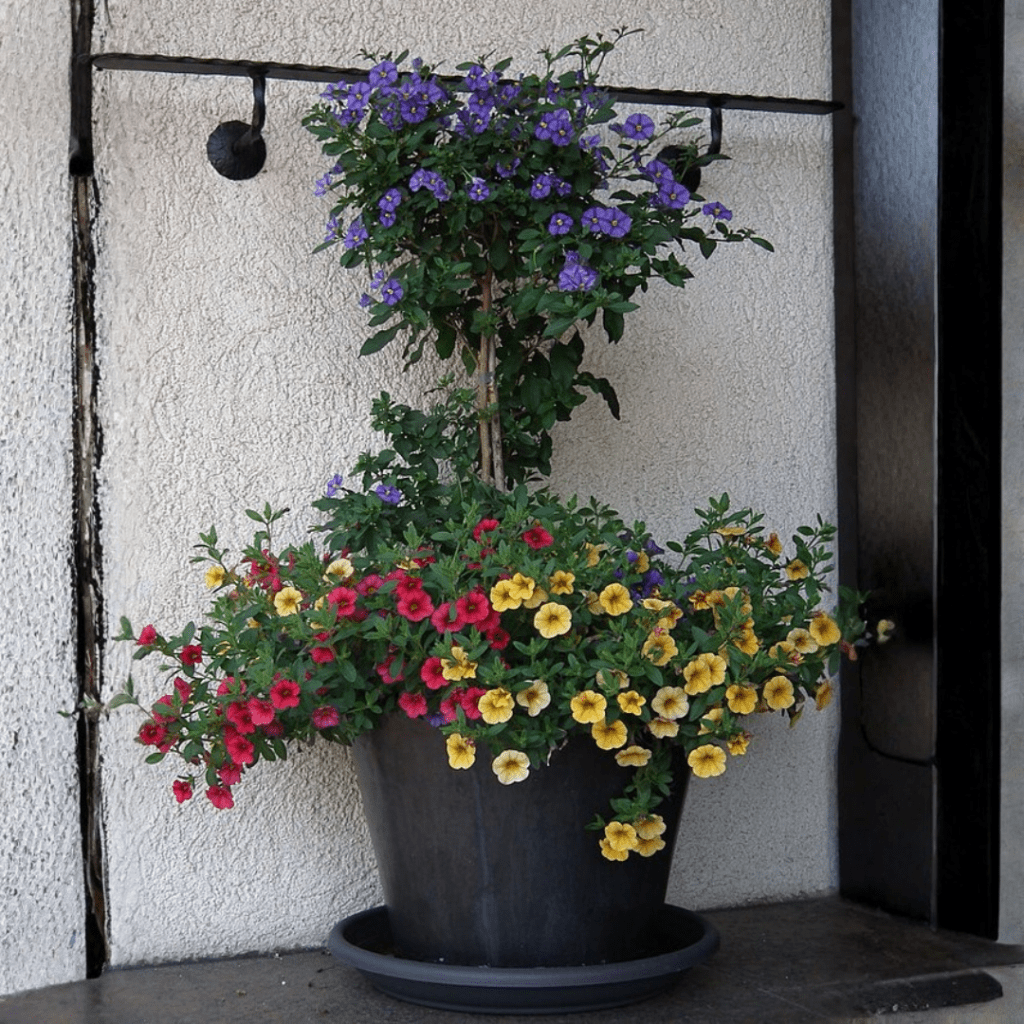
After trying hundreds of plant combinations, I’ve identified what separates high-maintenance from low-maintenance container plants. The best performers share specific traits: they tolerate occasional drought without collapsing, they don’t need constant deadheading to keep blooming, they resist pests, and they look good even when they’re not flowering. Petunias are gorgeous but demand weekly deadheading or they stop blooming and get ratty. Impatiens are reliable until one hot dry day kills them all. I’ve largely moved away from both toward plants that shrug off neglect.
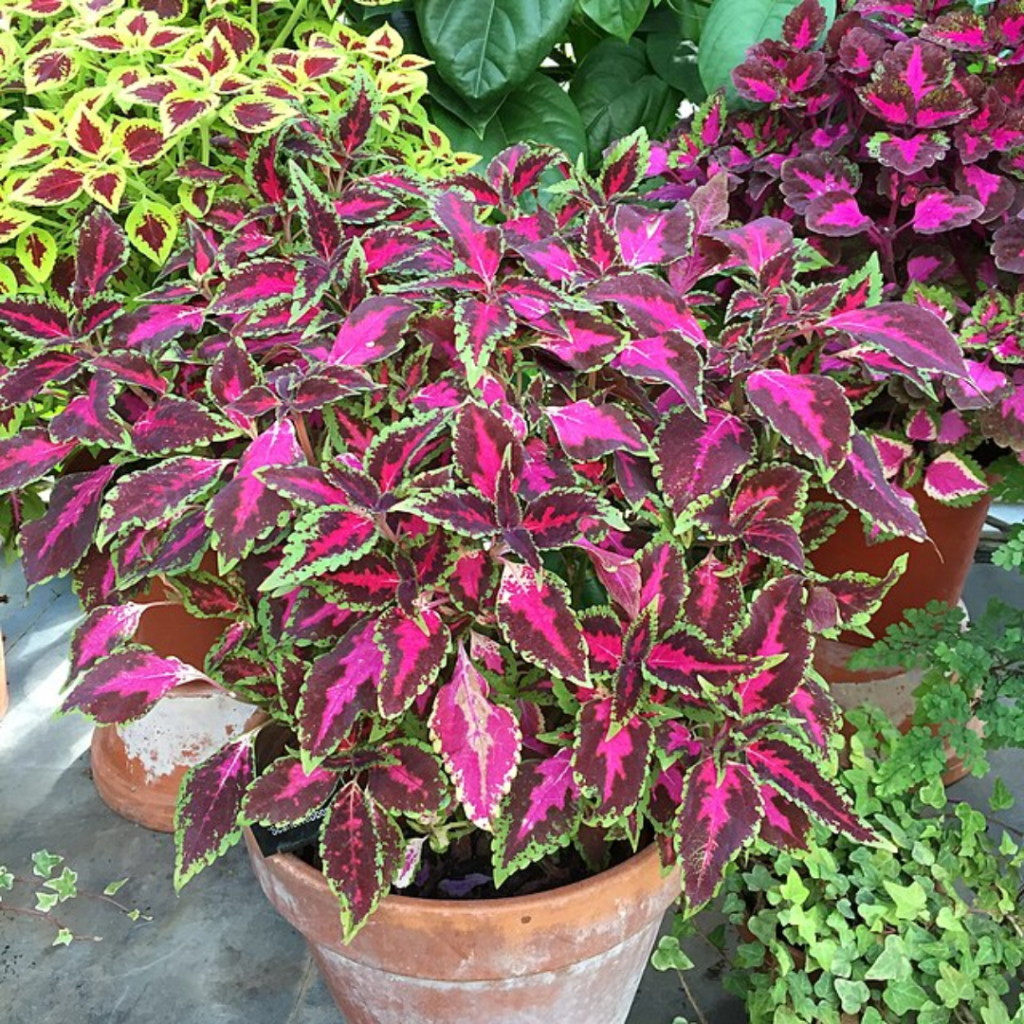
My absolute favorite annuals for containers are calibrachoa, angelonia, euphorbia ‘Diamond Frost’, and ornamental peppers. Calibrachoa blooms continuously without deadheading and bounces back from wilting like nothing happened. Angelonia stands up to heat, laughs at humidity, and produces spikes of flowers for four months straight. Euphorbia ‘Diamond Frost’ creates a cloud of tiny white flowers that never need deadheading and tolerates both sun and part shade. Ornamental peppers give you colorful fruit that lasts from July through frost, and they’re drought-tolerant once established. For foliage, coleus varieties have exploded in recent years with sun-tolerant selections in every color imaginable. They add brilliant color without any flowers to maintain.
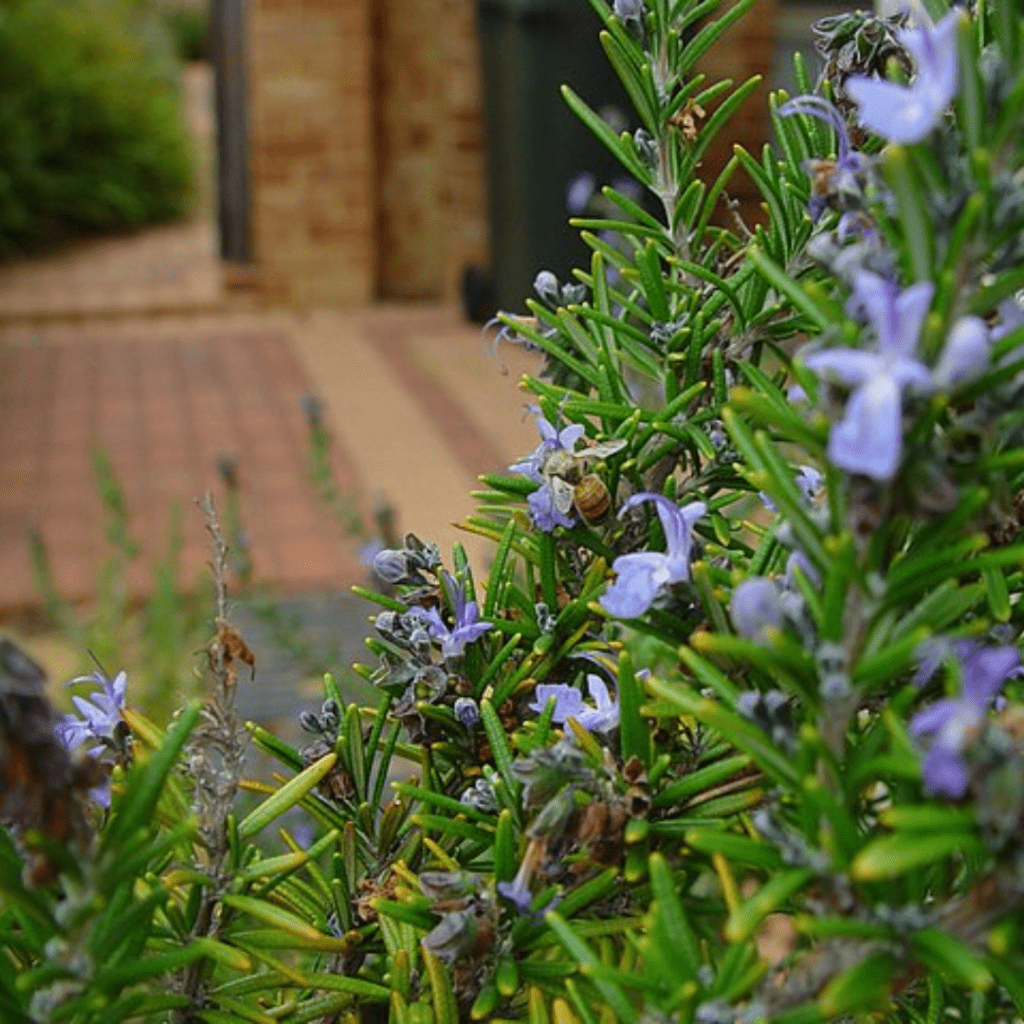
Don’t overlook edibles in ornamental containers. I always tuck herbs into my mixed pots because they’re functional and beautiful. Rosemary makes a stunning upright thriller, especially the columnar varieties like ‘Tuscan Blue’. Trailing rosemary works perfectly as a spiller. Purple basil adds deep color, and variegated sage provides silvery texture. Cherry tomatoes in smaller varieties like ‘Tiny Tim’ or ‘Window Box Roma’ produce heavily in large containers and look charming with trailing petunias or nasturtiums beneath them. I grow hot peppers in ornamental pots every year—the shiny fruit in reds, oranges, yellows, and purples is as decorative as any flower.
Maintenance Secrets That Keep Work to a Minimum
Even with perfect soil and smart plant selection, container gardens need some care. But I’ve refined my approach over the years to minimize time spent on tasks that don’t matter and maximize the impact of what I do. Watering is the big one, obviously. I check my containers every morning during the growing season—it takes five minutes to walk the patio and stick my finger an inch into the soil. If it’s dry, I water deeply until it runs out the drainage holes. If it’s still moist, I leave it alone. Most of my containers in peak summer need water every two to three days, sometimes every other day during a heat wave. Never daily if your soil mix is right and your pots are large enough.
I installed a simple drip irrigation system on my patio four years ago, and it’s been worth every penny of the two hundred dollar investment. I can water twenty containers with the turn of one valve, and a basic timer handles it even when I’m traveling. The system doesn’t have to be complicated—I used quarter-inch tubing and adjustable drip emitters, attaching two emitters to each large container and one to smaller pots. It took me about three hours to install, most of that figuring out the layout. Now I hand-water only when I’m adjusting the timing or checking specific plants. For folks who can’t install drip lines, I recommend grouping containers close together so you can water multiple pots without moving the hose.
Fertilizing matters less than people think when you start with good soil. I use a liquid fish and seaweed emulsion every three to four weeks, but honestly, I sometimes forget and the plants don’t seem to mind. The compost in my soil mix and the slow-release fertilizer I add at planting carry them most of the way. Heavy feeders like tomatoes and peppers get a boost every two weeks once they start setting fruit, but ornamentals are fine with monthly feeding. I keep a watering can with diluted fertilizer mixed up all the time—two tablespoons of liquid fertilizer per gallon of water—so when I do water by hand, some containers get fed without extra effort.
My Favorite Proven Container Combinations
After decades of experimenting, these are the combinations I return to year after year because they’re beautiful, tough, and easy. For a hot sunny spot, I love purple fountain grass, burgundy coleus, and golden creeping jenny. The color combination is rich and unexpected, and all three plants handle heat and occasional drought without complaint. In partial shade, I use ‘ColorBlaze’ coleus in lime green or burgundy as the thriller, surrounded by impatiens in coordinating colors, with variegated English ivy trailing over the edge. The ivy is evergreen, so I keep the same planter going year after year, just refreshing the annuals each spring.
For edible containers with ornamental appeal, I plant a rosemary center surrounded by trailing nasturtiums and variegated oregano. All three are edible, the nasturtiums bloom in vibrant oranges and reds all summer, and the oregano cascades beautifully. I harvest from this pot constantly and it only gets better-looking with pruning. Another winner is Swiss chard ‘Bright Lights’ in the center with marigolds around the edges. The chard stems in neon pink, yellow, and orange are stunning, and both plants produce edible harvests while looking gorgeous.
For year-round interest in mild climates, I build evergreen combinations using boxwood or dwarf Alberta spruce as the thriller, surrounded by winter-blooming pansies or violas, with trailing ivy for spillover. These look good twelve months of the year with minimal care. I swap the pansies for summer annuals when it gets hot, but the framework stays constant. The boxwood gets one shaping trim in spring and that’s it for maintenance.
Quick-Fire FAQ
Q: How often do I really need to water container gardens in summer?
A: Every two to three days for properly sized containers with good soil mix, daily only during extreme heat waves or for small pots under twelve inches.
Q: Can I use regular garden soil in my containers?
A: Never—it compacts too heavily and creates drainage problems. Always use potting mix designed for containers, ideally amended with perlite and compost.
Q: What plants work best together in one pot?
A: Choose plants with identical light and water needs, then combine one tall upright plant, several mid-height fillers, and trailing spillers for a full layered look.
Q: Do I need to replant my containers every year?
A: Annuals yes, but perennials, shrubs, and evergreens can stay in the same pot for three to five years with fresh top-dressing of compost each spring.
— Grandma Maggie