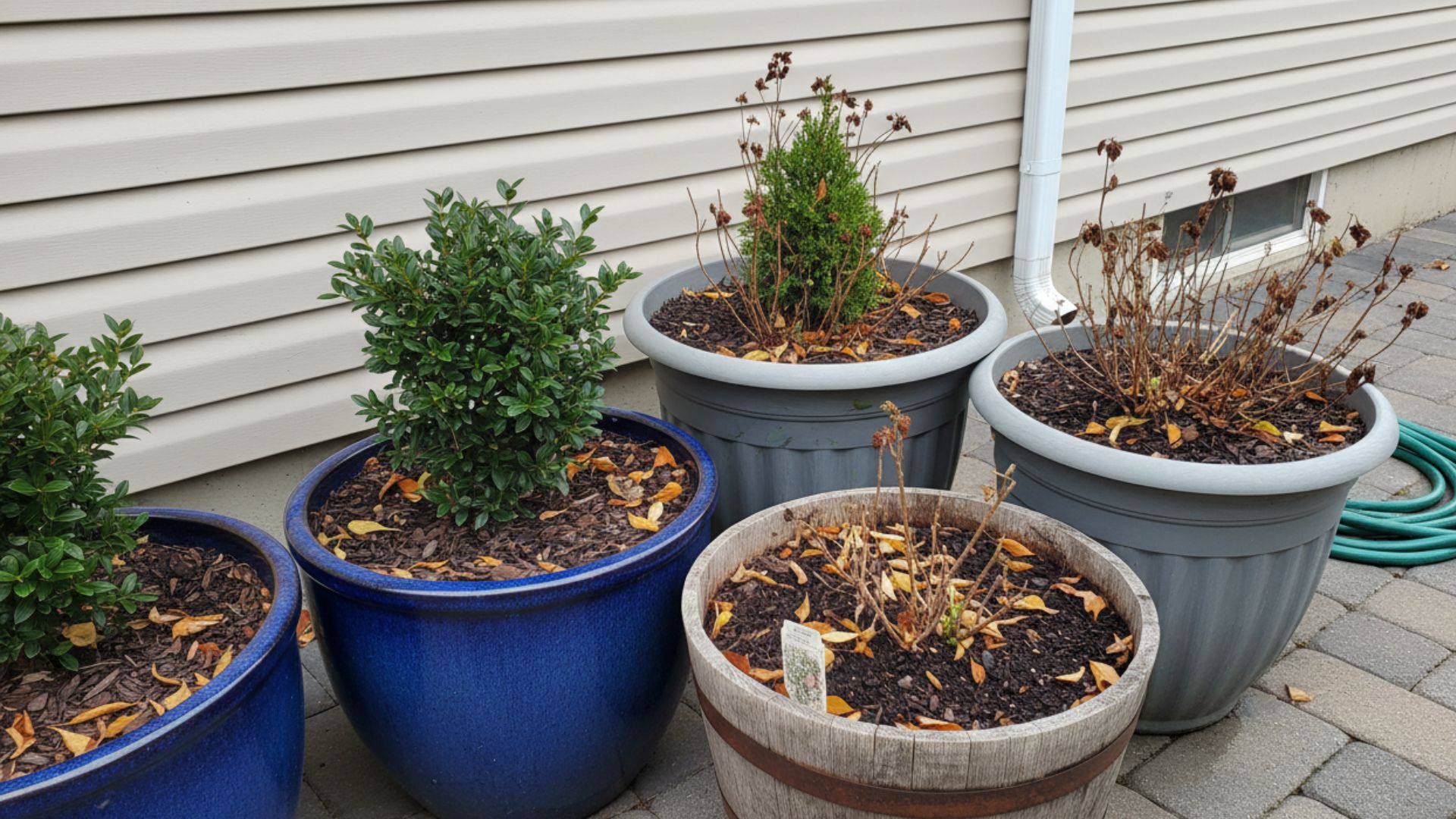
After fifty years of container gardening, I can tell you that the single most heartbreaking morning in any gardener’s year is that first warm day in spring when you walk outside expecting fresh green shoots and instead find a pot full of brown, mushy nothing. I’ve been there more times than I care to admit, especially in my early years when I thought a pretty pot and a hardy-sounding label were enough to get a perennial through a Wisconsin winter. It took me a good decade of trial, error, and more than a few silent funerals at the compost bin to learn the one rule that changed everything for my container garden. It’s called the 2-Zone Rule, and once you understand why it works, you’ll never lose another potted plant to winter again. Let me walk you through it.
Why Container Plants Die When They Shouldn’t
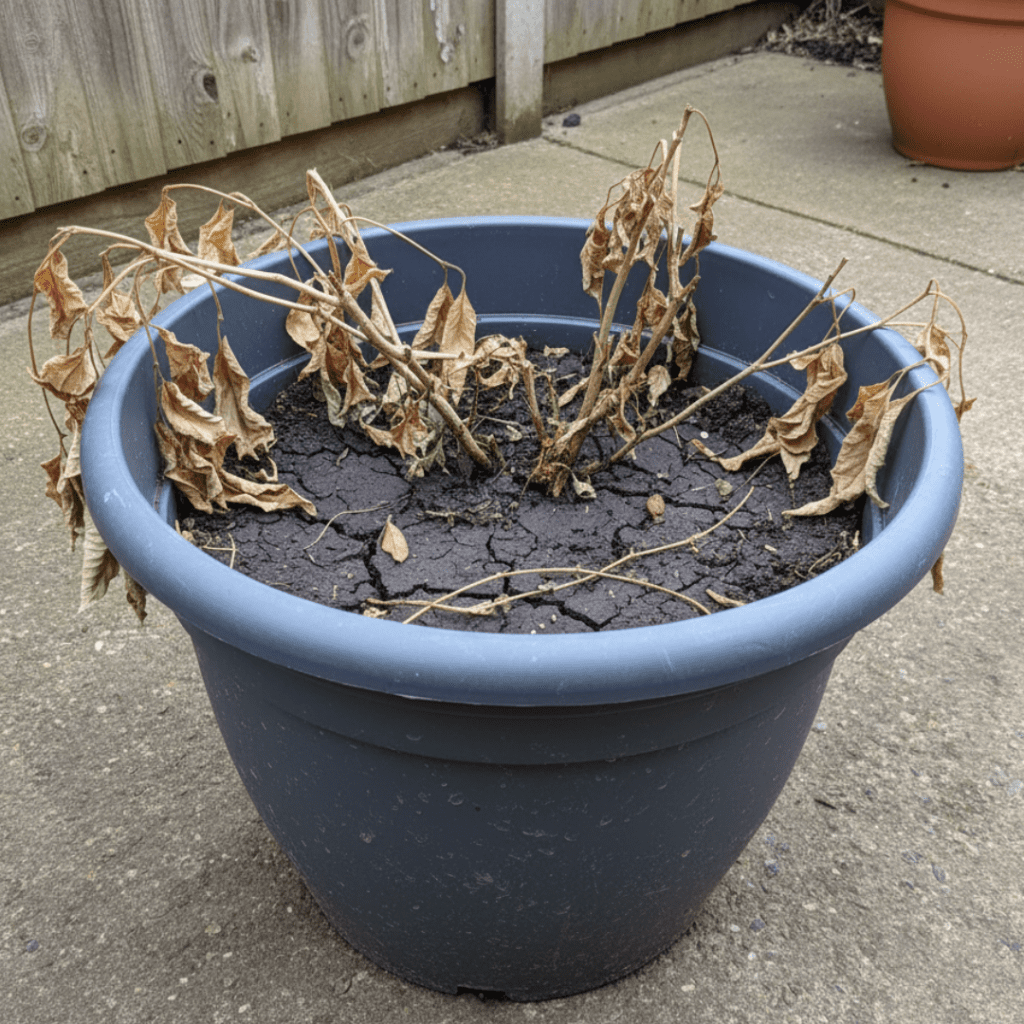


Here’s what most people don’t realize: USDA hardiness zones are based on plants growing in the ground, surrounded by the enormous insulating mass of the earth. When you put that same plant in a pot sitting on your patio, you’ve stripped away almost all of that protection. The soil in a container freezes much harder and much faster than ground soil, and it thaws out faster too. That might sound like a good thing, but it’s actually the worst part. Those repeated freeze-and-thaw cycles throughout winter are brutal on root systems, expanding and contracting the soil, heaving roots, and rupturing delicate root tissue that was never built to endure that kind of punishment.
I think of it this way: a plant in the ground is wearing a heavy winter coat. A plant in a pot on your deck is standing outside in a thin sweater. The air temperature hits the pot from every angle, the sides, the bottom, even the top if there’s no mulch. In my Zone 5 garden, I’ve measured pot soil temperatures that dipped well below what the ground registered just a few feet away. That’s why a plant labeled “hardy to Zone 5” can sail through winter in a garden bed but turn to mush in a container at the same address. The pot simply can’t offer the same thermal buffer.
Understanding the 2-Zone Rule
How to Pick the Right Plants for Your Pots
The 2-Zone Rule is beautifully simple. Whatever USDA hardiness zone you live in, choose container plants that are rated at least two zones colder. If you garden in Zone 6, look for plants hardy to Zone 4. If you’re in Zone 5 like me, you want Zone 3 plants or tougher. This two-zone buffer accounts for the harsher conditions inside a container and gives your plant’s roots the cold tolerance they need to survive those brutal freeze-thaw swings without being destroyed.
Now, I’ll be honest with you. I’ve sometimes cheated the rule by one zone and gotten away with it. A Zone 4 plant in my Zone 5 container has survived a mild winter more than once. But “sometimes” and “mild” are doing a lot of heavy lifting in that sentence. On years with a truly cold January or a late-season polar vortex, those gambles didn’t pay off. After losing a gorgeous Japanese maple I’d been nursing for three seasons, I stopped playing the odds. Two full zones of buffer is the insurance policy that actually pays out, and I’d rather have a reliable garden than a flashy one I have to replant every spring.
When you’re shopping for plants, flip that tag over and look at the hardiness range. If it says “Zones 4–8” and you live in Zone 6, that plant is a strong candidate for your containers. If it says “Zones 6–9,” it belongs in your garden bed, not your pot. It really is that straightforward, and once you start shopping with this filter in mind, you’ll be amazed at how many beautiful, tough options you’ve been walking right past.
Plants That Pass the 2-Zone Test With Flying Colors
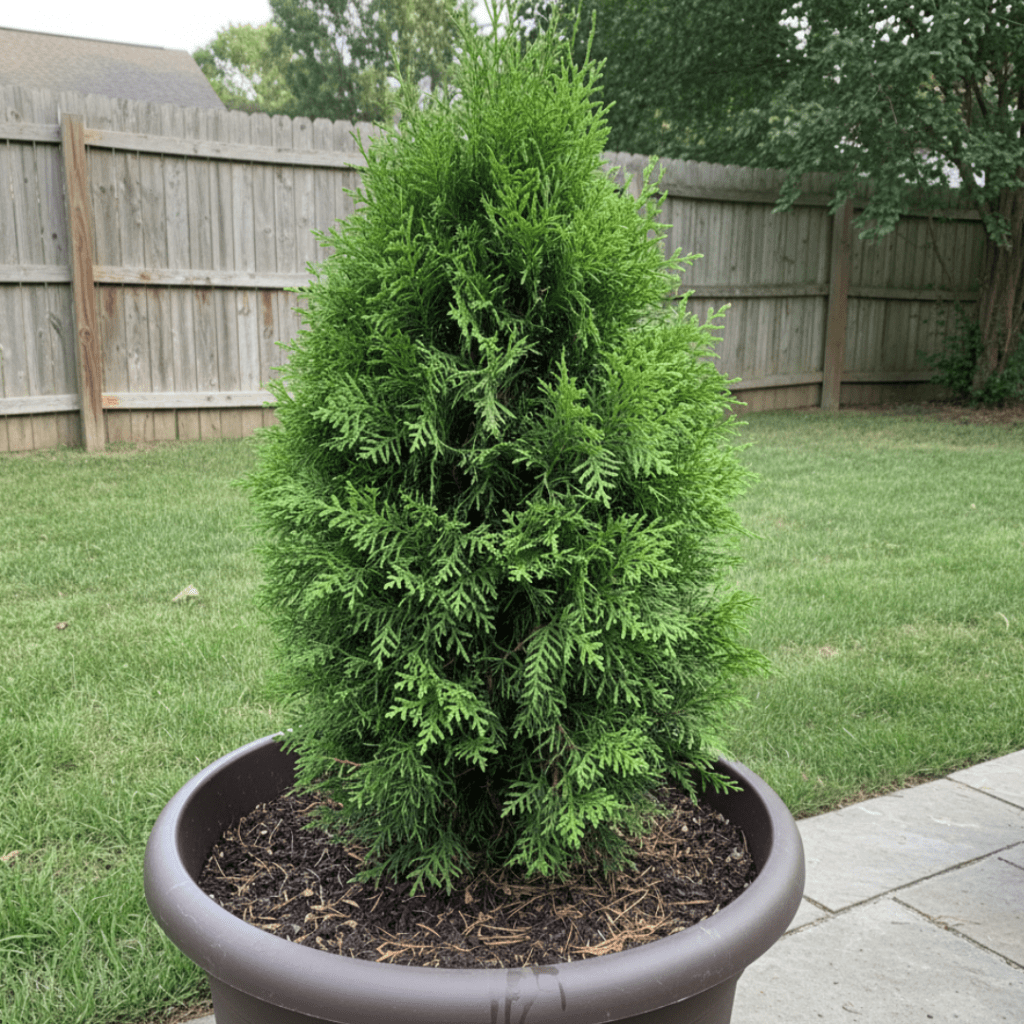
After decades of testing, I have a short list of container perennials and shrubs that have never let me down, and I want you to know about every one of them. For evergreen structure, ‘Emerald Green’ arborvitae is a champion. It’s hardy to Zone 2, grows in a lovely narrow column, and stays much smaller in a container than it would in the ground. In a 20-inch pot, mine has held its deep green color through five Wisconsin winters without a single brown needle. Dwarf mugo pine is another bulletproof choice, hardy to Zone 3 with a dense, rounded habit that looks beautiful year-round without any pruning from me.
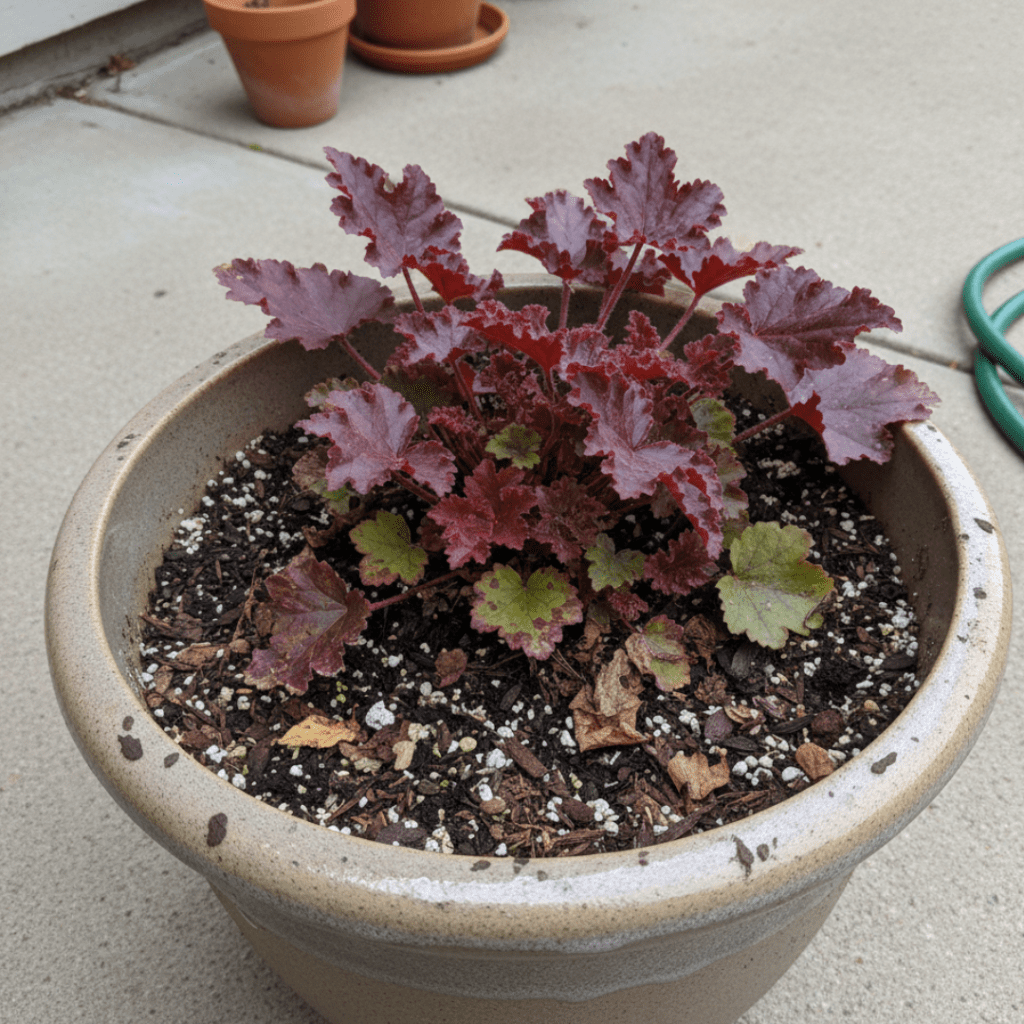
For flowering interest, I adore heucheras, or coral bells, which are hardy to Zone 3 in most varieties and bring stunning foliage color that looks just as good in October as it does in June. Hostas are another obvious winner for shady containers, hardy to Zone 3 and perfectly happy spending winter dormant in a large pot. I’ve also had wonderful long-term luck with daylilies, yarrow, and black-eyed Susans, all of which are rated Zone 3 or hardier and bring reliable summer color without making me worry when the first frost arrives. The trick is pairing that cold hardiness with a container at least 16 inches across so the root system has enough soil volume for insulation.
Your Container Matters More Than You Think
Picking the right plant is only half the equation. The pot itself can make or break your overwintering success. I learned the hard way that terracotta and unglazed ceramic pots absorb moisture and then crack when that moisture freezes and expands. I lost a beautiful hand-thrown ceramic planter my daughter gave me for Mother’s Day, and the heartbreak of that was almost worse than losing the plant inside it. For winter containers, stick with fiberglass, heavy-duty resin, thick-walled composite, or large wooden planters. These materials can handle the freeze-thaw cycle without shattering.Size matters enormously too. A bigger pot holds more soil, and more soil means more insulation around those roots. I won’t use anything smaller than 16 inches in diameter for a perennial I plan to overwinter, and I prefer 20 to 24 inches for shrubs. If you love the look of a decorative ceramic pot, here’s a trick I’ve used for years: plant in a slightly smaller plastic nursery pot and drop it inside the ceramic one, filling the gap between the two with bark nuggets. When winter comes, you simply lift the inner pot out and store the ceramic one safely in the garage. Come spring, everything goes back together.
Getting Your Containers Through Winter
Protection Strategies That Actually Work
Even with the 2-Zone Rule working in your favor, a few simple protection steps can mean the difference between a plant that merely survives and one that truly thrives the following spring. First, and I cannot stress this enough, make sure your container plants go into winter with moist soil. Not wet, not soggy, but evenly moist. Dry soil freezes faster and harder than moist soil, and a plant whose roots dry out completely over winter will die of desiccation long before the cold itself gets to it. I water my containers well in late fall and then check them once a month on a mild day through winter, giving them a drink if the top two inches of soil feel bone dry.
Location is your next best friend. I group all my overwintering containers together against the south-facing wall of my house, which blocks the prevailing north wind and captures a bit of radiant warmth from the foundation. Placing pots directly on the ground rather than up on a raised deck also helps, since the ground offers some thermal transfer that an elevated surface doesn’t. If you have plants that are right at the edge of the 2-zone buffer, you can pile 6 to 8 inches of shredded leaves or straw mulch around and on top of the pots after the ground freezes. I’ve also wrapped pot clusters in burlap stapled to simple wooden stakes, creating a windbreak that costs almost nothing and takes ten minutes to build.
What About Plants That Don’t Make the 2-Zone Cut?
I know what you’re thinking, because I’ve been there too: “But Maggie, I love that Japanese maple, and it’s only hardy to my zone.” I understand completely. When your heart is set on a plant that doesn’t meet the 2-Zone Rule, you have a few solid options. The most reliable is moving the container into an unheated garage, shed, or cold basement once the plant goes dormant in late fall. The key word here is unheated. Most perennials and deciduous shrubs need a cold dormancy period to bloom and grow properly the following year, so you’re not trying to keep them warm. You’re trying to keep them in a steady range of roughly 20 to 45 degrees Fahrenheit, cold enough for dormancy but protected from the extreme lows and the relentless freeze-thaw of an exposed patio.
Another method that old-time northern gardeners know well is burying the entire pot in the ground for winter. Dig a hole roughly the size of your container, sink it in, and mound soil or mulch over the top. The surrounding earth insulates the pot just as it would insulate an in-ground plant, effectively neutralizing the container’s disadvantage. In spring, you simply dig it back up, clean off the pot, and return it to its display spot. It’s more work, I won’t pretend otherwise, but I’ve saved some truly irreplaceable plants this way, including a ‘Bloodgood’ Japanese maple that’s been with me for twelve years now.
Spring Wake-Up: Bringing Containers Back to Life
One of the most common mistakes I see is gardeners rushing their container plants back into the spotlight the moment temperatures warm up in March. Resist that urge. Late freezes can still do serious damage to tender new growth, and a plant that’s been sleeping in a sheltered spot needs time to adjust. I wait until nighttime temperatures are consistently above freezing, usually mid to late April in my area, before moving containers back to their summer positions. Even then, I give them a week or two in a semi-sheltered spot first so they can acclimate gradually rather than getting hit with full sun and wind all at once.
Once I see signs of active new growth, that’s when I start fertilizing again, not before. Feeding a dormant plant is like waking someone up at 3 a.m. to make them eat dinner. It’s confusing and counterproductive. A slow-release granular fertilizer worked into the top inch of soil is my go-to, and I top-dress with a half inch of fresh compost at the same time. If the plant looks crowded or root-bound after two or three seasons, early spring is also the perfect time to divide it, refresh the potting mix, or move it to a slightly larger container. I find that most perennials can live happily in the same pot for two to three years before they start asking for more room.
Quick-Fire FAQ
Q: Does the 2-Zone Rule apply to annuals too?
A: No. Annuals complete their life cycle in one season regardless of hardiness, so the rule only applies to perennials, shrubs, and small trees you intend to keep alive through winter in their containers.
Q: Can I just wrap my pots in bubble wrap instead of following the 2-Zone Rule?
A: Insulation helps at the margins, but it won’t turn a borderline-hardy plant into a survivor through a severe winter. Think of wrapping as extra credit on top of the 2-Zone Rule, not a replacement for it.
Q: Do I need to water my dormant container plants in winter?
A: Yes, check them monthly on a mild day. Roots still take up small amounts of water even when dormant, and dry soil freezes harder and faster, which puts the plant at greater risk. Keep the soil lightly moist but never waterlogged.
Q: What if I don’t know my USDA hardiness zone?
A: Visit the USDA Plant Hardiness Zone Map online and type in your zip code. It takes about ten seconds, and it’s the single most useful piece of information you can know as a gardener.
— Grandma Maggie