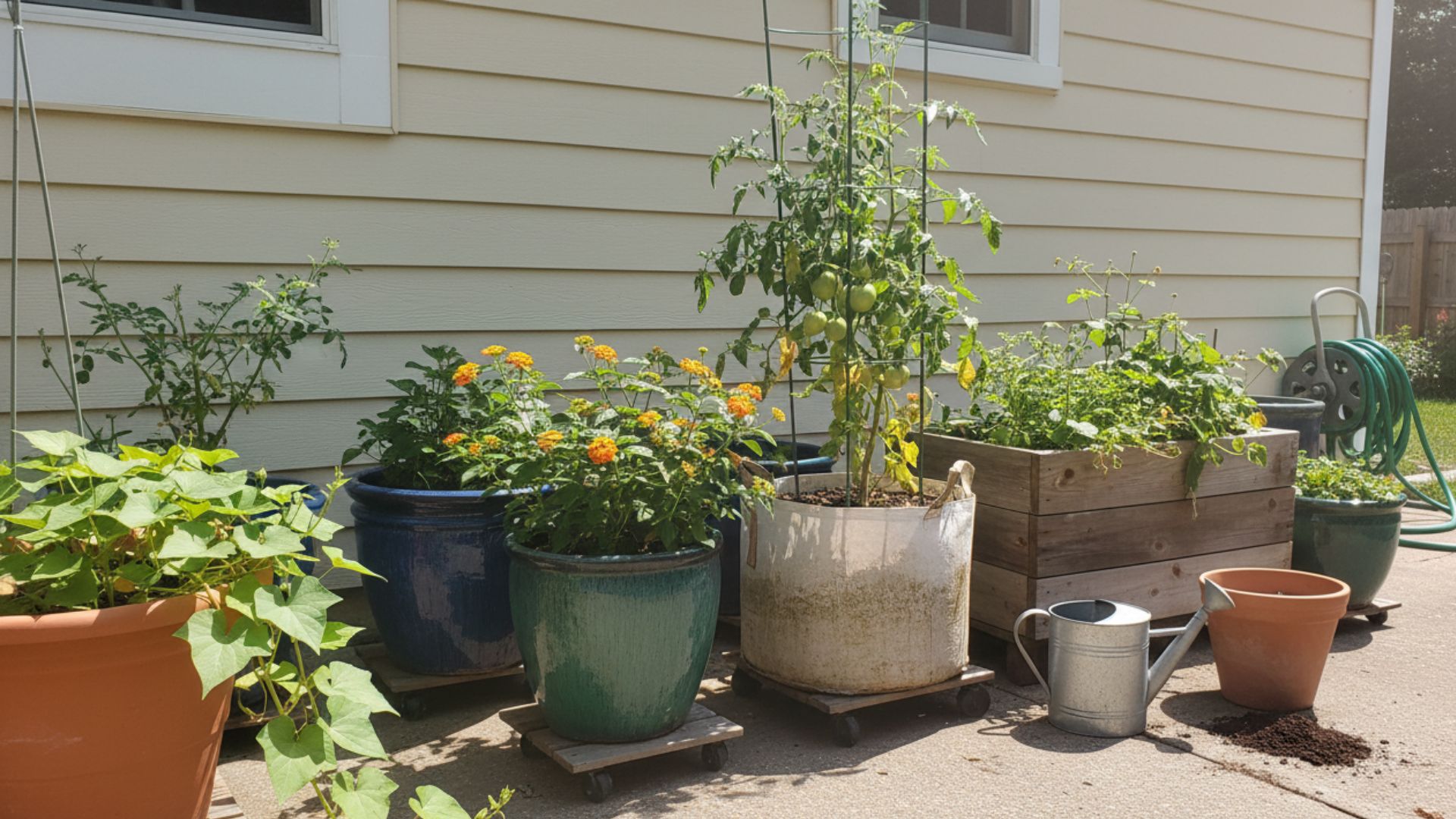
After fifty-some years of growing things in pots, I’ll tell you something that took me a painful decade to learn: container gardening in Zones 8 and 9 is a completely different game than what the glossy garden magazines show you. Those gorgeous terracotta arrangements photographed in mild Pacific Northwest weather? They’d be crispy brown toast on a Zone 9 patio in July. I’ve gardened through summers where the thermometer didn’t dip below 95°F for weeks at a stretch, and I’ve watched beautiful container plantings wilt to nothing by noon despite watering at dawn. But I’ve also grown some of the most stunning, productive pots of my life in that same punishing heat, because I finally stopped fighting the climate and started working with it. Let me walk you through everything I’ve learned about keeping containers thriving when summer turns brutal.
Why Zone 8–9 Summers Demand a Different Container Strategy
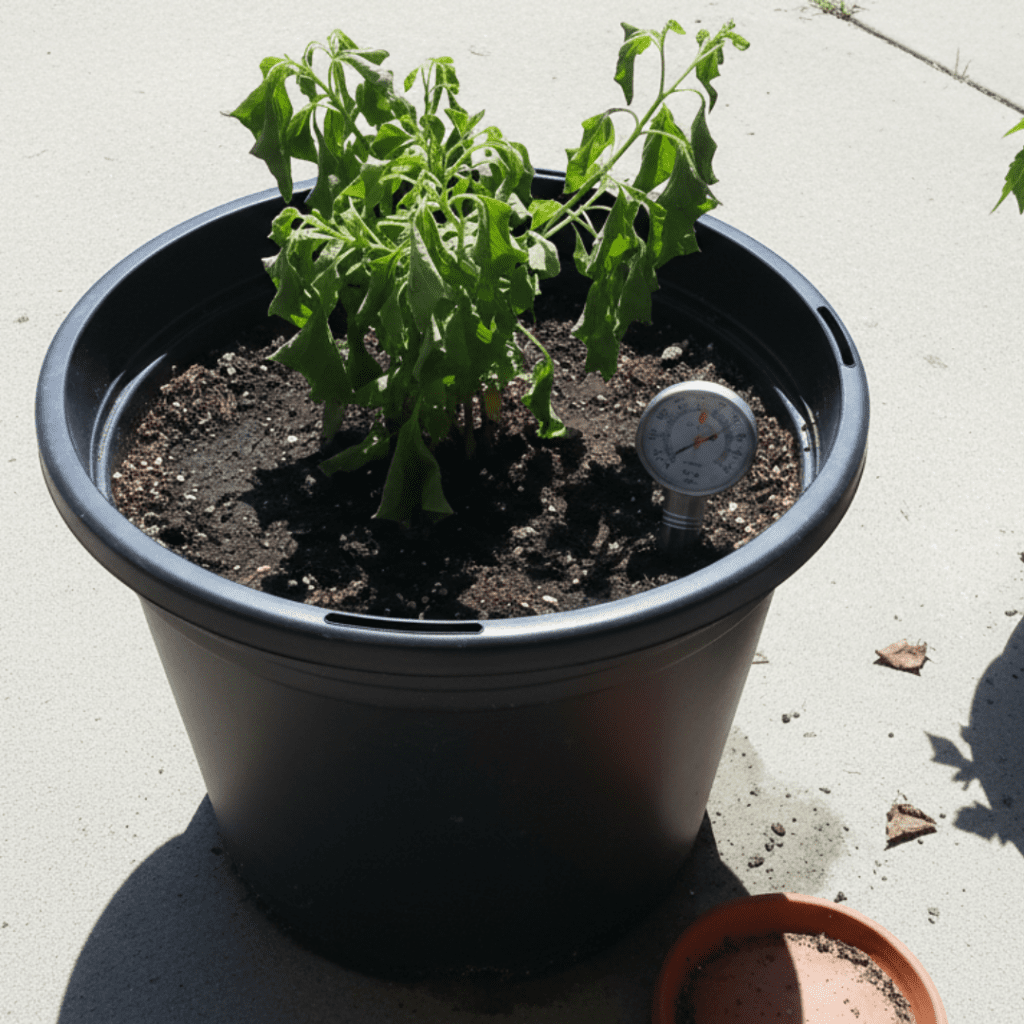


The biggest thing most gardeners don’t realize about Zones 8 and 9 is that the heat doesn’t just stress leaves, it cooks roots. An in-ground plant has the whole earth as a buffer, with soil temperatures staying relatively cool a few inches down even on the worst days. A container sitting on a south-facing patio? That pot can reach internal temperatures of 120°F or more when the air is in the mid-90s. I’ve actually measured this with a soil thermometer, and I’ll never forget the first time I saw that reading. At those temperatures, root cells die. The fine feeder roots that do the heavy lifting of water and nutrient absorption are destroyed, which is exactly why a plant that looked fine at breakfast can be completely collapsed by dinner, even though the soil is still damp. Understanding this one fact changed everything about how I approach summer containers.
Zone 9 summers, in particular, regularly exceed 90°F from June through September, with some areas pushing past 100°F for weeks on end. The mild winters, which rarely dip below 20°F, mean your growing season is wonderfully long, but that extended summer heat creates challenges you simply won’t find in cooler climates. Zone 8 is a touch more moderate, but a string of 95°F days in August will punish a poorly planned container garden just the same. The strategies I’m about to share address the root cause of most summer container failures: heat buildup in the pot itself.
Choosing the Right Pot Material (This Matters More Than You Think)
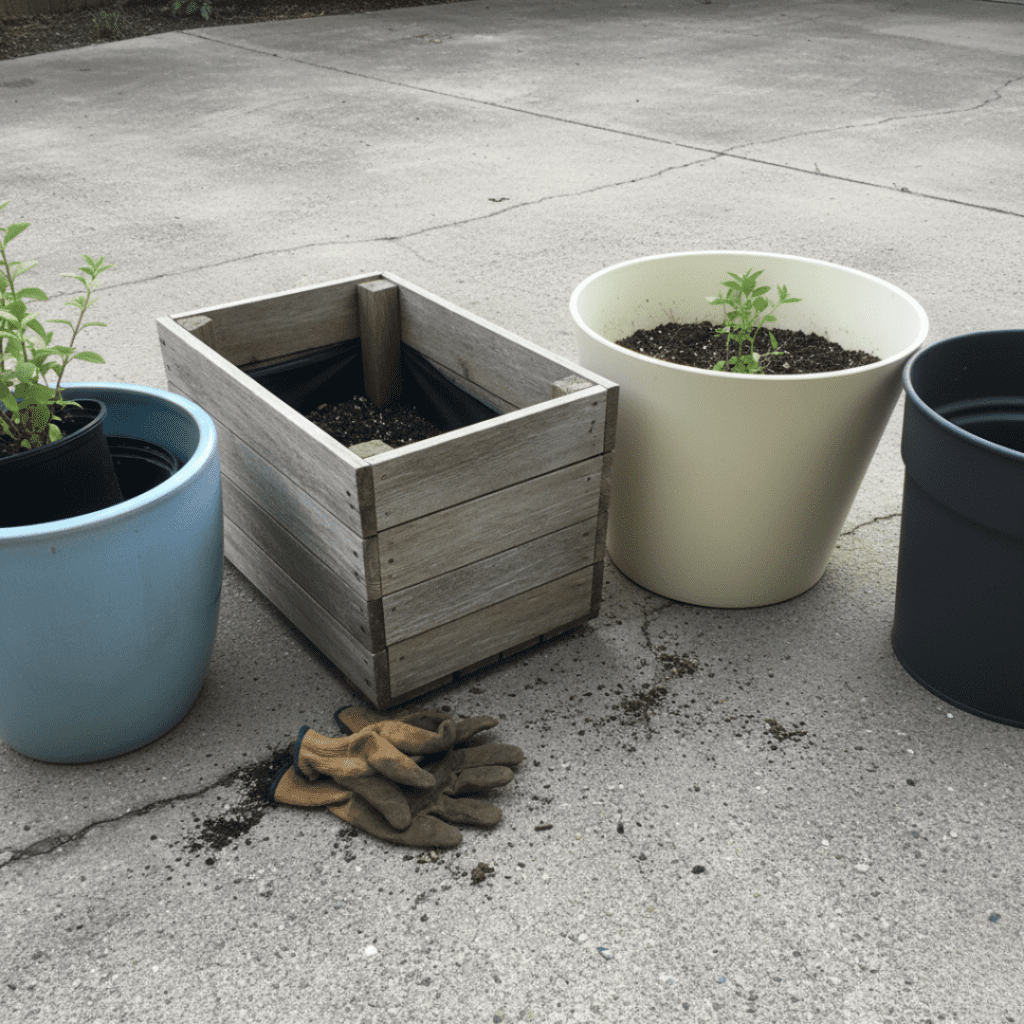
I used to choose pots based entirely on how pretty they were. That cost me a fortune in dead plants before I got smart about materials. In Zone 8–9 heat, your pot material is arguably more important than the plant you put in it. Dark-colored metal containers are the worst offenders in hot climates. Metal conducts heat aggressively, and a black iron planter on a sunny patio can literally scorch roots within hours on a triple-digit day. I learned this the hard way with a gorgeous set of galvanized tubs I’d filled with herbs one May. By mid-July, every last one of them was dead except the rosemary, and even that looked like it was holding on out of sheer stubbornness.
For hot-climate container gardening, I recommend light-colored glazed ceramic, fiberglass, or thick-walled plastic in pale shades. Glazed ceramic holds moisture well and insulates roots far better than thin terracotta, which dries out at an alarming rate once temperatures climb. Fiberglass is another excellent choice because it offers natural UV protection and won’t leach chemicals into the soil, which matters if you’re growing edibles. Wooden planter boxes, especially those made from cedar or redwood, are among my personal favorites for summer containers. Wood doesn’t absorb and radiate heat the way ceramic or plastic does, so roots stay noticeably cooler. I’ve measured a consistent 8 to 10 degree difference between soil temperatures in a wooden planter versus a dark plastic pot sitting right next to it on the same patio.
If you already own dark or metal pots you love, don’t throw them away. You can double-pot by placing a slightly smaller plastic nursery pot inside the decorative one, creating an insulating air gap between the two walls. That simple trick has saved more plants in my garden than I can count. Another option is wrapping the inside of metal containers with bubble wrap insulation before filling with soil. It’s not glamorous, but your petunias won’t care what things look like on the inside.
Smart Placement and the Art of Afternoon Shade
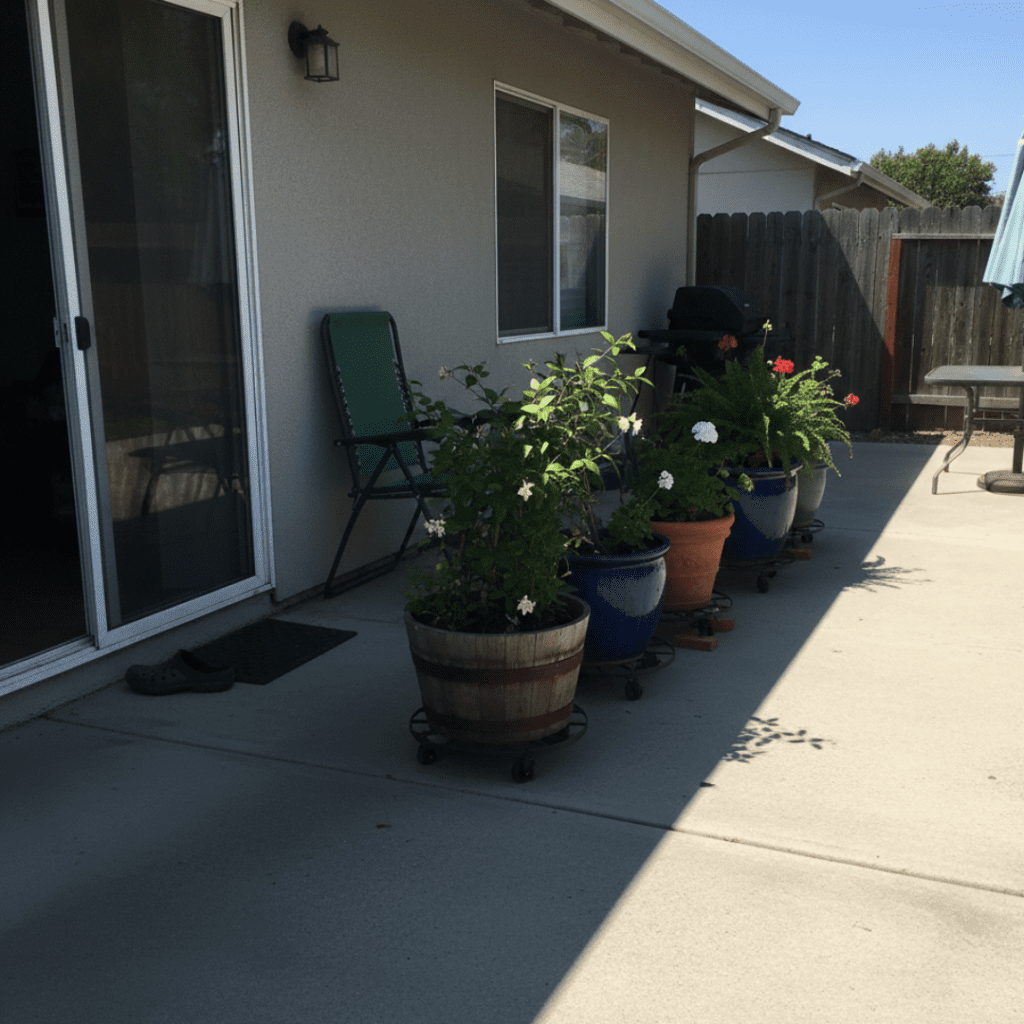
Here’s a mistake I see over and over: people place their containers where they look best for the patio, not where the plants will actually survive. In Zones 8 and 9, the morning sun from the east is your friend. It’s warm enough to fuel growth without being punishing. The afternoon sun from the west, especially from about 1:00 PM to 5:00 PM, is what destroys container plants in summer. Even sun-loving tomatoes and peppers will appreciate some relief during those brutal afternoon hours when pavement is radiating heat upward and the western sky is blasting down.
I arrange my summer containers so they get a solid 5 to 6 hours of morning sun and are then shaded by the house, a fence, or a strategically placed patio umbrella during the worst afternoon heat. If you have a covered porch that faces east or northeast, that’s golden real estate for containers. I also place my larger pots on rolling plant caddies so I can shift them with the seasons. In spring, those pots might sit in full sun to soak up every ray. By late June, I’ve rolled them 4 feet to the left where the eave casts a shadow starting at 2:00 PM. That small adjustment can mean the difference between a container that thrives and one that’s struggling by August.
Pay attention to reflected heat too. Containers sitting on concrete, brick, or stone patios absorb radiant heat from below. I’ve seen patio surface temperatures reach 30 degrees or more above the ambient air temperature, which turns the space around your pots into something like an oven. Elevating containers even 2 to 3 inches off a hot surface with pot feet, wooden blocks, or a simple plant stand allows air to circulate underneath and reduces heat transfer significantly. I use cedar shims under most of my patio pots, and it’s one of those tiny changes that made a surprisingly big difference.
Watering Strategies That Actually Keep Up With the Heat
Watering containers in Zone 8–9 summers is not the same casual, every-other-day routine that works in milder climates. During peak heat, most of my containers need water every single morning and sometimes a second light watering in the late afternoon. I water deeply each time, which means slowly pouring until water runs freely from the drainage holes. A quick splash on the surface just wets the top inch and leaves the roots below bone dry, which is worse than not watering at all because it encourages roots to grow toward the surface where they’re most vulnerable to heat.
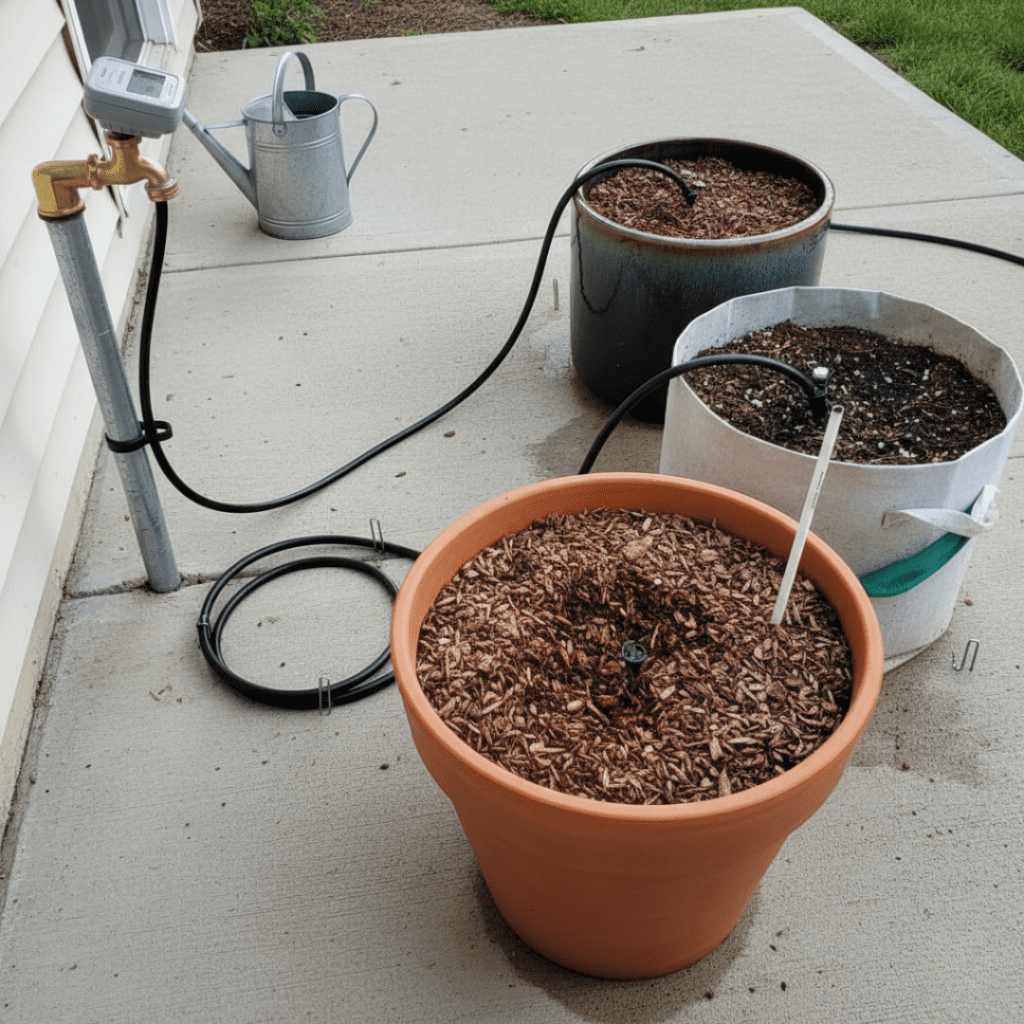
The single best investment I ever made for my summer containers was a simple drip irrigation system with a battery-powered timer. I ran quarter-inch tubing from my outdoor spigot to each pot, with adjustable drip emitters delivering water right to the soil surface. The timer runs for 15 minutes at 6:30 AM every morning, and I supplement by hand on the hottest days. The whole setup cost me about forty dollars at the hardware store and took an afternoon to install. It’s not fancy, but it means my plants get consistent deep water even if I’m out of town or just not up for the morning rounds.
A moisture meter is another tool I’d call essential rather than optional. For about ten dollars, you get a probe that tells you whether the soil 4 to 6 inches down is wet, moist, or dry. The surface of a container can feel dry while the bottom is still waterlogged, or the top can look fine while the roots are parched. I check each container with the meter before watering, because overwatering in hot weather causes root rot just as surely as underwatering causes wilt. Both will kill a plant, and the symptoms can look eerily similar. Adding a 1 to 2 inch layer of mulch on top of each container, using shredded bark or cocoa hull mulch, reduces evaporation dramatically and keeps soil temperatures 5 to 8 degrees cooler. I wouldn’t garden in summer without it.
Heat-Loving Plants That Thrive in Zone 8–9 Containers
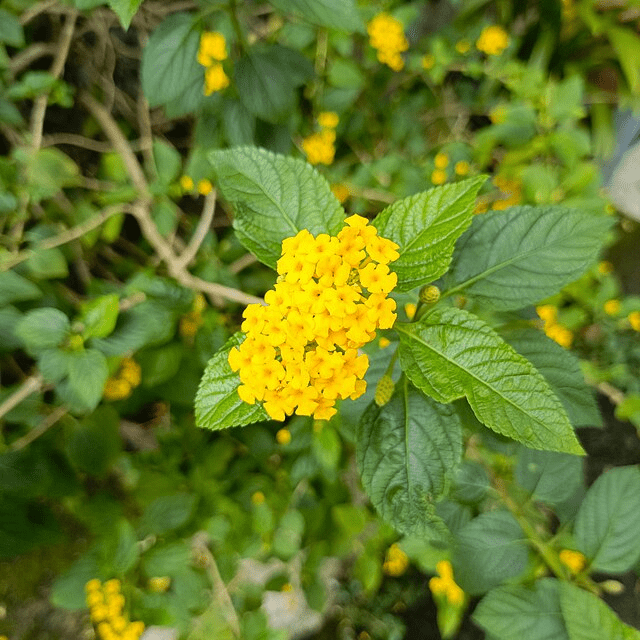
Choosing the right plants is half the battle won before summer even starts. I’ve learned to stop mourning the things I can’t easily grow in July, like cool-season lettuce or cilantro that bolts to seed in a week, and instead celebrate the gorgeous plants that actually relish the heat. For sun-drenched patios, lantana is my absolute go-to. It blooms nonstop from spring until the first frost, shrugs off 100°F days, and attracts butterflies like nothing else I grow. One lantana in a 16-inch pot will put on a show all summer long with minimal fussing. Angelonia is another workhorse I plant every year. It looks like a delicate snapdragon but laughs at temperatures that would flatten most annuals.
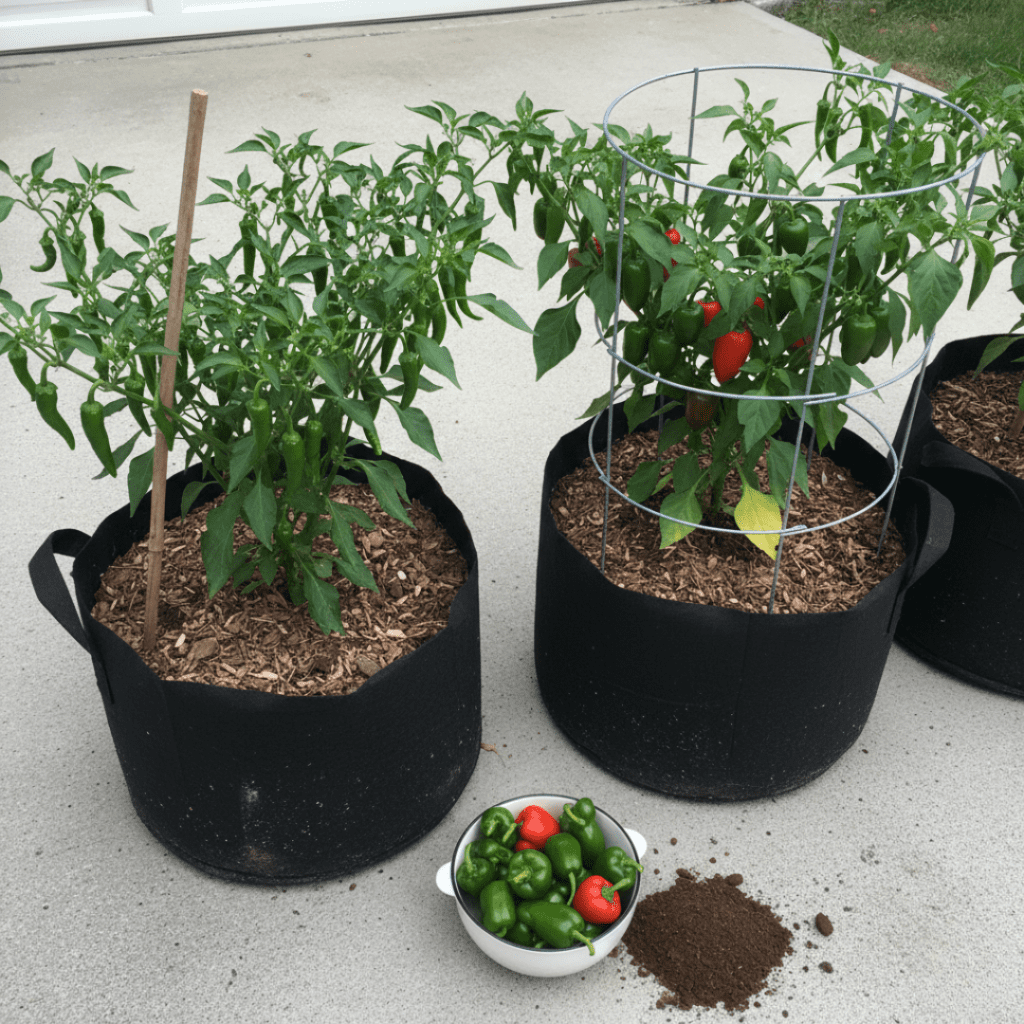
For edibles, peppers and okra are superstars in Zone 8–9 containers. Both of them genuinely love temperatures that most vegetables find punishing. I grow ‘Shishito’ and ‘Jalapeño’ peppers in 5-gallon fabric grow bags every summer, and they produce so heavily by August that I’m begging neighbors to take some off my hands. Cherry tomatoes, especially heat-tolerant varieties like ‘Sweet Million’ or ‘Sun Gold,’ do beautifully in large containers of 18 inches or wider, though even they benefit from afternoon shade once temperatures consistently exceed 95°F. Herbs like rosemary, thyme, oregano, and basil are built for this climate. Rosemary, in particular, is practically indestructible in Zone 8–9 heat and will come back year after year as a perennial in containers as long as you don’t overwater it.
For shadier spots on the patio, and I hope you have a few, coleus has become one of my must-have container plants since the newer sun-tolerant varieties came along. The foliage colors are stunning, they fill out a pot beautifully, and they handle heat without complaint. Pair them with foxtail fern for texture and trailing sweet potato vine in chartreuse or deep purple for a container that looks magazine-worthy without requiring magazine-level maintenance. For those shady corners, caladiums give you bold tropical color with almost no effort. I plant the bulbs 2 inches deep in mid-spring, and by June they’re gorgeous. They die back in fall, but the bulbs store easily in a paper bag until next year.
The Soil Mix Secret Most People Get Wrong
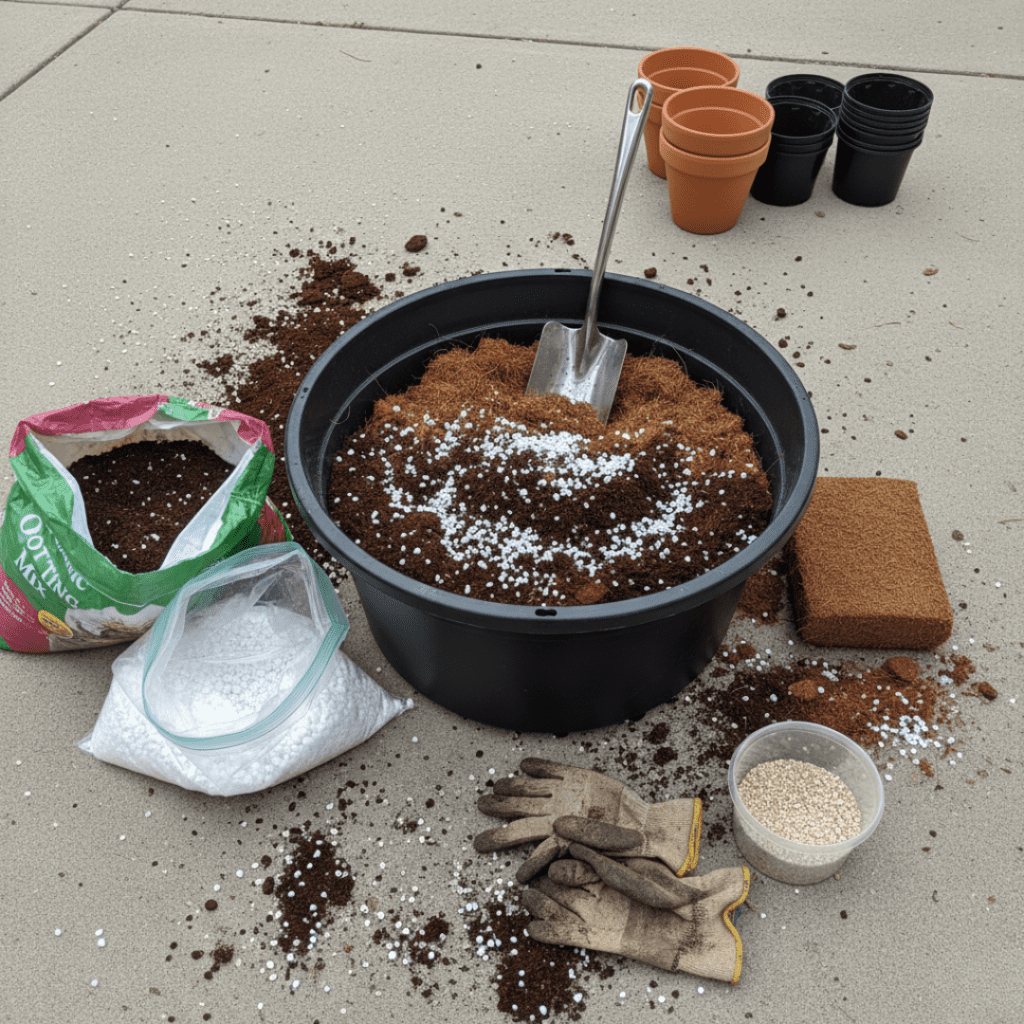
Standard potting mix from the garden center is designed to work everywhere, which means it’s not really optimized for anywhere. In Zone 8–9 summers, I amend every bag of potting mix I buy before it goes into a container. My formula is simple and I’ve been using it for over twenty years: for every 3 parts of quality potting mix, I add 1 part perlite for drainage and aeration, and 1 part coconut coir for moisture retention. The coir is the key ingredient most people miss. It holds water much longer than peat moss, which tends to become hydrophobic when it dries out. Once peat-based soil dries completely in summer heat, water just runs down the sides of the pot and out the drainage hole without ever reaching the roots. Coconut coir doesn’t have that problem.
I also mix in a slow-release granular fertilizer at planting time, typically a balanced 14-14-14 formula at the rate listed on the package. This feeds the plant steadily for about three months, which covers most of the intense growing season. After that initial charge runs out, I switch to a diluted liquid fertilizer applied every two weeks. One important note: avoid fertilizing when temperatures are above 95°F. Fertilizer stimulates new growth, and new growth during extreme heat stresses a plant that’s already working hard just to stay alive. I’ve learned to fertilize in the early morning and skip it entirely during heat waves. Your plants will thank you by not burning up.
Putting It All Together: A Seasonal Timeline
In Zone 8 and 9, I think of my container garden in three phases. The first is the spring setup, from mid-February through April. This is when I plant warm-season crops and flowers while temperatures are still comfortable. I get my tomatoes, peppers, and herbs into containers by mid-March in Zone 9, or early April in Zone 8, so they have a good 6 to 8 weeks of pleasant weather to establish strong root systems before the heat hammer drops. Starting early gives roots time to fill the pot before they’re asked to support a plant through 95°F afternoons.
The second phase is the summer survival period, from June through September. This is when placement, watering, and plant selection matter most. I shift containers to their summer positions with afternoon shade, activate the drip system, apply mulch to every pot, and stop fertilizing during the very worst heat spells. I also deadhead flowers regularly, because allowing seed production diverts energy the plant needs for staying alive. Any container that looks like it’s struggling gets moved to a shadier spot for a week of recovery. Don’t be afraid to shuffle things around.
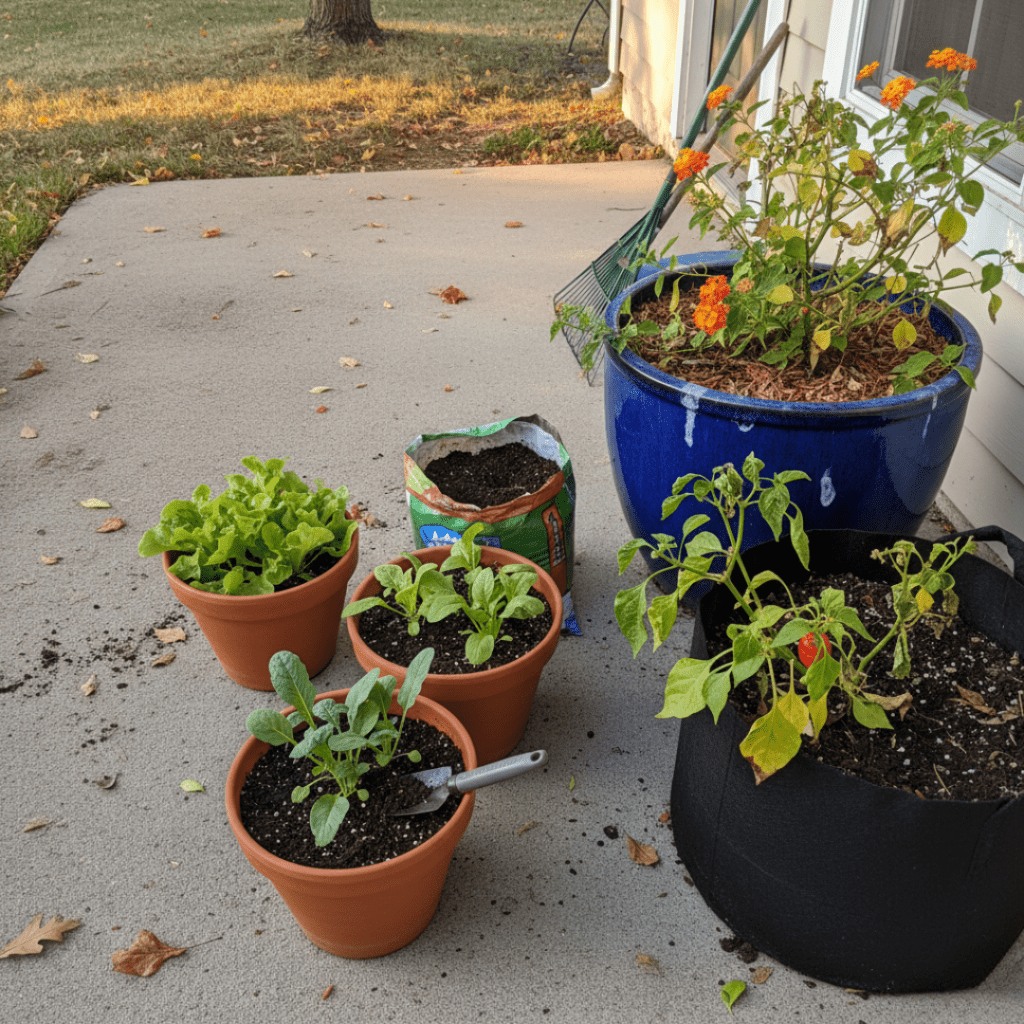
The third phase is the fall revival, from October through November, which is honestly my favorite time. As temperatures drop back to the 70s and 80s, container gardens come roaring back to life. I replant any gaps with cool-season crops like lettuce, spinach, and kale, refresh the potting mix with a top dressing of compost, and resume regular fertilizing. In Zones 8 and 9, fall is really a second spring for container gardening, and the plants that survived summer will reward you with their best performance of the year. After three decades of growing in this climate, I look forward to that October renaissance more than almost anything else in the garden.
Quick-Fire FAQ
Q: How big should containers be for Zone 8–9 summer gardening?
A: Go as large as your space allows, with 14 inches diameter as the absolute minimum. Bigger pots hold more soil, which stays cooler and retains moisture longer. I rarely plant anything in a pot smaller than 16 inches for summer.
Q: Can I use self-watering containers in hot climates?
A: Absolutely, and I highly recommend them. Self-watering pots with a built-in reservoir give roots a consistent moisture supply and can reduce your watering chores by half. Just check that the reservoir doesn’t go empty during extreme heat.
Q: Should I bring containers inside during heat waves?
A: Most heat-tolerant plants do fine staying outside if they have afternoon shade and consistent water. I only move containers indoors if temperatures exceed 110°F or if a plant is showing signs of severe heat stress like wilting that doesn’t recover overnight.
Q: Is it true that terracotta pots are bad for hot climates?
A: Unglazed terracotta dries out very quickly in summer heat because it’s porous and wicks moisture right through the walls. Glazed ceramic is a much better choice, as the glaze seals the surface and keeps moisture where your plants need it.
— Grandma Maggie
每天都在战争,希望2026和平.