
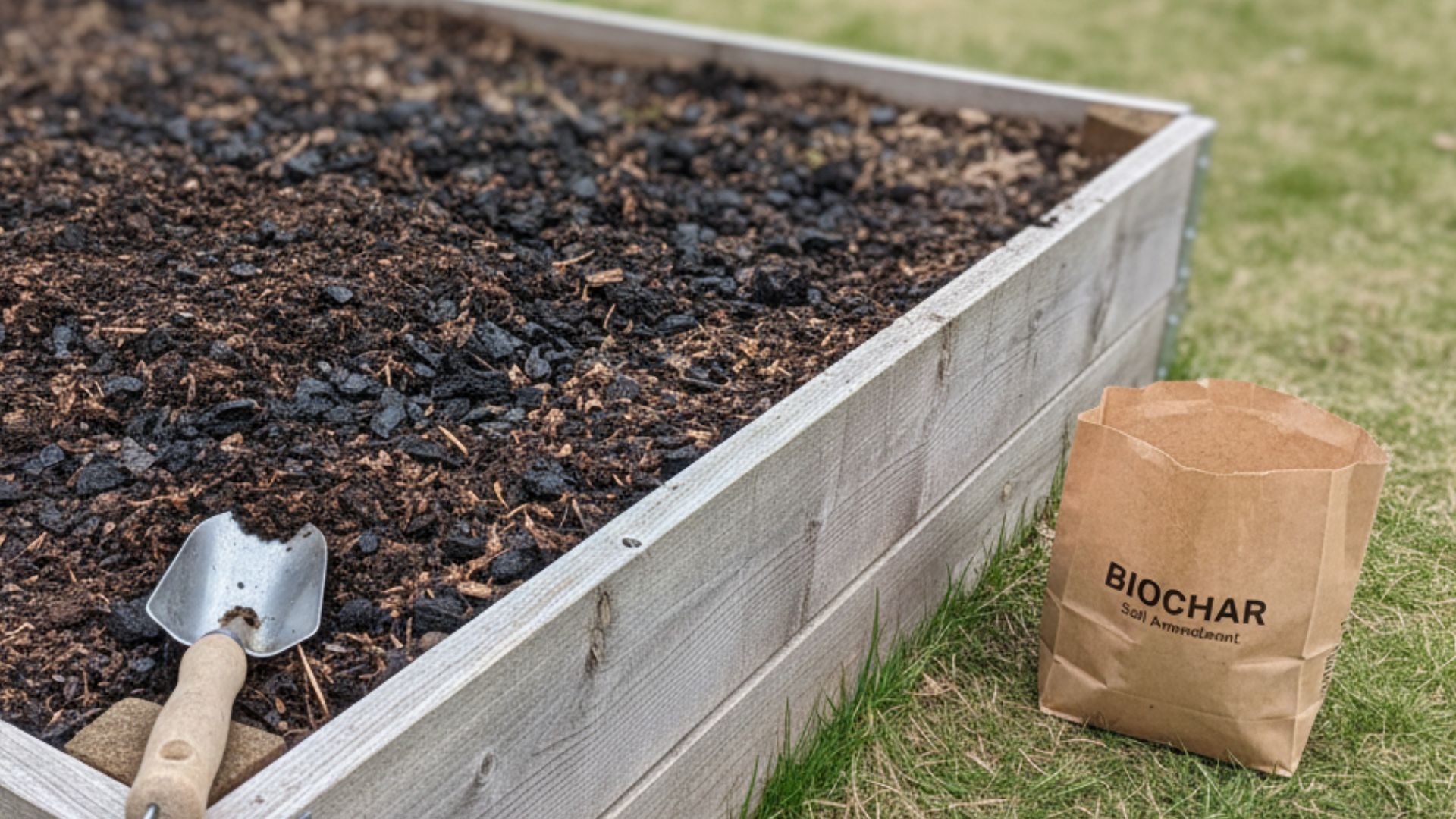
I first stumbled across biochar about fifteen years ago, long before it became a buzzword in gardening circles. A friend of mine who studied soil science handed me a bag of what looked like crushed charcoal and told me to mix it into my raised beds. I’ll admit, I was skeptical — I’d been gardening for decades by that point and thought I’d seen every soil amendment there was. But within one season, the difference in my tomato and pepper beds was hard to ignore. The soil held moisture longer between waterings, earthworms seemed to multiply overnight, and plants just looked healthier. Since then, biochar has become a permanent part of how I build soil, and I want to share what I’ve learned — including the one mistake that can actually set your garden back if you’re not careful. Let me walk you through everything you need to know.
What Exactly Is Biochar and Why Should You Care?
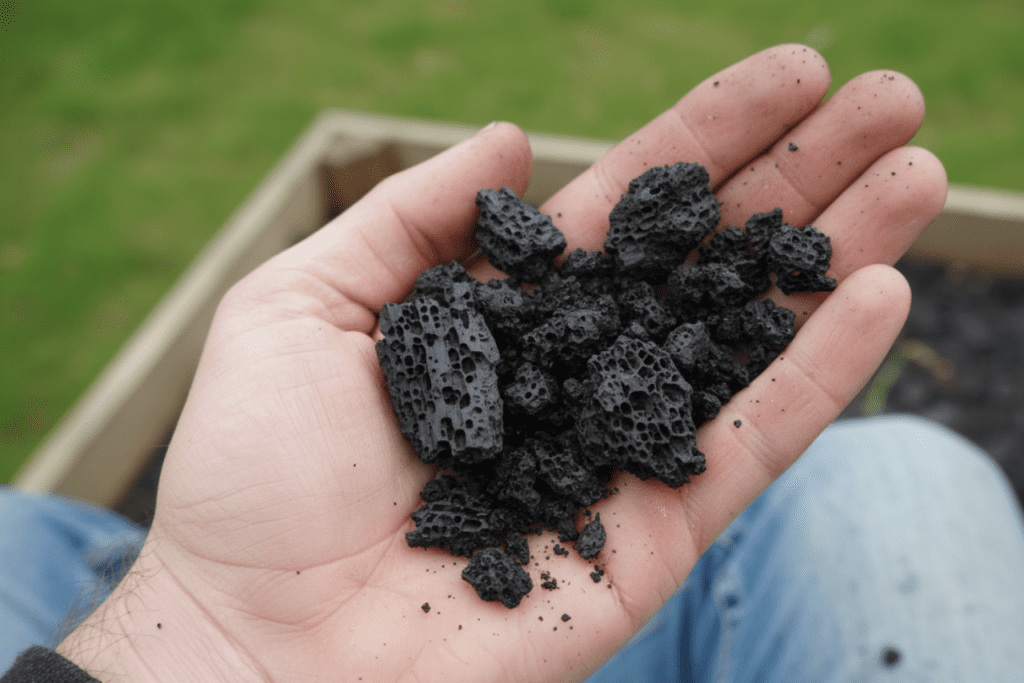


Biochar is organic material — wood, crop waste, coconut shells, even nut husks — that has been heated to very high temperatures in an environment with little or no oxygen, a process called pyrolysis. It’s not the same thing as the charcoal briquettes you use at a barbecue, which often contain binders and chemical additives you absolutely do not want near your vegetables. True biochar is pure carbon with an incredibly porous structure, riddled with tiny tunnels and chambers at a microscopic level. Think of it as a vast apartment building for soil microbes. Those pores hold water, trap nutrients, and provide sheltered surfaces where beneficial bacteria and fungi can establish thriving colonies.
This isn’t some modern invention, either. Archaeologists studying the Amazon basin discovered patches of remarkably dark, fertile soil called Terra Preta — Portuguese for “black earth” — that indigenous peoples created hundreds, possibly thousands, of years ago by incorporating charred organic material into otherwise poor tropical soils. Those patches are still fertile today. That’s the part that captured my imagination: you’re not just improving your soil for this season or next year. You’re improving it for your children and grandchildren. In my experience, once you incorporate biochar properly, you notice measurable improvements in water retention — studies suggest 15 to 20 percent — and a visible increase in microbial activity within one to two seasons.
The One Step You Must Not Skip: Charging Your Biochar
Here is the single most important thing I can tell you about biochar, and it’s the mistake I see new users make constantly: never add raw, uncharged biochar straight into your garden soil. I cannot stress this enough. Fresh biochar is like a dry sponge with an enormous surface area, and it is hungry. Those millions of tiny pores will immediately start absorbing nutrients and moisture from the surrounding soil, pulling them away from your plants’ roots. I’ve seen gardeners add a generous layer of fresh biochar to their beds in spring and then wonder why their seedlings stalled out or turned yellow within weeks. The biochar was literally stealing their lunch.
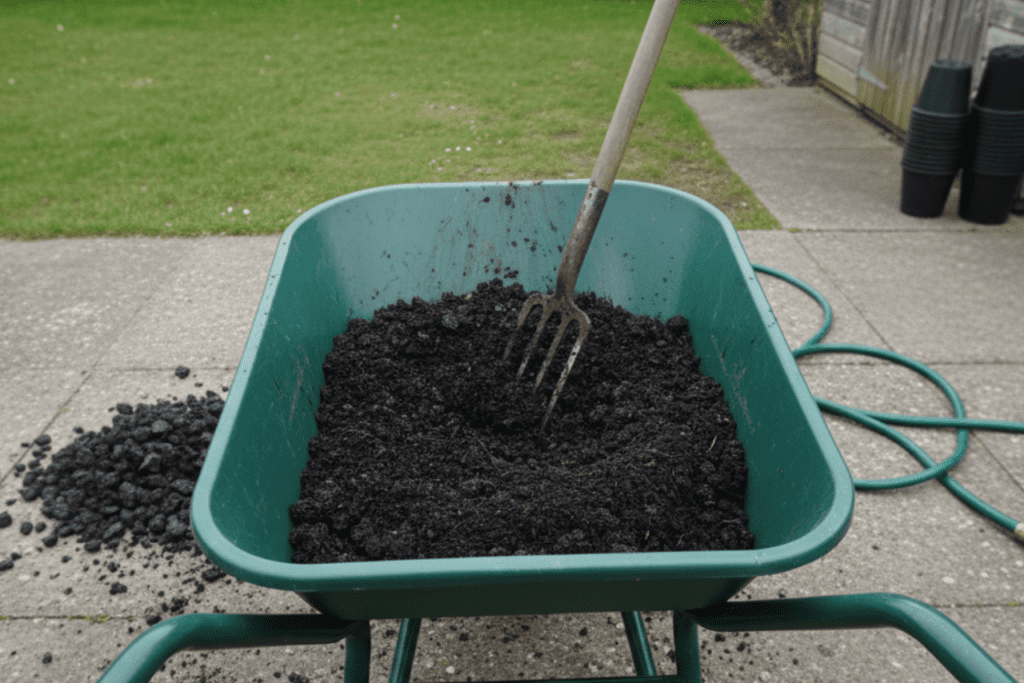
Charging — sometimes called inoculating or activating — is the process of pre-loading those pores with nutrients and beneficial microbes before the biochar goes anywhere near your garden. The simplest method I use is to mix equal parts biochar and finished compost in a large bin or wheelbarrow, wet the mixture thoroughly until it’s about as damp as a wrung-out sponge, and let it sit for two to four weeks, turning it every few days. The compost microbes colonise the biochar’s pore structure, and nutrients soak in and are held in place. You can also soak biochar in diluted liquid fertiliser — fish emulsion works beautifully at a ratio of about two tablespoons per gallon of water — for 24 to 48 hours as a faster alternative. By the time you work it into your beds, it arrives already loaded with life and nutrition, ready to give rather than take.
How to Apply Biochar in Your Garden
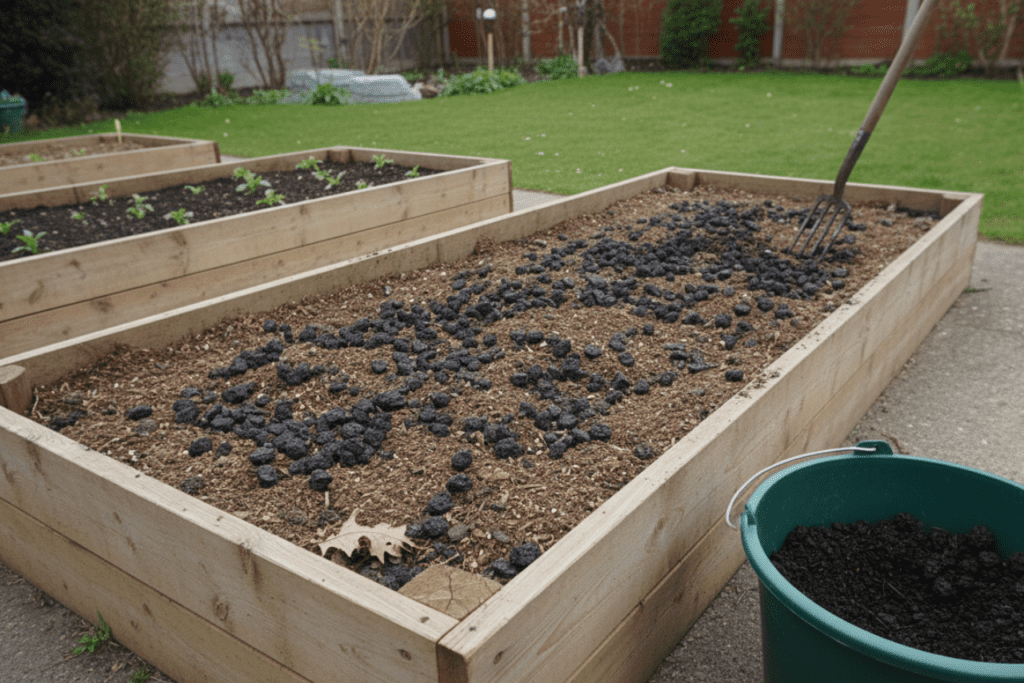
Once your biochar is properly charged, application is straightforward. The widely recommended rate is 5 to 10 percent by volume, mixed into the top six to eight inches of soil. In practical terms, for a standard 4-by-8-foot raised bed that’s 10 inches deep, you’d want roughly three to six gallons of charged biochar worked in evenly. I usually aim for the middle of that range — about five percent — for my first application and add more the following season if I feel the soil could benefit. There’s no real risk of overdoing it at these rates, but biochar isn’t cheap, so there’s no sense in wasting it either.
I prefer to apply biochar in autumn or very early spring, when I’m already turning beds and adding compost. I scatter the charged biochar across the surface and then fork it in thoroughly, making sure it’s well distributed rather than concentrated in clumps. You want it spread throughout the root zone, not sitting in pockets. For established perennial beds where digging isn’t practical, I top-dress with a thin half-inch layer of charged biochar mixed into compost and let earthworms and rain do the incorporating over time. It’s slower, but after two or three seasons of this approach, my perennial borders have noticeably better drainage and moisture retention. For container gardens, I mix charged biochar into my potting blend at about 10 percent by volume, and I’ve found I can reduce watering frequency by a good day or two between soakings, which is a real gift in the heat of July.
Where to Get Biochar — And Can You Make Your Own?
Biochar is increasingly available at garden centres and online. Look for products labelled specifically as garden-grade or horticultural biochar and check for certification from the International Biochar Initiative, which sets quality standards. Prices vary, but expect to pay somewhere around fifteen to thirty dollars for a bag that will treat one or two raised beds. Wakefield Biochar and Pacific Biochar are two brands I’ve had good results with, though regional options are popping up all the time as demand grows. Avoid using barbecue charcoal, lump charcoal from hardware stores, or anything with additives — these are not the same product and can introduce chemicals you don’t want in your soil.
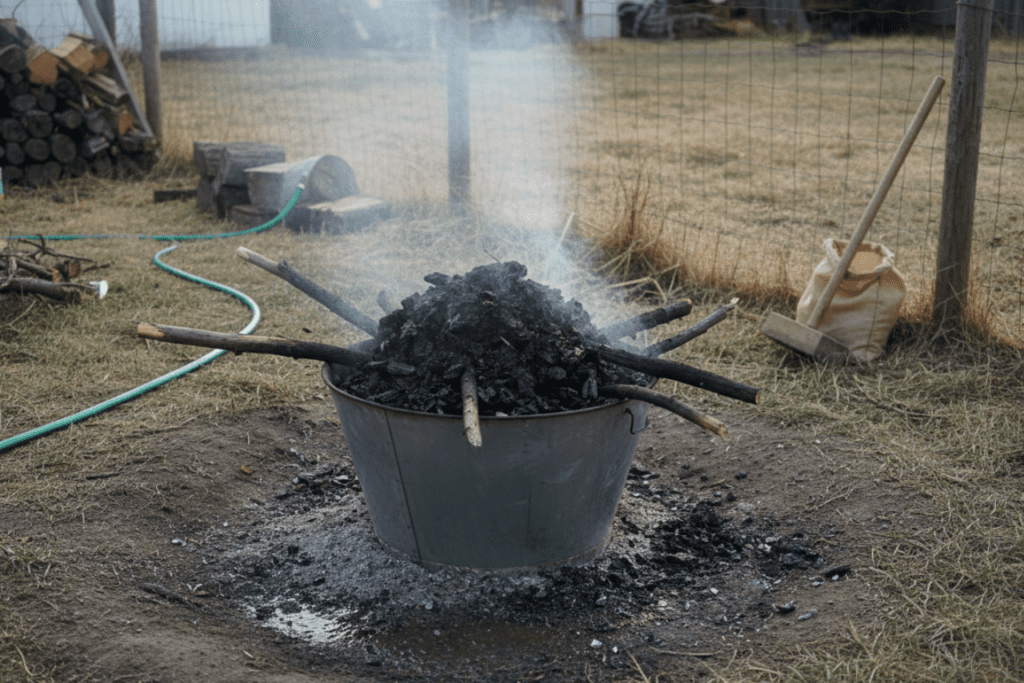
You can make biochar at home, though I’ll be honest — it takes some effort and a safe outdoor space. The basic method involves burning dry wood or woody garden waste in a top-lit updraft stove or a simple cone-shaped pit, which restricts oxygen and chars the material rather than reducing it to ash. I’ve done this with pruning waste and fallen branches, and the results work perfectly well. The key is to quench the fire with water once the material is fully charred but before it turns to white ash. You’ll know it’s right when it’s black all the way through, lightweight, and makes a slight ringing sound when pieces tap together. After quenching, crush it to roughly pea-sized pieces — I use a burlap sack and a garden tamper — and then charge it before use, exactly as described above. If making your own feels like too much trouble, buying it is perfectly fine. The soil benefits are identical.
What to Expect: A Realistic Timeline
Patience matters with biochar, and I want to set honest expectations. In the first season after application, the changes are subtle. You may notice soil feels slightly looser and holds moisture a touch longer. Plants might look marginally healthier, but you probably won’t see dramatic differences right away. By the second season, the microbial communities within the biochar have had time to mature and expand, and that’s when improvements become genuinely noticeable — better root development, improved water retention during dry spells, and stronger overall plant vigor. After two to three years, my beds that received biochar consistently outperform those that didn’t, and I’ve reduced my watering in amended beds by roughly a third during peak summer.
The beautiful thing about biochar is that it doesn’t break down the way compost or other organic amendments do. Compost is wonderful — I add it every single year — but it decomposes within a season or two and needs constant replenishing. Biochar’s carbon structure is so stable that it persists in soil for hundreds of years. That initial investment of time and money keeps paying dividends season after season without reapplication. I think of it as building the permanent infrastructure of healthy soil, while compost is the annual maintenance. Together, they’re a powerful combination. After fifteen years of using both, the soil in my oldest beds is dark, crumbly, alive with worms, and holds moisture like nothing else on my property. It’s the kind of soil every gardener dreams about, and biochar played a central role in getting there.
Quick-Fire FAQ
Q: Can biochar harm my plants if I use too much?
A: At the recommended 5–10% by volume, biochar is very safe. The real risk isn’t overuse — it’s using uncharged biochar, which temporarily pulls nutrients from the soil and can stunt young plants until it equilibrates.
Q: Is biochar the same as activated charcoal or barbecue charcoal?
A: No. Barbecue charcoal and briquettes often contain binders, lighter fluid, or other additives that don’t belong in garden soil. Activated charcoal is processed differently for filtration purposes. Always use biochar specifically produced for horticultural or agricultural use.
Q: How soon will I see results after adding biochar to my beds?
A: Subtle improvements in moisture retention can appear within weeks, but the most noticeable gains in plant health and microbial activity typically show up in the second growing season after application.
Q: Does biochar change soil pH?
A: Most biochar is slightly alkaline, so it can nudge pH upward by a small amount. If you garden in already alkaline soil, test your pH before and after application and adjust with sulphur if needed. For acidic soils, this gentle liming effect is often a welcome bonus.
— Grandma Maggie