
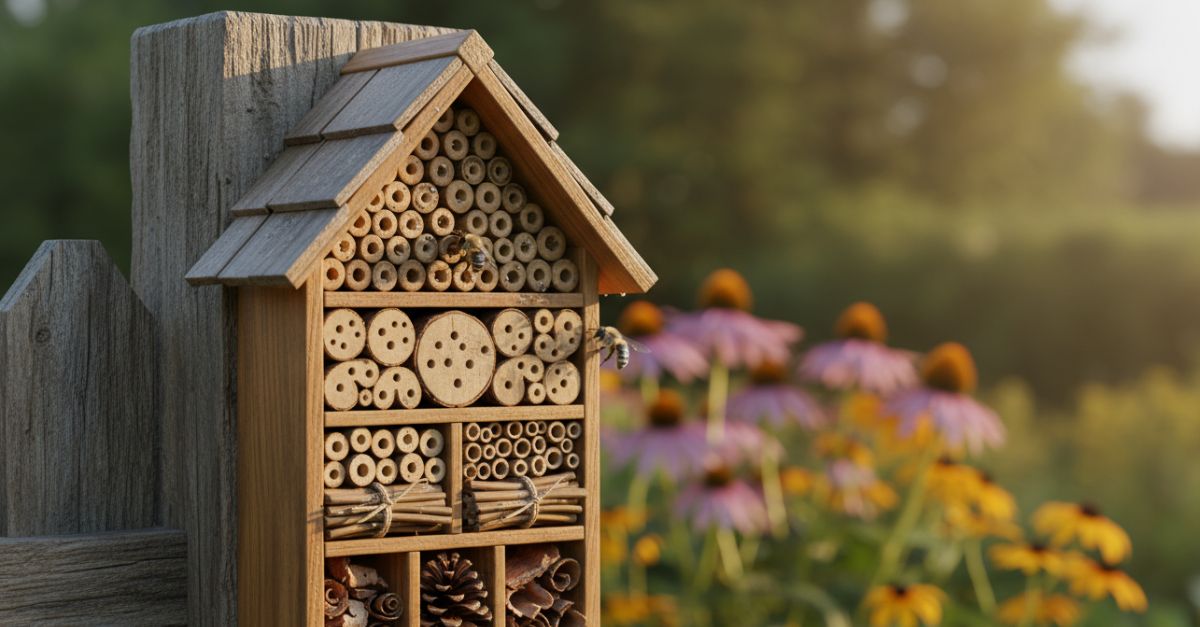
I love how a small wooden box can turn into a humming, buzzing neighborhood. An insect hotel gives beneficial insects a safe place to live, nest, and thrive. With a few simple natural materials you’ll support pollinators and garden health all year long.
Why Build One Now
Building an insect hotel is one of the friendliest, most rewarding projects you can do in the garden. Zones 4-9 are wonderfully adaptable for this — and you can tailor materials to your local flora. I always tell friends that an insect hotel is less about looking perfect and more about offering diverse nooks and crannies for different species.
What Your Hotel Should Include (and Why)
Bamboo Tubes and Drilled Logs
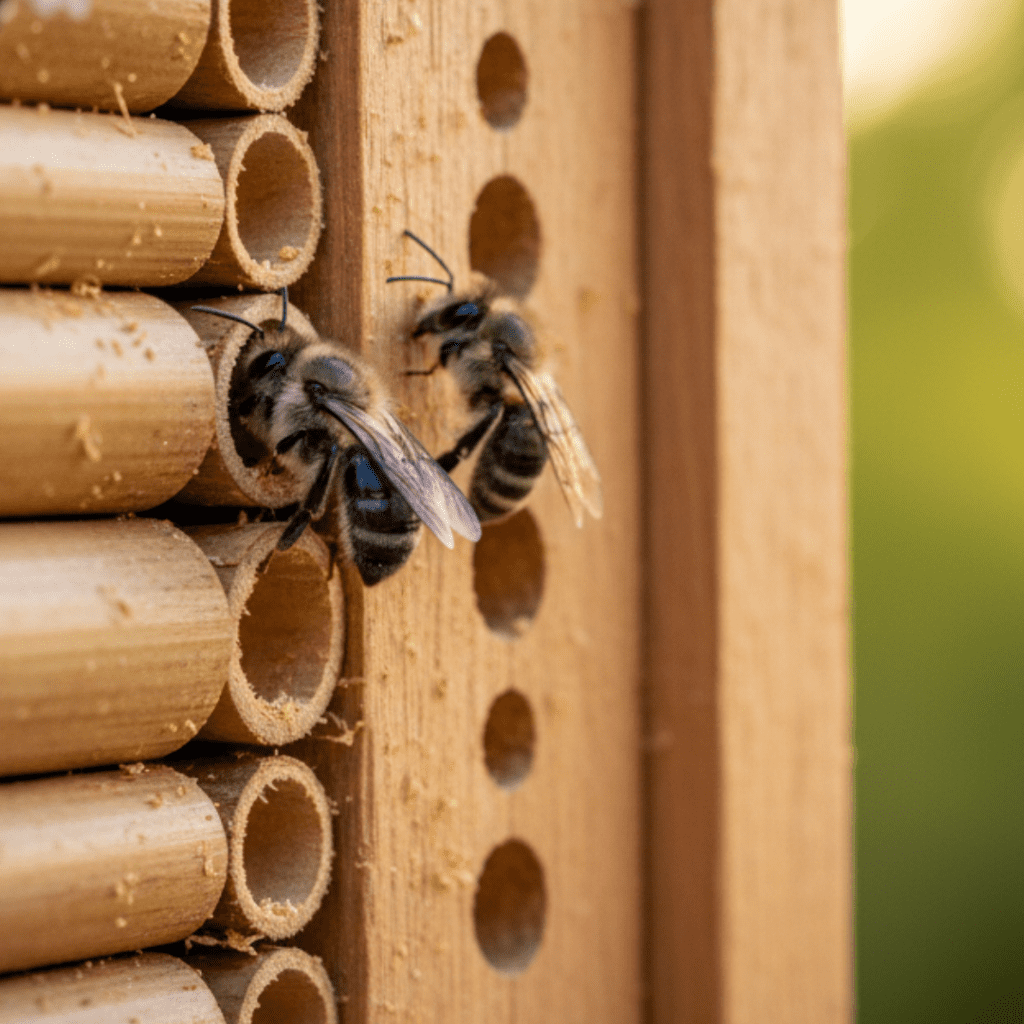
These are prime nesting sites for mason bees and leafcutter bees. Use assorted tube diameters (4-10 mm) and make sure drilled holes end blind (don’t drill through). I keep mine dry and slightly angled so rain won’t pool inside.
Pinecones and Bark

Perfect winter shelter for ladybugs and small beetles. Tuck pinecones into a snug compartment so ladybugs can hibernate safely. A friend once told me she found whole families of ladybugs the next spring — it felt like finding hidden treasure.
Straw Bundles and Reeds
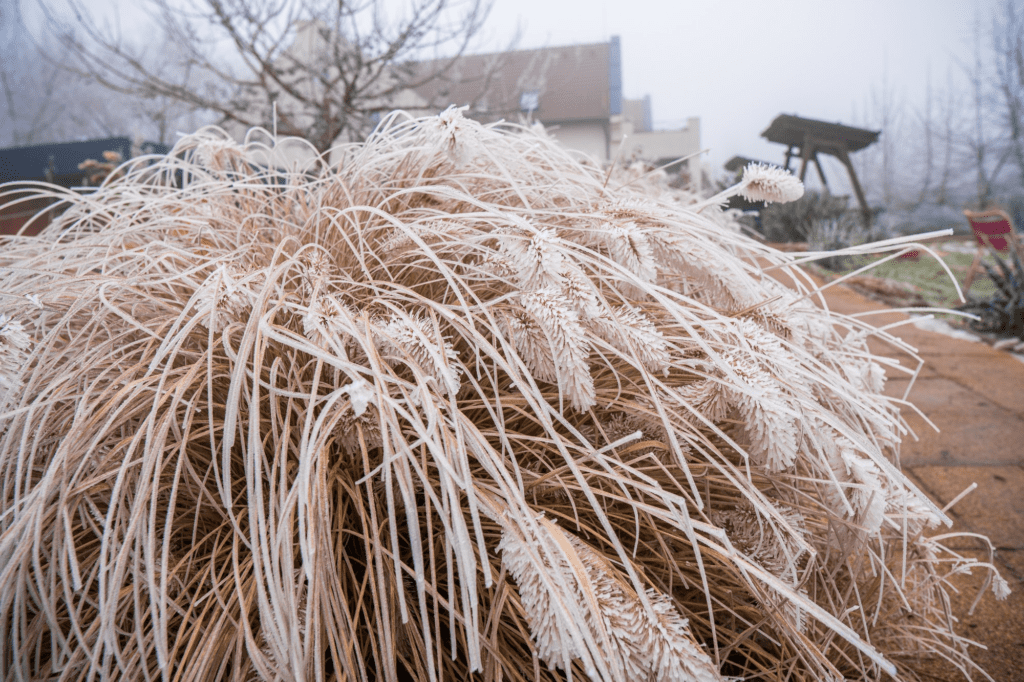
Lacewings and tiny beneficial predators love the cozy straws. Bundle them tightly and tie with twine so they don’t flop out after a storm. They’re an inexpensive way to invite pest-eating allies.
Leaf Litter and Sticks

The simplest materials are often the best. Leaf litter and small sticks host beetles and fireflies and make a soft winter bed for many insects. Keep a small dry pile in one compartment and avoid using chemically treated leaves.
Native Flowers Nearby
Your hotel will be lonely without food. Plant native nectar and host plants like milkweed, purple coneflower (Echinacea), black-eyed Susan, and goldenrod to keep pollinators well-fed through the seasons. These plants also help attract and sustain offspring of many beneficial species.
A Simple Step-by-Step Build (No Fancy Tools Needed)
- Choose your frame: Repurpose a small wooden crate, pallet cubby, or build a simple box with a pitched roof. The roof keeps materials dry and helps your hotel last.
- Divide into compartments: Use simple dividers or bricks to create separate habitats for nesting, overwintering, and hibernating insects. Diversity matters.
- Fill wisely: Place drilled logs and bamboo in a sheltered compartment, pack straw and reeds in another, then tuck pinecones and bark into tighter spaces. Reserve a loose area for leaf litter and twigs.
- Secure it: Fasten a backboard and use wire mesh sparingly (only if needed) to keep materials from falling out but avoid covering entrances. Leave clear access for insects.
- Mount thoughtfully: Place your hotel 3-6 feet off the ground on a post, fence, or tree. Face it toward morning sun (east or southeast) and give a little roof overhang for protection from heavy rain.
Placement, Maintenance, and Seasonal Care
Location Matters
Bright, sheltered spots with nearby nectar plants are ideal. Too much shade keeps things damp; too much direct midday sun can bake occupants. I aim for morning sun and afternoon shade where possible.
Keep It Stable
Secure your hotel so wind won’t jostle materials. A gentle tilt downward helps rain run away from nesting tubes.
Minimal Maintenance
Check in spring for moldy or waterlogged material and replace only what’s necessary. Replace bamboo tubes or split logs every few years if you see serious fungal growth, but many parts — pinecones, bark, and leaves — can stay put.
Cleanliness with Care
Avoid over-sterilizing. Beneficial insects need diversity, and many natural enemies of pests overwinter here. If a section seems inhabited by pests, replace that compartment rather than disassemble the whole structure.
What to Plant Nearby (My Favourites)
1. Milkweed: Essential for Monarchs
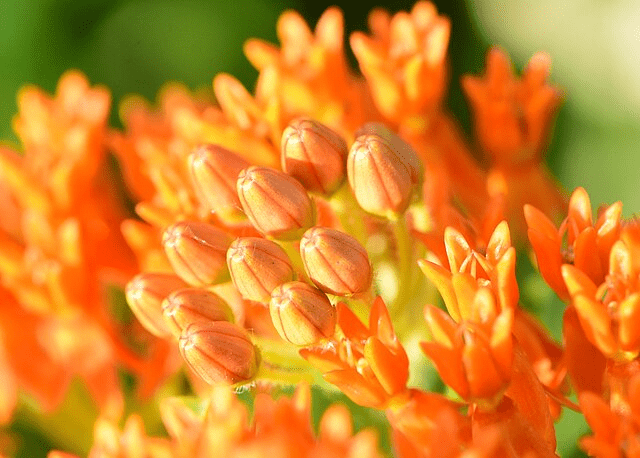


Essential for monarch caterpillars and a consistent nectar source. Plant a cluster rather than single plants to make a reliable buffet.
2. Purple Coneflower: Long-Lasting Nectar
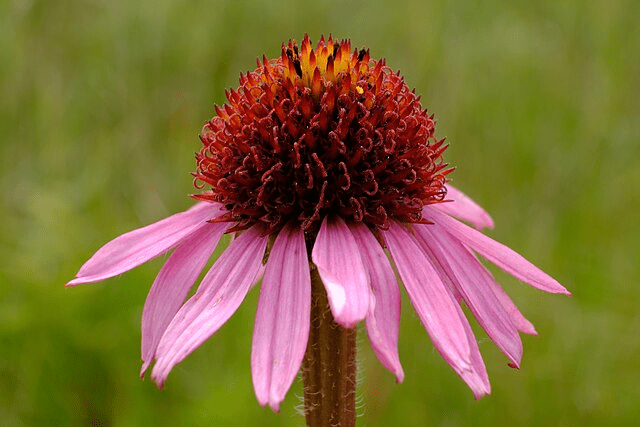
Long-lasting nectar for bees and butterflies, and seedheads that feed birds in winter.
3. Black-Eyed Susan: Cheerful Native Magnet
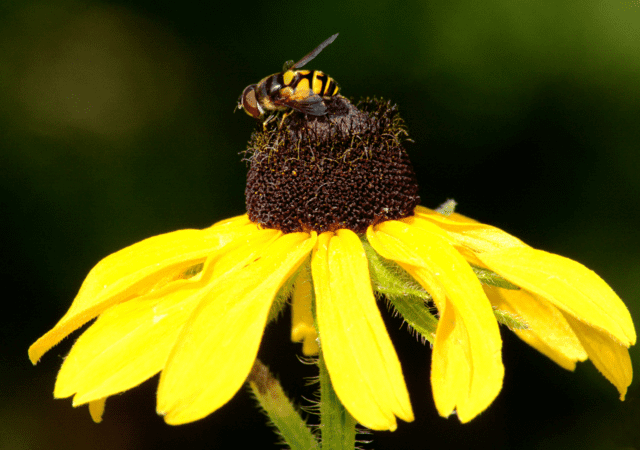
Cheerful, drought-tolerant, and a great magnet for native bees.
4. Goldenrod: Late-Season Powerhouse
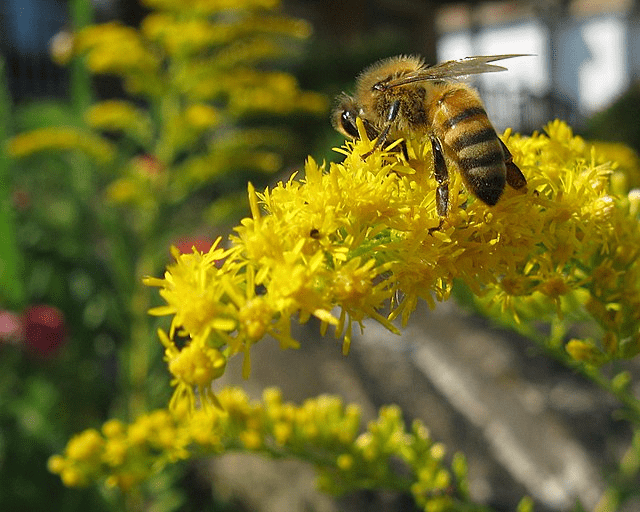
Often misunderstood, goldenrod is a late-season nectar powerhouse for pollinators and migrating butterflies.
These plants form a seasonal relay of nectar: spring bloomers start the party, summer perennials keep it going, and goldenrod and asters carry insects through fall.
A Few Troubleshooting Tips I’ve Learned
- If holes are occupied by parasites or you notice a weird smell, remove and replace that tube and monitor. Nature is messy; moderation is key.
- Avoid treated lumber and pesticide drift. Your hotel should be a chemical-free refuge.
- Match local needs: if you live in a drier area, favor more reeds and bark over moisture-loving materials, and choose native plants suited to your microclimate.
The Bigger Picture: Biodiversity by Design
An insect hotel isn’t just a cute garden accent — it’s habitat restoration at the backyard scale. You’re creating nesting and wintering sites lost to tidy yards and development. Over time, you’ll see more pollinators, fewer pest outbreaks, and a livelier evening chorus of insects.
My favorite part is watching a child return to the hotel with quiet wonder. “Look, Grandma Maggie, the bees found homes!” I always tell them we built it for them as much as for us.
Quick-Fire FAQ
Q: Do insect hotels really help pollinators?
A: Yes — they provide crucial nesting and overwintering sites that many modern landscapes lack, boosting local pollinator populations.
Q: How high should I mount the hotel?
A: Mount between 3-6 feet off the ground, facing east or southeast for morning sun and protection from prevailing winds.
Q: Can I use synthetic materials?
A: Natural materials are best; avoid treated wood and plastic. Bamboo, untreated logs, straw, and bark are preferred.
Q: Do I need to clean the hotel every year?
A: No — only replace soggy or moldy materials as needed. Overcleaning removes beneficial occupants and their overwintering shelters.
Q: What plants should I start with nearby?
A: Begin with milkweed, purple coneflower, black-eyed Susan, and goldenrod to create a reliable nectar corridor.
— Grandma Maggie