
Every garden situation presents unique soil challenges, and I’ve worked with just about all of them over the decades—from rock-hard clay that rang like concrete when struck with a shovel to sandy ground that couldn’t hold water for more than an hour. The wonderful truth is that almost any soil can be transformed into productive growing space with the right approach. You just need to understand what you’re working with and match your soil-building strategy to your specific situation. Let me walk you through the most common scenarios and show you exactly how to create thriving soil in each one.
Starting From Scratch: Building New Garden Beds
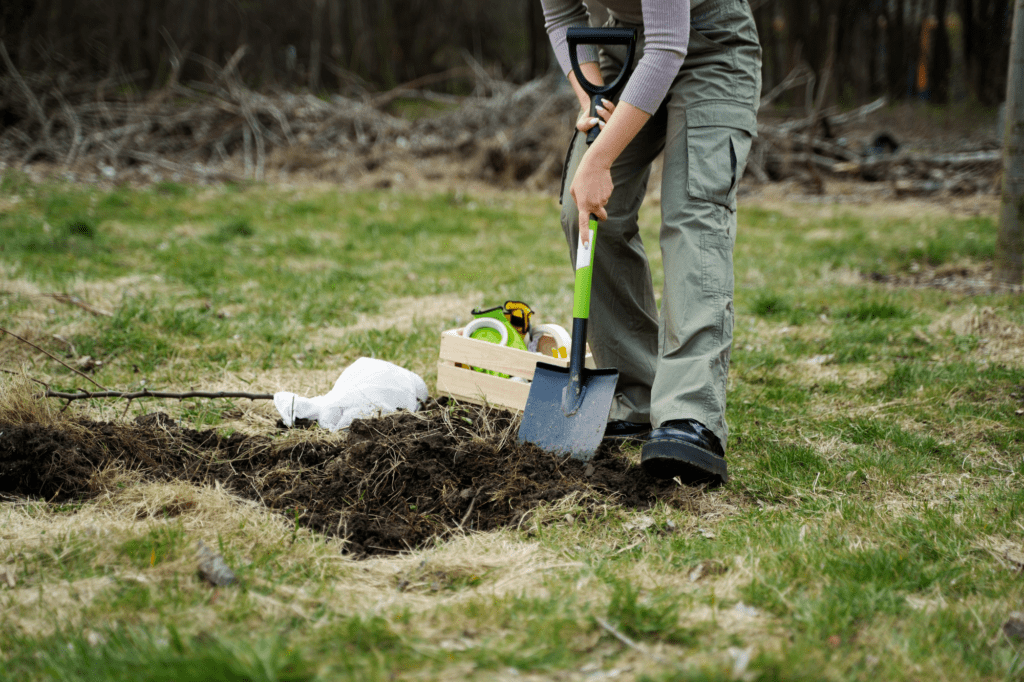


When you’re converting lawn or unused space into garden beds, proper preparation makes the difference between struggling plants and abundant harvests. I always start by removing the sod—you can use a flat spade to cut it into manageable squares, then lift and shake out the soil before composting the grass or using it to fill low spots elsewhere in the yard.
Once the sod is gone, spread four to six inches of finished compost across the entire bed. This might seem like a lot, but remember you’re building the foundation for years of productive growing. If you have a soil test—and I strongly recommend getting one for new beds—add specific amendments at this stage. Low phosphorus? Work in bone meal at three to four pounds per 100 square feet. Need nitrogen? Add blood meal or alfalfa meal. Acidic soil requiring lime? Spread it now according to test recommendations.
Now comes the physical work: incorporating everything into the top eight inches. I use a digging fork rather than a rototiller because it preserves soil structure better and doesn’t create that compacted layer deep down that tillers often cause. Push the fork in straight, rock it back to lift and loosen, then move back six inches and repeat. Work the compost and amendments thoroughly into the existing soil—you want them mixed, not layered.
Here’s the step many gardeners skip: letting the bed settle for two weeks before planting. Freshly worked soil is fluffy and full of air pockets. If you plant immediately, these pockets collapse as you water, leaving plant roots suspended or buried too deeply. Those two weeks let everything settle naturally. Water the bed once or twice during this period to speed the process. When settling is complete, rake the surface smooth and you’re ready to plant into soil that will support strong growth from day one.
Taming Heavy Clay: The Long Game That Pays Off
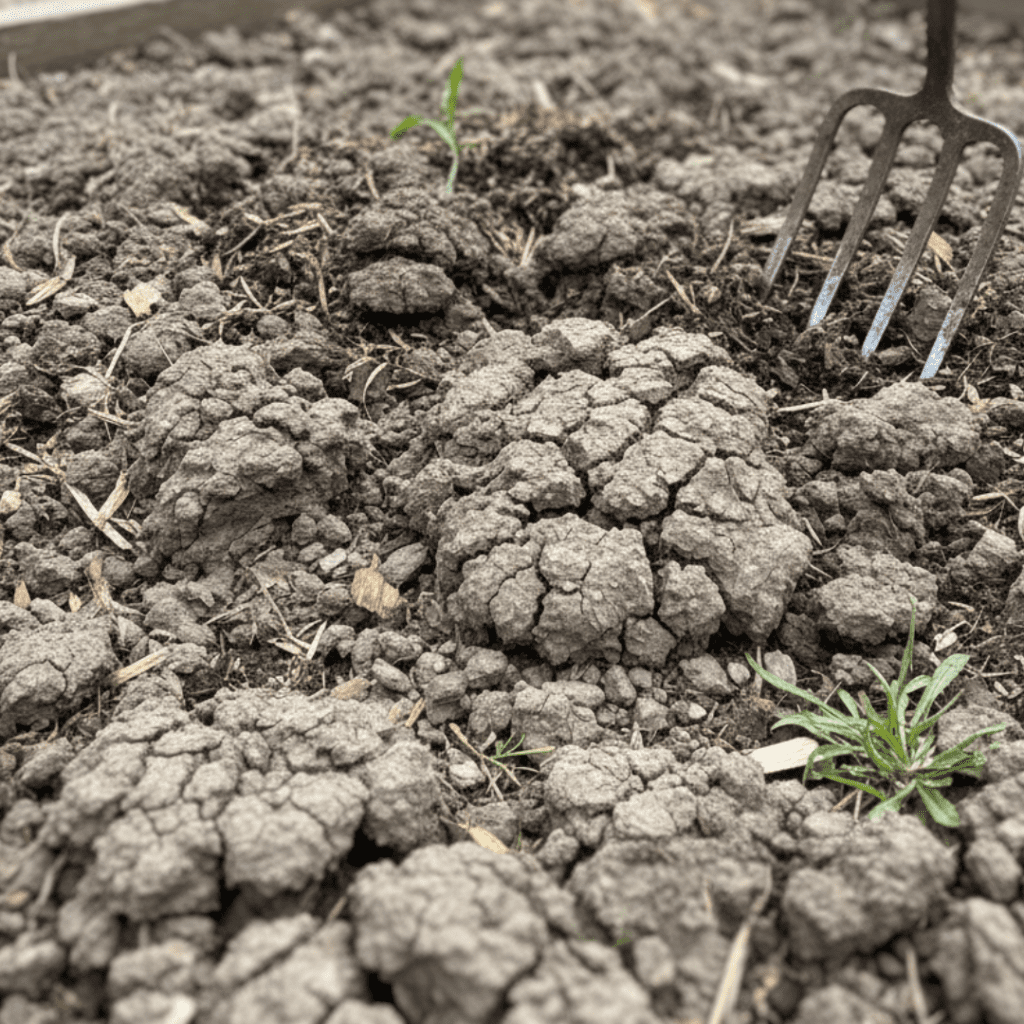
Clay soil breaks hearts and shovels in equal measure. When wet, it’s slippery and impossible to work. When dry, it cracks into concrete-hard chunks. But clay holds nutrients beautifully and, once improved, produces some of the most fertile garden soil imaginable. I know because I’ve spent thirty years transforming clay beds that started as parking-lot-hard into the rich, productive soil I have today.
The secret is adding materials that change the physical structure. Compost is essential—spread three to four inches and work it into the top six to eight inches every single season for at least three years. Don’t get discouraged by slow initial progress. Clay transformation is gradual, but every addition of organic matter creates improvement.
Coarse builder’s sand or perlite helps with drainage. Work in a one-inch layer along with your compost. Don’t use fine play sand—it actually makes clay worse by filling spaces between particles. You want gritty, sharp sand that keeps drainage channels open.
Gypsum is my secret weapon for clay. Unlike lime, which changes pH, gypsum breaks up clay particles chemically without altering acidity or alkalinity. Spread five pounds per 100 square feet in fall, water it in, and let winter rains and freeze-thaw cycles work it through the soil. The improvement is noticeable by spring—soil that was sticky and clumpy becomes more granular and workable.
Critical warning about clay: avoid over-tilling. Every time you work wet clay, you destroy soil structure and create hardpan—that impenetrable layer a few inches down that blocks roots and water. Only work clay when it’s barely moist, never when it’s soggy or bone dry. Squeeze a handful; if water drips out, it’s too wet. If it won’t hold together at all, it’s too dry. Perfect clay working moisture forms a ball that breaks apart when you poke it.
I’ve learned to work with clay’s strengths while minimizing its challenges. I plant in spring when soil is naturally moist and workable. I add compost every fall when rain softens the ground. I mulch heavily to keep moisture even—clay’s biggest problem is the wet-to-dry extremes that create that rock-hard surface. Steady moisture from mulch keeps clay in that perfect, workable middle zone.
Managing Sandy Soil: Constant Feeding for Constant Drainage

Sandy soil is the opposite problem from clay—it drains so fast that water runs straight through, carrying nutrients away before plants can use them. I’ve gardened in beach sand that needed watering twice daily in summer. Everything I added seemed to disappear into that thirsty ground within weeks. But sandy soil has advantages: it warms quickly in spring, never gets waterlogged, and is easy to work year-round.
The solution is massive amounts of organic matter. Where clay needs compost annually, sand needs it twice yearly—three to four inches worked in each time. I add compost in early spring before planting and again in fall after harvest. This seems excessive until you realize you’re not just feeding plants, you’re building soil structure that doesn’t naturally exist in sand.
Peat moss or coconut coir helps sandy soil hold water. Mix in a one to two-inch layer along with your compost. Coconut coir is my preference—it’s more sustainable than peat and works just as well. Both materials act like sponges, absorbing water during irrigation and releasing it slowly as soil dries.
Sandy soil demands frequent feeding because nutrients wash away so quickly. I use slow-release organic fertilizers that break down gradually over months rather than fast-acting amendments that disappear with the first heavy rain. Alfalfa meal, kelp meal, and rock phosphate all work well. I also rely heavily on compost tea and liquid fish emulsion applied every two weeks during active growth—constant small doses rather than occasional large applications.
Mulching is even more critical on sand than on other soil types. A four-inch layer of straw or shredded leaves slows evaporation dramatically and keeps soil temperatures more stable. Without mulch, sandy soil can heat to damaging levels in summer sun, literally cooking shallow roots.
Raised Beds: Creating Perfect Soil From Scratch
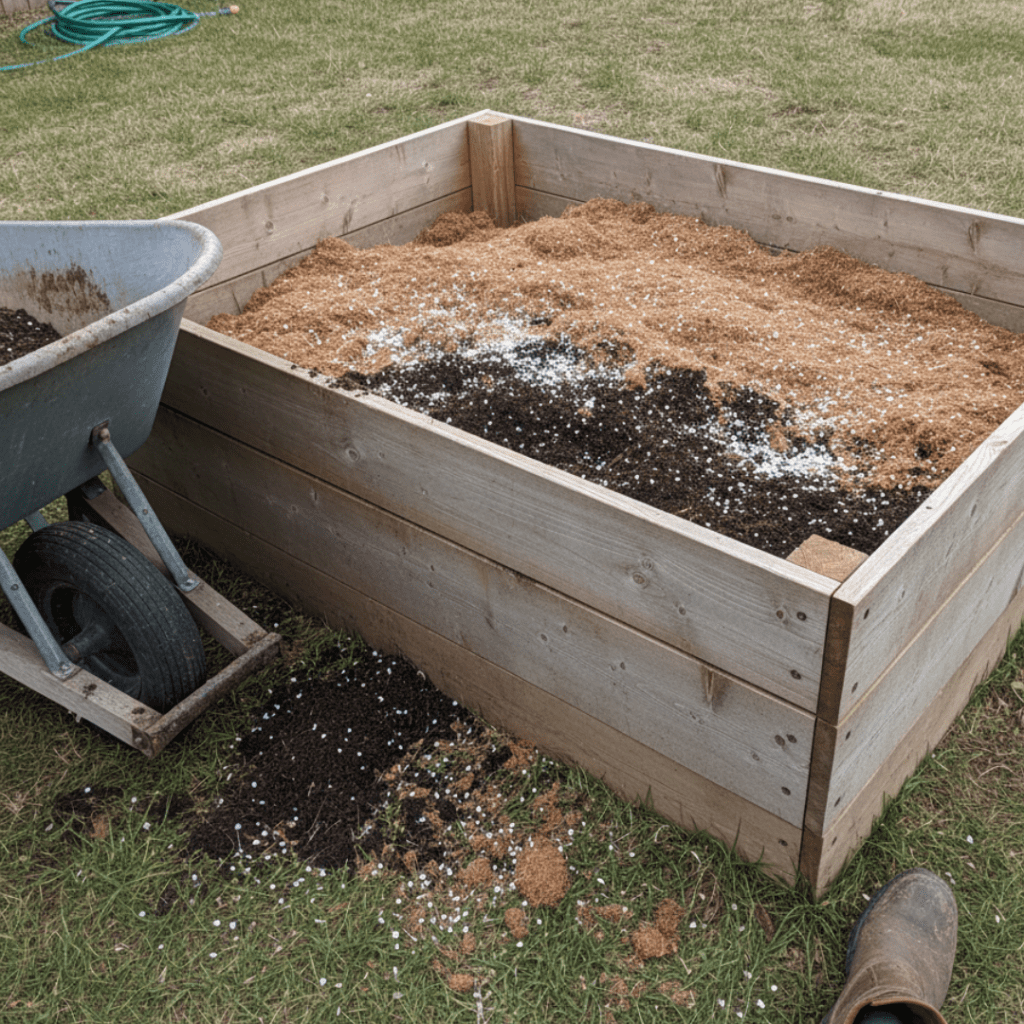
Raised beds give you complete control over soil composition—you’re building growing medium from the ground up rather than improving what nature provided. This is both liberating and slightly intimidating because you need to get the mix right from the start.
My proven formula is equal parts by volume: one-third finished compost, one-third peat moss or coconut coir, and one-third vermiculite or perlite. This creates the perfect balance of nutrients, water retention, and drainage. Plants grow faster in this mix than in any other medium I’ve used.
The compost provides nutrients and beneficial microorganisms. The peat moss or coconut coir holds moisture while staying loose and airy. The vermiculite or perlite keeps drainage excellent even after repeated watering and rain compaction. Mix these thoroughly before filling beds—I dump all three components onto a tarp and turn them with a shovel until completely blended.
Raised bed soil settles and compresses over time. Each season, I add a two-inch layer of fresh compost across the surface and work it gently into the top few inches. This refreshes nutrients, replaces volume lost to decomposition, and maintains that fluffy, productive structure plants love.
One common mistake I see is filling raised beds with straight garden soil. This compacts terribly in the contained space, becoming hard and airless within a season. Always use a proper mix designed for raised beds, never soil alone.
For very deep beds, I practice layering to save money. The bottom third can be rougher material—partially finished compost, aged wood chips, or even logs that will decompose slowly. The middle third gets a coarser soil mix. Only the top third needs to be that premium compost blend. This technique, called hugelkultur, creates a rich, long-lasting growing medium while reducing the amount of expensive finished compost needed.
Container Growing: Meeting Unique Potting Needs
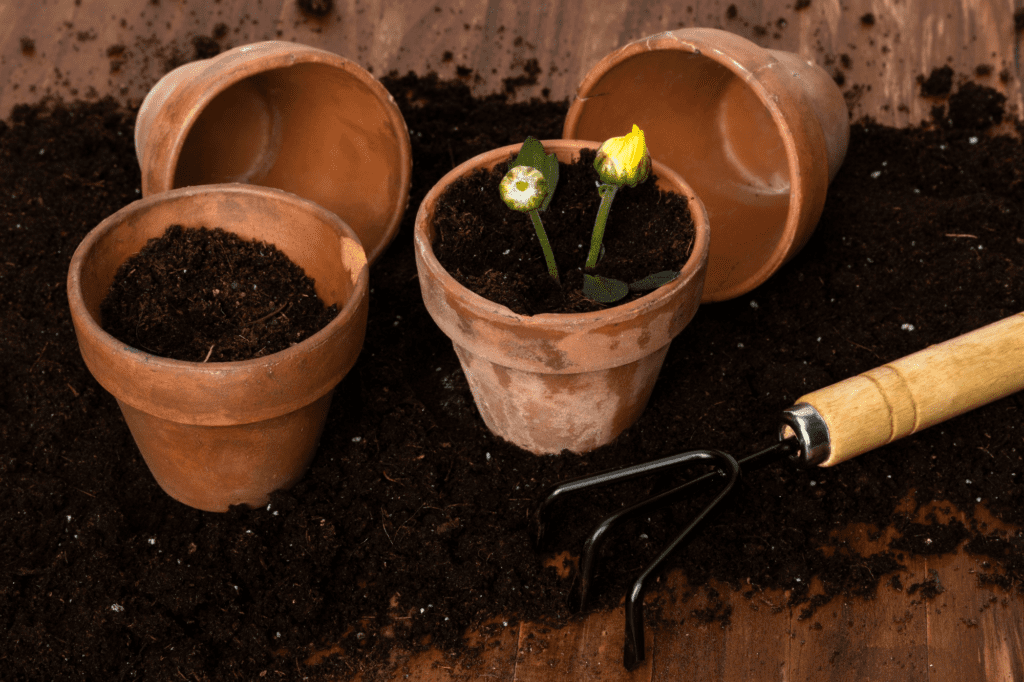
Containers create harsh growing conditions—limited root space, rapid moisture fluctuation, and complete dependence on what you provide. Regular garden soil fails in pots because it compacts when watered repeatedly, squeezing out the air spaces roots need to breathe.
Always start with proper potting mix, never garden soil. Commercial potting mixes are formulated to stay fluffy in containers while retaining moisture and nutrients. I improve bagged potting mix by adding one part compost to every four parts mix. This boosts nutrients and introduces beneficial microbes without making the medium too heavy.
At planting time, I work in slow-release organic fertilizer according to package directions. This provides steady nutrition for months. Then, throughout the growing season, I supplement with liquid fertilizer every two weeks. Container plants use nutrients faster than garden plants because there’s less soil volume to draw from and frequent watering leaches nutrients away.
Fish emulsion is my go-to liquid feed for containers. I mix it at half the recommended strength but apply it twice as often—this prevents fertilizer burn while keeping plants constantly fed. Compost tea works wonderfully too, providing both nutrients and beneficial organisms.
Large containers eventually need soil replacement. After two to three seasons, roots fill every space and organic matter breaks down completely. I dump old potting mix into garden beds where it still has value, then refill containers with fresh mix. This annual or biennial refresh prevents the exhausted soil problems that plague long-term container gardens.
Matching Strategy to Situation
The key to successful soil building is recognizing that one approach doesn’t fit all situations. Clay needs structure improvement. Sand needs moisture retention. New beds need thorough preparation. Containers need specialized mixes. Each situation demands its own strategy.
But the underlying principle stays constant: organic matter is the foundation of all good soil, regardless of starting conditions. Whether you’re breaking up clay, holding together sand, filling raised beds, or mixing potting soil, compost and organic amendments transform growing conditions from marginal to magnificent.
I’ve gardened in all these situations over the years, and I’ve learned that patience and persistence pay off. That impossible clay bed becomes workable. That thirsty sand starts holding moisture. Those new beds settle into productivity. And those containers burst with growth when properly maintained. The soil tells you what it needs—you just have to listen and respond appropriately.
Quick-Fire FAQ
Q: Can I plant immediately in a new raised bed or should I wait?
A: You can plant right away in raised beds filled with fresh potting mix—unlike ground beds, the mix is already blended and doesn’t need settling time; just water thoroughly before planting to eliminate air pockets.
Q: How do I know if I have clay or sandy soil?
A: Squeeze moist soil in your hand—clay forms a tight ball that holds its shape and feels slick; sand won’t hold together at all and feels gritty; loam forms a ball that crumbles when poked.
Q: Is it worth improving terrible soil or should I just build raised beds?
A: Both approaches work, but improving existing soil costs less and provides better long-term drainage; raised beds give instant results and work well where soil is contaminated or drainage is impossible to fix.
Q: Can I reuse potting soil from last year’s containers?
A: Yes, but refresh it first—remove old roots, mix in one-third fresh potting mix and compost, and add new slow-release fertilizer; completely replace soil every two to three years for best results.
— Grandma Maggie