
There’s something deeply satisfying about feeding your garden with fertilizers you’ve brewed yourself—watching weeds and scraps transform into potent plant food costs almost nothing and works beautifully. I keep several batches fermenting throughout the growing season, and my plants respond with lush growth that store-bought fertilizers never quite matched. Yes, some of these concoctions smell terrible while brewing, but diluted and applied, they’re garden magic. Container plants especially thrive on regular liquid feeding, and mid-season crops get remarkable boosts from these homemade tonics. Let me share the recipes I’ve perfected over decades of experimentation.
Why Liquid Fertilizers Work So Well


Liquid feeds deliver nutrients quickly because they’re already dissolved and ready for immediate root uptake. Granular fertilizers need to break down first, which takes time and depends on soil moisture and microbial activity. Liquid fertilizers bypass that wait—plants can absorb them within hours of application.
This makes liquid feeds perfect for container plants, which burn through nutrients faster than garden plants due to limited soil volume and frequent watering that leaches nutrients away. It’s also ideal for giving mid-season boosts to heavy feeders like tomatoes, squash, and corn when they’re actively fruiting and need extra support.
Homemade liquid fertilizers offer another advantage beyond speed—they’re living solutions full of beneficial microorganisms that improve soil biology while feeding plants. Commercial synthetic fertilizers are sterile chemicals. These fermented teas contain bacteria, fungi, and enzymes that colonize the root zone and support plant health in ways pure chemicals never can.
Nettle Tea: Nitrogen Powerhouse From Weeds
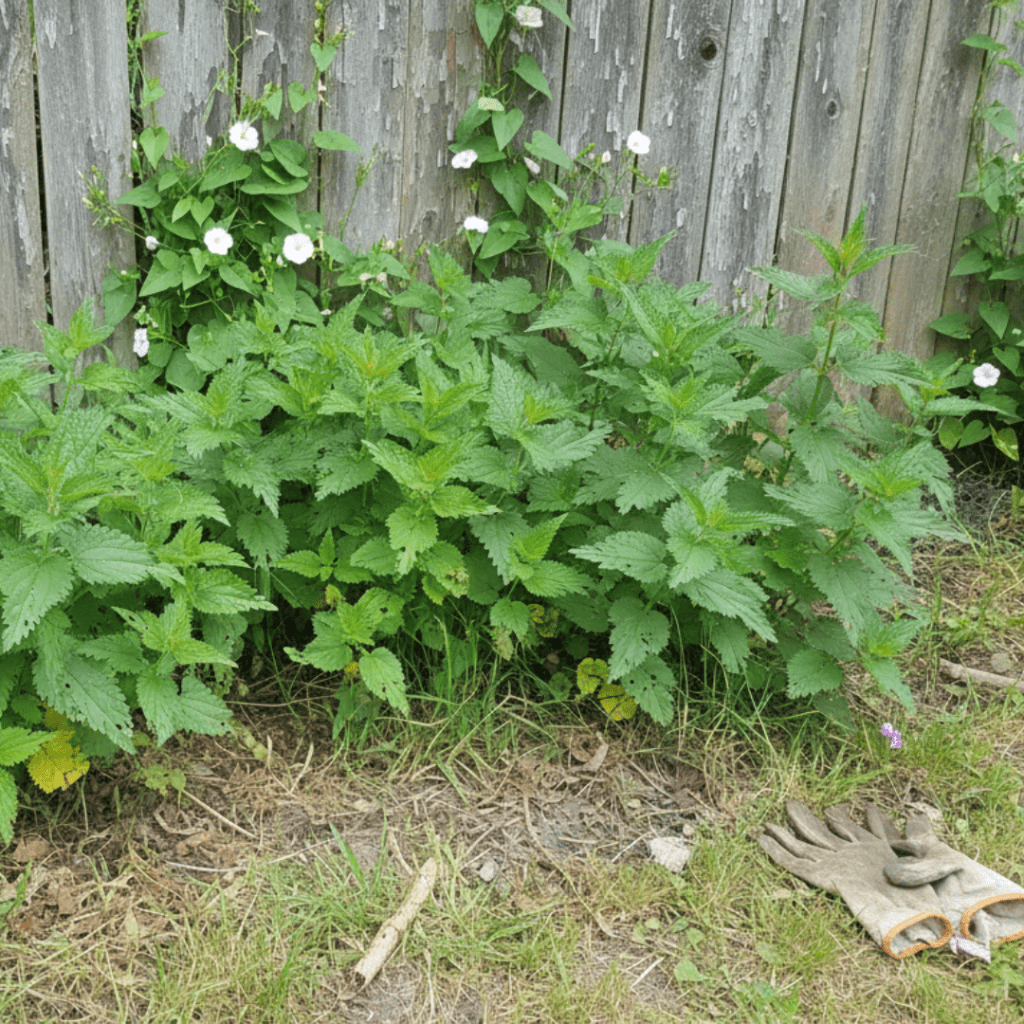
Stinging nettles are common garden weeds with a vicious sting, but they make extraordinarily potent nitrogen fertilizer. The same properties that make them unpleasant to touch—high nitrogen, iron, and mineral content—make them perfect for feeding plants. I consider finding a nettle patch a blessing rather than a problem.
Harvest nettles before they flower, wearing thick gloves and long sleeves to avoid stings. Chop them roughly with pruners or a sharp spade—smaller pieces ferment faster. Fill a five-gallon bucket halfway with chopped nettles, then add water until the bucket is three-quarters full. Weight the nettles down with a rock or brick to keep them submerged.
Cover the bucket loosely—fermentation produces gas that needs to escape, but covering keeps flies out. Place it somewhere away from the house because the smell during fermentation is genuinely terrible. Think concentrated manure mixed with rotting vegetation. My brewing buckets live behind the garage where the smell won’t drive anyone indoors.
Let the mixture ferment for two to three weeks, stirring every few days. You’ll know it’s ready when bubbling stops and the nettles have broken down into brownish sludge. The smell peaks around week two, then subsides somewhat as fermentation completes.
Strain out the plant material through an old sheet or burlap sack. The liquid concentrate is now ready to use, but never apply it straight—it’s far too strong and will burn plants. Dilute one part nettle tea to ten parts water until it’s the color of weak tea. This diluted solution can be watered onto soil around plants or sprayed on leaves as foliar feed.
I apply nettle tea every two weeks to leafy greens, brassicas, and any plants showing nitrogen deficiency. The response is dramatic—leaves darken to deep green within days, and growth accelerates noticeably. The leftover plant sludge goes straight into the compost pile.
Manure Tea: Balanced Nutrition From Livestock Waste
Manure tea works similarly to nettle tea but provides more balanced nutrition with nitrogen, phosphorus, potassium, and trace minerals. The critical rule is using only composted manure, never fresh. Fresh manure contains ammonia levels high enough to burn roots and kill plants. It also may harbor pathogens dangerous to humans. Composted manure is safe, mild, and incredibly effective.
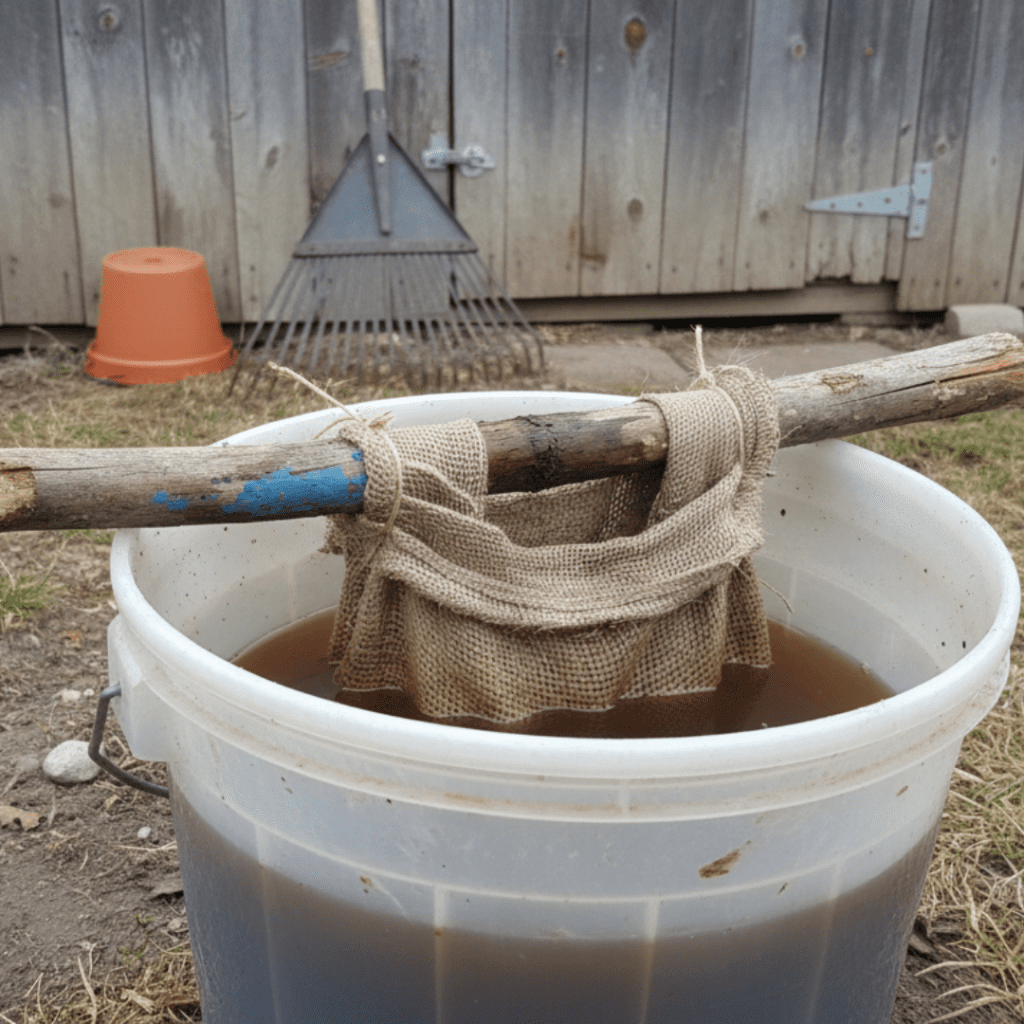
Fill a burlap sack, old pillowcase, or mesh laundry bag with two to three gallons of composted manure. Tie it closed securely—you don’t want manure floating throughout your bucket. Suspend this bag in a five-gallon bucket of water like a giant tea bag. I tie the bag’s drawstring to a stick laid across the bucket rim.
Let it steep for one week, agitating the bag daily by lifting and dunking it several times. The water gradually turns dark brown as nutrients leach from the manure. After a week, remove and compost the bag of spent manure—it’s given up most of its soluble nutrients but still has value in the compost pile.
The resulting liquid should be diluted to the color of weak tea before use. If it’s very dark, dilute more heavily. I typically use one part manure tea to three or four parts water for root feeding, or one part tea to ten parts water for foliar spraying.
Cow, horse, and chicken manure all work well but have different strengths. Chicken manure is highest in nitrogen and makes the most potent tea—use it for heavy feeders and leafy crops. Horse manure is milder and well-balanced, perfect for general feeding. Cow manure is gentlest and works well for sensitive plants and seedlings.
I apply manure tea every two to three weeks throughout the growing season to vegetables, flowers, and even perennials. It’s particularly valuable for tomatoes and peppers during fruiting, when they need sustained nutrition to keep producing.
Compost Tea: Liquid Gold for Soil Biology
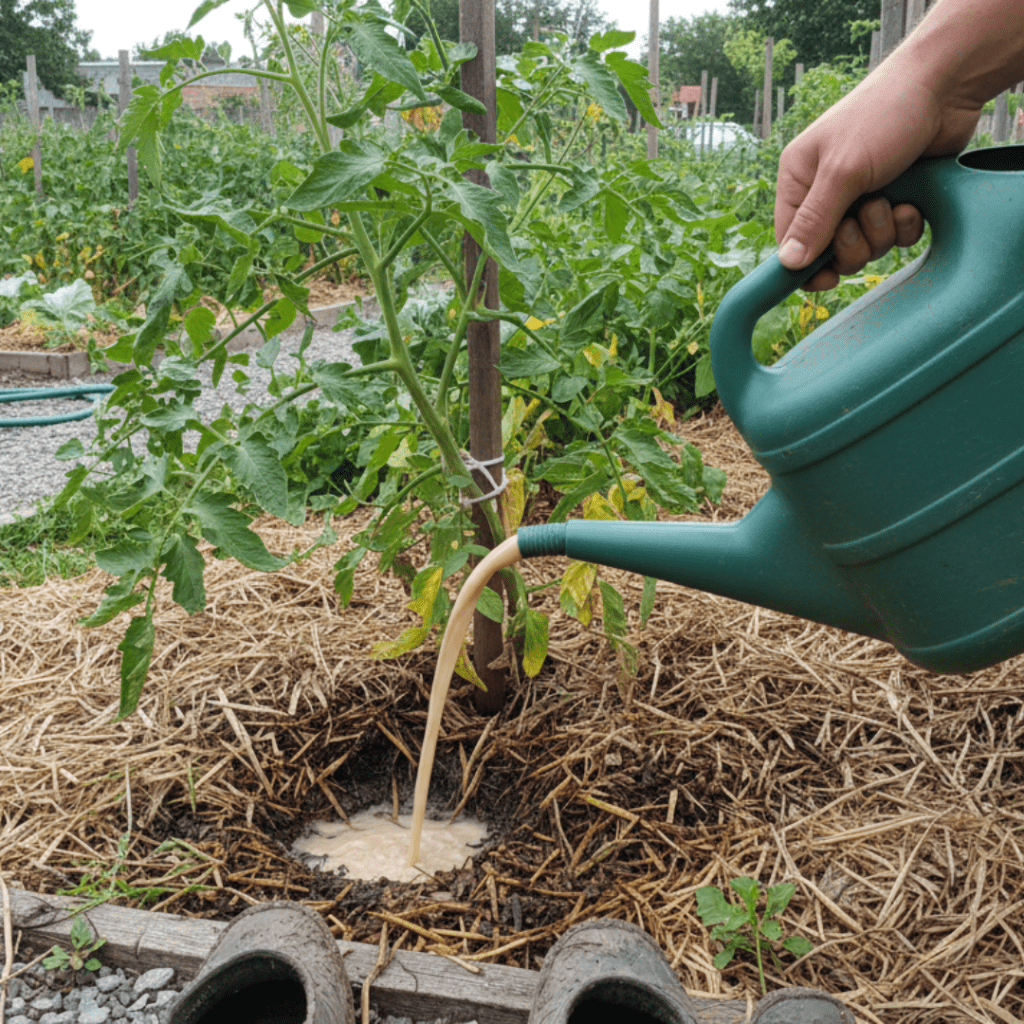
Compost tea is less about concentrated nutrients and more about introducing beneficial microorganisms throughout the garden. While it does provide some nutrition, its real value is the living biology it delivers—bacteria, fungi, protozoa, and nematodes that improve soil health and protect against diseases.
Fill a five-gallon bucket halfway with finished compost—the darker and richer, the better. Add water to fill the bucket, then let steep for three to five days, stirring vigorously once or twice daily. This aeration encourages beneficial aerobic organisms to multiply while discouraging harmful anaerobic bacteria.
Some gardeners use aquarium pumps and air stones to keep oxygen levels high during brewing. I’ve tried this and it does produce more active tea, but I get good results with simple manual stirring twice daily. The key is never letting it go anaerobic—if it smells rotten rather than earthy, something went wrong and you should dump it and start over.
After three to five days, strain the tea through cheesecloth or an old t-shirt. Use it immediately—the beneficial organisms die off quickly once removed from their food source. Dilute to the color of weak tea and apply as soil drench or foliar spray.
I use compost tea differently than other liquid fertilizers. Rather than feeding plants directly, I’m inoculating soil and leaves with beneficial organisms that outcompete pathogens and improve nutrient cycling. I apply it to seedlings at transplanting to help them establish, and spray it on leaves to prevent fungal diseases.
Fish Emulsion: Store-Bought Convenience With Homemade Options
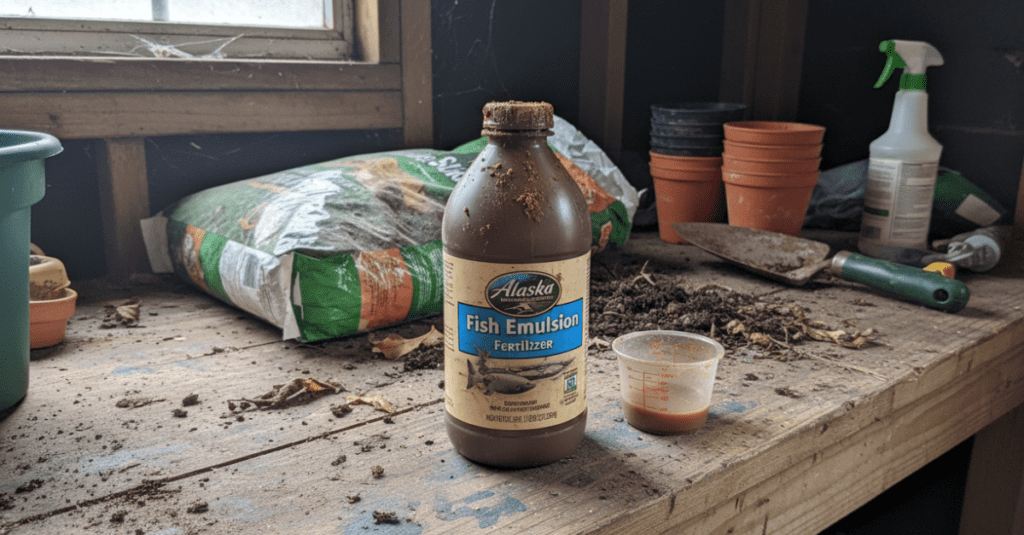
Fish emulsion provides excellent balanced nutrition with significant nitrogen, some phosphorus and potassium, plus valuable trace minerals and growth hormones. You can buy it ready-made at any garden center, or make it from fish scraps if you’re adventurous and have a strong stomach.
Commercial fish emulsion is my most-used liquid fertilizer because it’s convenient, consistent, and relatively inexpensive. Mix according to package directions—usually one to two tablespoons per gallon of water—and apply every two weeks during active growth. The smell is strong when first mixed but dissipates quickly after application.
Making your own fish emulsion is possible but challenging. Save fish scraps, heads, and guts from cleaning your catch. Place in a bucket with water in a one-to-two ratio, add a tablespoon of molasses to feed beneficial bacteria, and let ferment for several weeks. The smell is absolutely horrific—far worse than nettle tea. I’ve made it twice and decided commercial fish emulsion is worth the cost.
If you do make homemade fish emulsion, strain thoroughly before use and dilute heavily—one part fish liquid to twenty parts water. It’s extremely concentrated. Keep it away from the house during brewing, and warn the neighbors if they’re close by.
Fish emulsion excels for container plants, which need frequent feeding due to limited soil volume. I feed container vegetables and flowers every two weeks with diluted fish emulsion from first planting through frost. Transplants also benefit enormously—I water seedlings with weak fish emulsion solution immediately after transplanting to reduce shock and accelerate establishment.
Weed Tea: Free Fertilizer From Your Garden
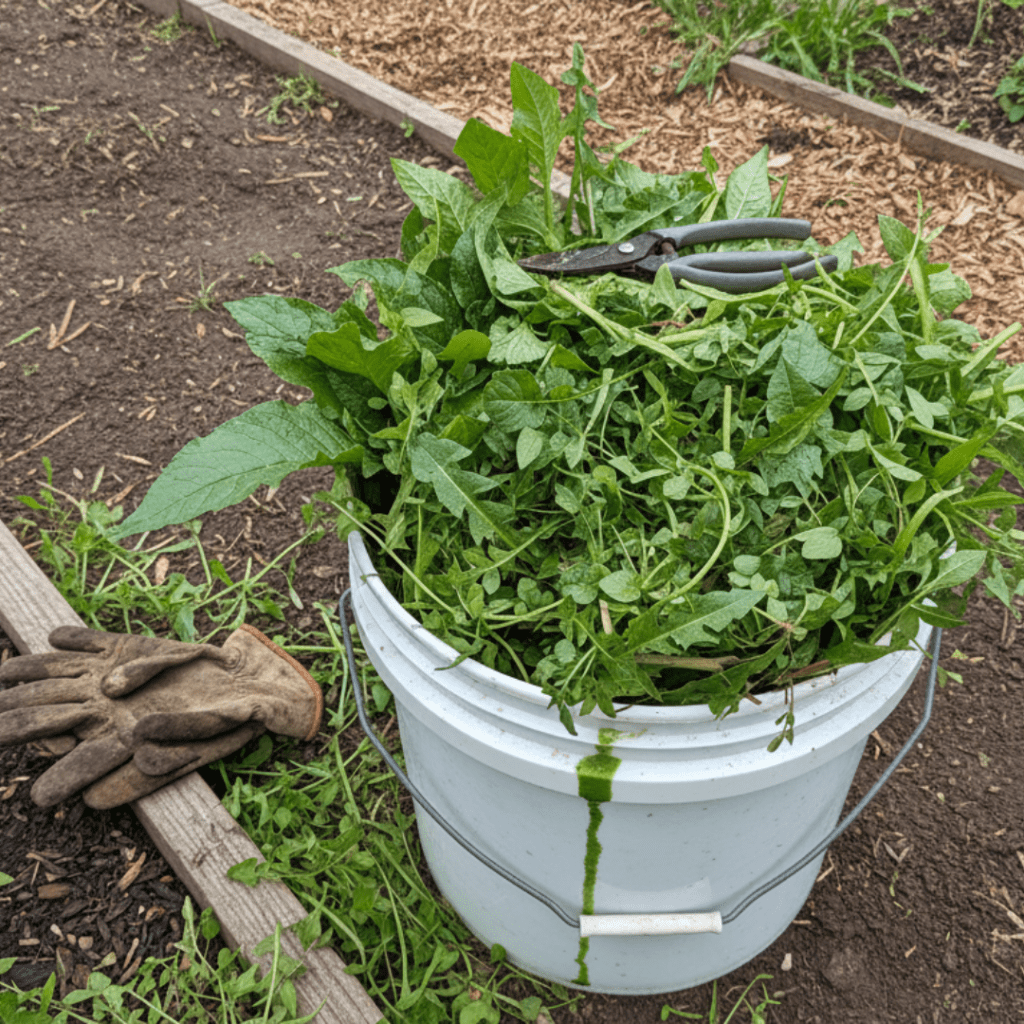
Nearly any garden weed can become fertilizer through the fermentation process. Comfrey, chickweed, lamb’s quarters, and dandelion all make excellent nutrient tea. This transforms annoying weeds into valuable resources while keeping them out of the compost pile where seeds might survive.
The method is identical to nettle tea: chop weeds, fill a bucket halfway, add water, and ferment for two to three weeks. Strain, dilute ten-to-one, and use. Mix different weeds together for more balanced nutrition—each contributes different minerals based on what it accumulated during growth.
Avoid weeds with mature seeds unless you’re certain the fermentation will kill them. I harvest for tea before flowering, when nutrient content is highest and seed production hasn’t begun. Never use weeds that spread from root pieces like bindweed or quackgrass—those require completely different disposal methods.
Application Tips for Best Results
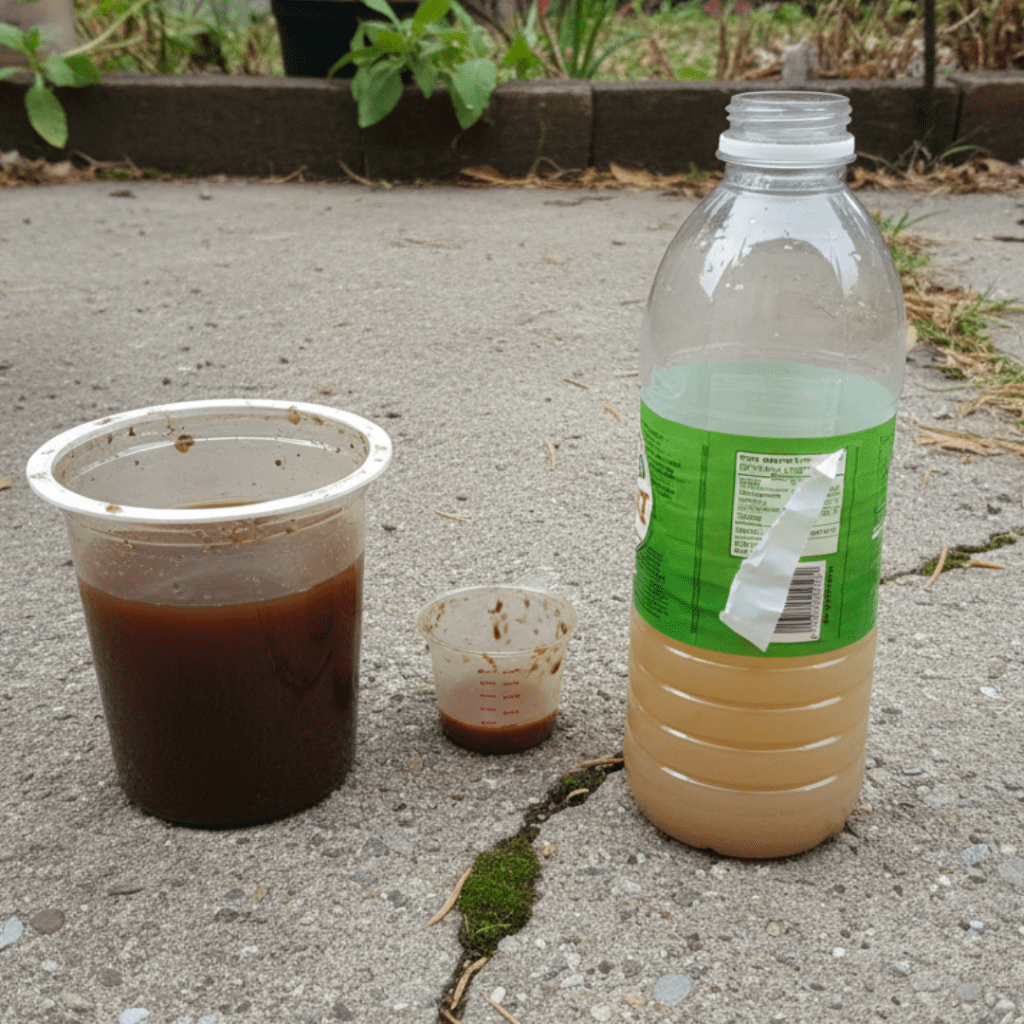
Apply liquid fertilizers to moist soil, never dry ground. Water plants first if soil is dry, then apply diluted tea the next day. This prevents root burn and ensures nutrients distribute evenly through the root zone.
Morning application works best. Plants absorb nutrients most actively in morning hours, and liquid on leaves dries before nightfall, reducing disease risk. I avoid fertilizing during the heat of midday, which can burn foliage.
For foliar feeding, spray until leaves are wet but not dripping. The undersides of leaves absorb nutrients better than top surfaces, so spray upward from beneath the plant. Use foliar feeding for quick nutrient boosts, but rely primarily on soil application for sustained feeding.
Store unused liquid fertilizers in sealed containers out of sunlight. They’ll keep for several weeks, though compost tea should be used immediately. If stored tea develops foul odor, discard it—beneficial biology has died off and potentially harmful organisms may have taken over.
Quick-Fire FAQ
Q: Can I use these liquid fertilizers on all plants or are some too strong?
A: Properly diluted, all these teas work on any garden plants; however, use lighter dilutions for seedlings and sensitive plants, and stronger dilutions for heavy feeders like tomatoes and squash.
Q: How do I know if I’ve diluted enough?
A: The diluted tea should be pale, about the color of weak iced tea; if it’s dark and concentrated-looking, dilute more—it’s better to err on the weak side than burn plants with overly strong solution.
Q: Can I combine different liquid fertilizers?
A: Yes, mixing different teas together is fine and often beneficial—nettle tea for nitrogen combined with compost tea for biology makes an excellent all-purpose fertilizer; just maintain proper overall dilution.
Q: Is the smell really as bad as you say?
A: During fermentation, yes—nettle tea and especially homemade fish emulsion smell truly awful; however, once diluted and applied, the smell dissipates within hours, and plants thrive regardless of the brewing aroma.
— Grandma Maggie