I still feel a little guilty thinking about the spring I happily filled my peanut feeder with whole peanuts, convinced I was doing the neighbourhood birds a great favour. I’d been feeding the garden birds for years by that point, and I thought I had it all figured out. Then I stumbled across a mention in an old birding newsletter about nestlings choking on whole peanuts they couldn’t break down — and everything I thought I knew came into sharp focus. That single piece of information changed how I approach the feeder from March through to the end of July, and it started me on a much more careful, season-by-season approach to bird feeding that I’ve followed ever since. If you want to genuinely help your garden birds rather than accidentally harm them, this is the guide I wish I’d had thirty years ago.
Why Whole Peanuts Can Kill Nestlings — and What to Do Instead
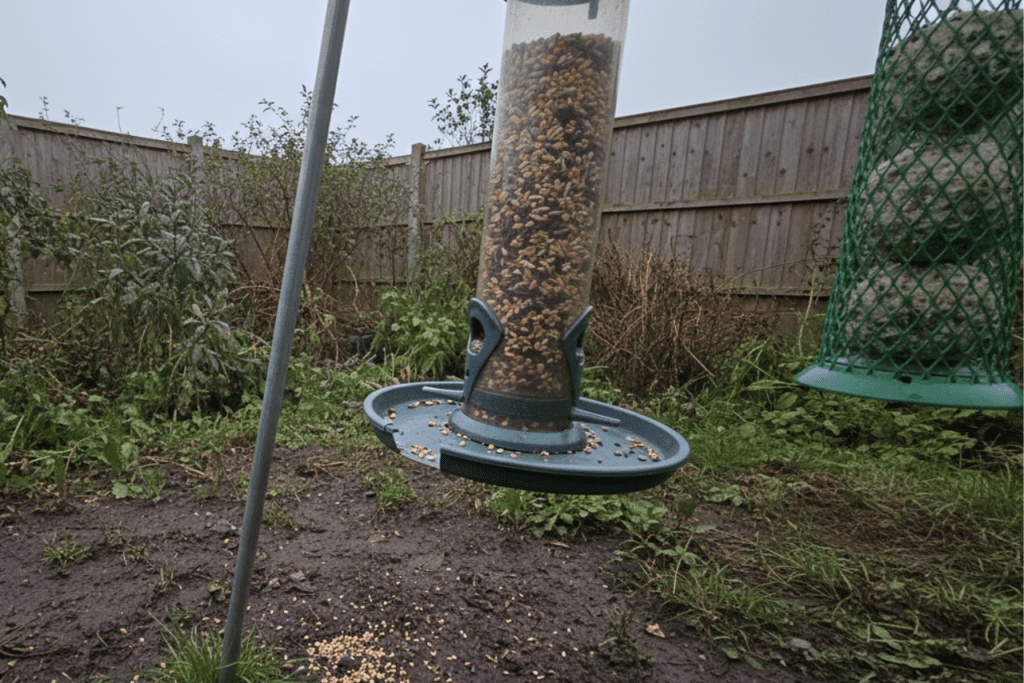
During nesting season — which runs from March through to the end of July in most of the UK and across much of North America — adult birds are constantly ferrying food back to their chicks in the nest. The problem with whole peanuts is that a nestling’s crop simply cannot process them. The nut lodges, and the chick suffocates or starves. The adult bird, doing exactly what instinct tells it to do, has no way of knowing the food it is carrying back is lethal. It is a heart-breaking thing to learn, and I find it is one of the least-known hazards among well-meaning garden bird feeders.
The solution is straightforward: during nesting season, only offer peanuts that have been halved or crushed, or use a proper peanut feeder with a wire mesh fine enough that birds can only peck off small fragments rather than extract a whole nut. Many garden centres sell these specifically for this purpose, and they are worth having permanently. Outside of nesting season — from August through to the end of February — whole peanuts in a standard peanut feeder are perfectly fine, and they are an excellent high-fat food source that robins, blue tits, great tits, and nuthatches adore. But from March onwards, I always make a point of switching to crushed peanuts or checking my feeder mesh is suitably fine. It has become as automatic for me as bringing in the washing before rain.
A Season-by-Season Feeding Calendar
Over the years I have found that thinking about bird feeding in seasons — rather than just topping up the feeder whenever it runs low — makes an enormous difference both to the birds and to how much I spend on feed. Birds have very different nutritional needs and natural food availability across the year, and matching what you offer to what they actually need in each season is the mark of a genuinely helpful garden bird feeder.
In spring (March through May), the priority is energy-dense food that supports breeding without creating the peanut hazard I described above. Crushed peanuts, sunflower hearts, and live or dried mealworms are all excellent choices. Mealworms in particular are a favourite with robins and song thrushes during this time, and I put out a small dish of them every morning near my low hedging where the robins like to hunt. Avoid bread entirely at this time of year — it fills young birds up without providing any real nutrition and can cause a condition called angel wing in waterfowl if you feed near a pond.
Summer (June through August) is when many people stop feeding altogether, reasoning that there is plenty of natural food available. I understand that thinking, but I do not entirely agree with it. While insects and berries become more plentiful, newly fledged birds are still learning to forage, and many are not very efficient at finding food yet. I keep a small quantity of sunflower hearts and mealworms out through the summer, cleaned and refreshed daily since warm weather makes food go off quickly. What I do stop putting out is anything containing loose fats or suet that can melt and coat feathers in the heat — fat balls should be removed from June through August for exactly this reason.
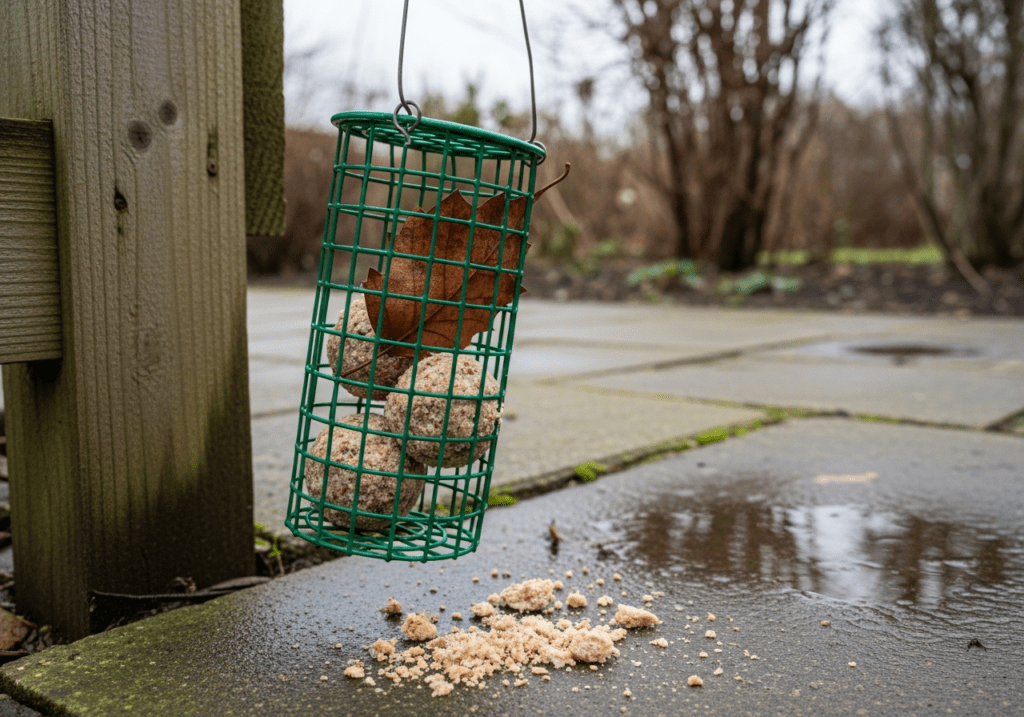
Autumn (September through November) is when I start ramping up the feeder again in earnest. Migrating birds passing through the garden — fieldfares, redwings, and waxwings in a good year — can strip a berry bush bare in a day, and they appreciate suet pellets, sunflower hearts, and a good mixed seed on the ground or on a low tray feeder. This is also the time to reintroduce fat balls, which I put out from October onwards. I find this is when they are most eagerly taken, and rightly so: as the days shorten and temperatures drop, the birds need those extra calories to maintain their body temperature through cold nights.
Winter (December through February) is the season I consider the most critical for feeding. Fat balls are most valuable during October through February when natural insect food has essentially disappeared, and I keep multiple feeders stocked throughout. I also put out a larger tray feeder on the ground during winter to accommodate blackbirds, which rarely use hanging feeders. Mixed seed, suet pellets, sunflower hearts, nyjer seed for the goldfinches, and whole peanuts in a mesh feeder for tits and nuthatches — winter is the season to go all out. A frozen water source is also a genuine hazard, so I always make sure to put fresh water out each morning and break any ice that has formed overnight. After thirty years at this, I can tell you the birds notice immediately when you do it.
The Hygiene Rule That Could Save a Bird’s Life
I want to talk about feeder cleaning because it is the part of bird feeding that most people skip, and it is also the part that has caused the most measurable harm to bird populations in recent years. Salmonella and trichomonosis — a parasitic disease — have both been linked to dirty feeders, and both have caused documented population declines in greenfinches and chaffinches across the UK and North America. These are not abstract risks. They are real, they are happening, and they are largely preventable.
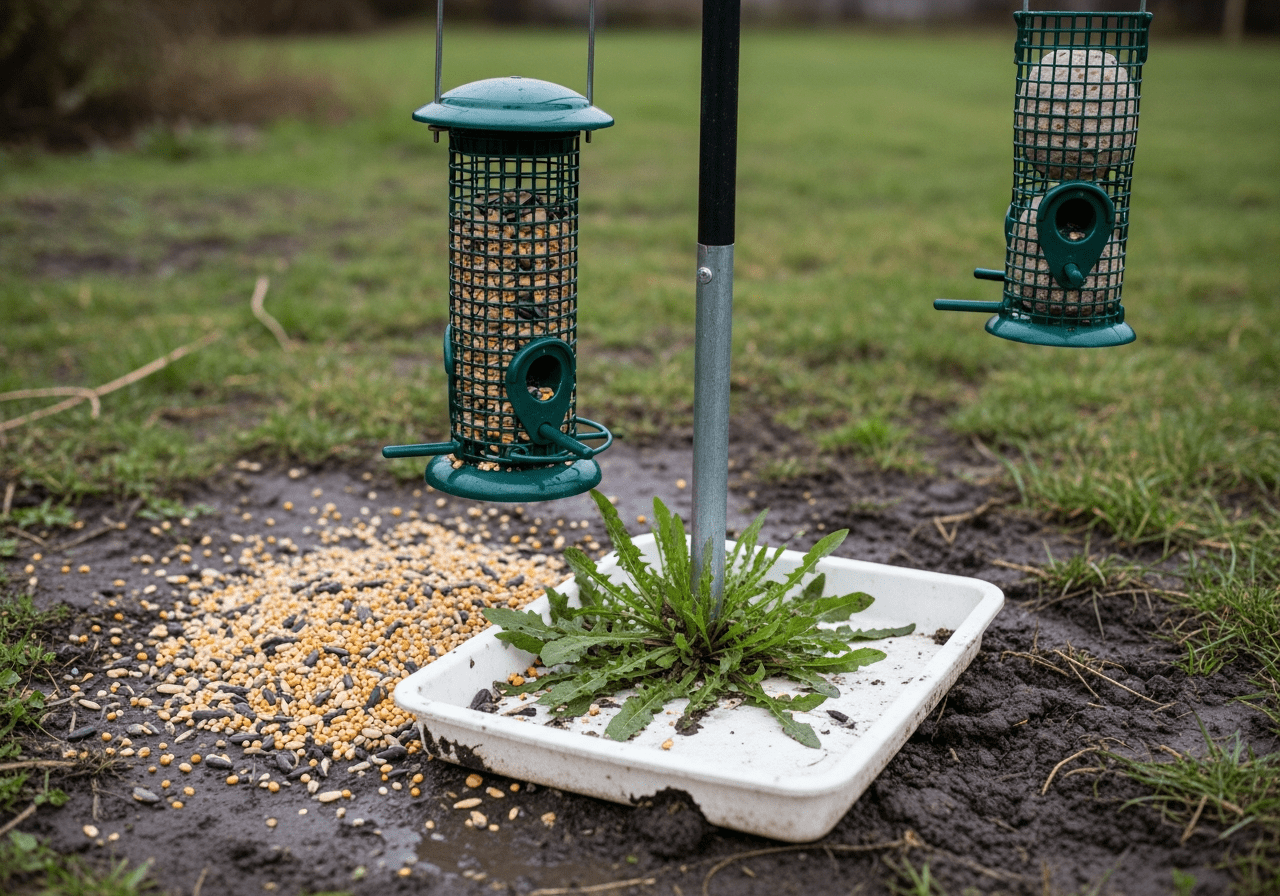
The rule I follow — and that the RSPB and the Audubon Society both recommend — is to clean feeders every two weeks with hot soapy water, rinse them thoroughly, and allow them to dry completely before refilling. I use a dedicated brush I keep just for the feeders and a diluted mild disinfectant for a deeper clean once a month. The ground beneath feeders also needs attention: accumulated hulls, droppings, and rotting seed beneath a feeder is one of the most common sources of disease transmission, so I rake it away or move the feeder’s position regularly to avoid it building up. It takes me about twenty minutes every two weeks and I consider it as essential as the feeding itself.
I’ve learned to watch the birds themselves for signs of disease — a greenfinch sitting puffed up and lethargic near the feeder, or a bird that lets you approach too closely, is often unwell. If I notice this, I bring all my feeders in for at least two weeks and clean them thoroughly before putting them back out. It sounds drastic, but a temporary pause can prevent a disease outbreak from spreading through an entire local flock.
Which Foods Attract Which Birds
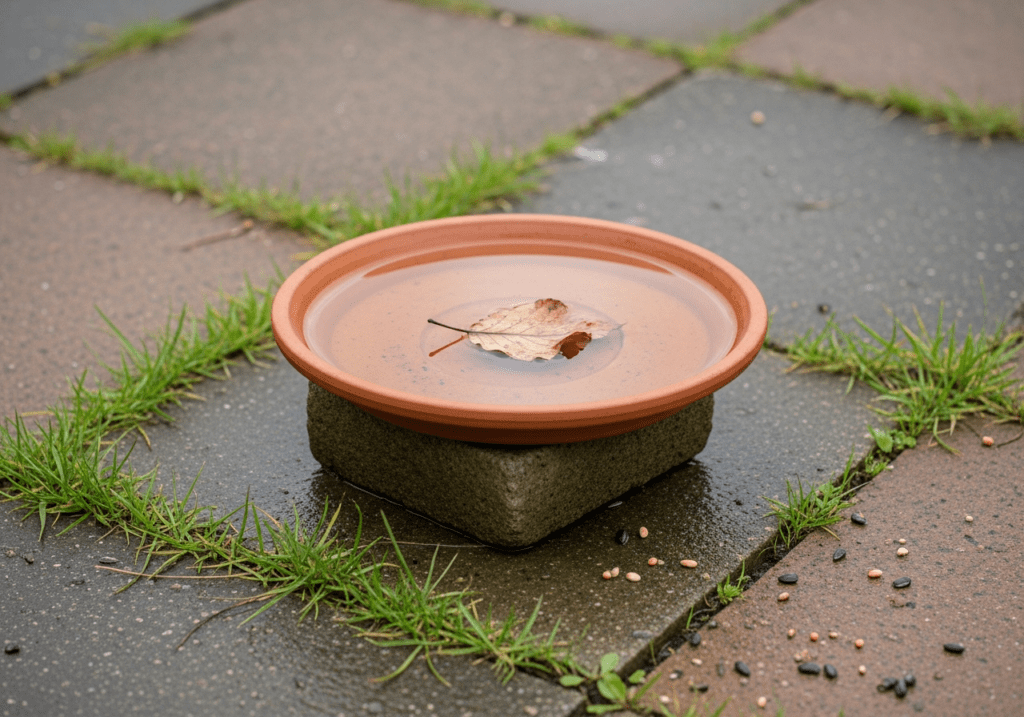
Part of the joy of bird feeding is learning which foods bring which visitors, and over the years I have noticed very consistent patterns in my own garden. Nyjer seed in a specialist nyjer feeder reliably brings goldfinches, siskins, and redpolls — birds that might otherwise pass straight through without stopping. Sunflower hearts are the one food I would keep if I could only choose one: they attract the widest variety of birds, produce minimal waste because there is no husk, and are taken readily by blue tits, great tits, chaffinches, house sparrows, dunnocks, and even the occasional long-tailed tit that works its way along the feeder in a little flock.
Mealworms — live ones, if you can manage it, though dried work well too — are the fastest way to attract robins and song thrushes. I put mine in a smooth-sided dish so the mealworms cannot escape before the birds find them. Suet pellets scattered on a low tray feeder bring blackbirds, starlings, and occasionally a mistle thrush in winter. Whole sunflower seeds in the shell attract great spotted woodpeckers if you are lucky enough to have them nearby — I have had one regular visitor for the past three winters and I am inordinately pleased about it.
One thing I have stopped putting out entirely is desiccated coconut. I know it used to be a common recommendation, but it swells in a bird’s stomach and can cause serious harm. Similarly, salted nuts, salted fat from cooking, and very dry bread should never go near a feeder. The general principle I hold to is this: if it is heavily processed, salted, or sweetened, it has no place in a bird feeder. Stick to natural, purpose-made bird foods and you will not go far wrong.
Quick-Fire FAQ
Q: Can I put out fat balls all year round?
A: No — fat balls should be removed from June through August because warm temperatures cause them to melt, and melted suet can mat and damage a bird’s feathers. Reintroduce them from October onwards when they are most needed.
Q: How often should I clean my bird feeders?
A: Every two weeks as a minimum, using hot soapy water and a dedicated brush. Dirty feeders spread diseases like salmonella and trichomonosis, which have caused real declines in greenfinch and chaffinch populations.
Q: Is it safe to stop feeding birds in summer?
A: You can reduce what you put out, but keeping a small supply of sunflower hearts and mealworms available helps newly fledged birds that are still learning to forage on their own.
Q: What is the single most harmful thing I could do at a bird feeder?
A: Putting out whole peanuts during nesting season (March–July) — adult birds carry them back to nestlings who cannot break them down and may choke. Always use crushed peanuts or a fine-mesh peanut feeder during this window.
— Grandma Maggie
levitra pills
levitra pills
doksiciklin
doksiciklin
antibiotics for sinus infection
antibiotics for sinus infection
zyloprim 300 mg price
zyloprim 300 mg price