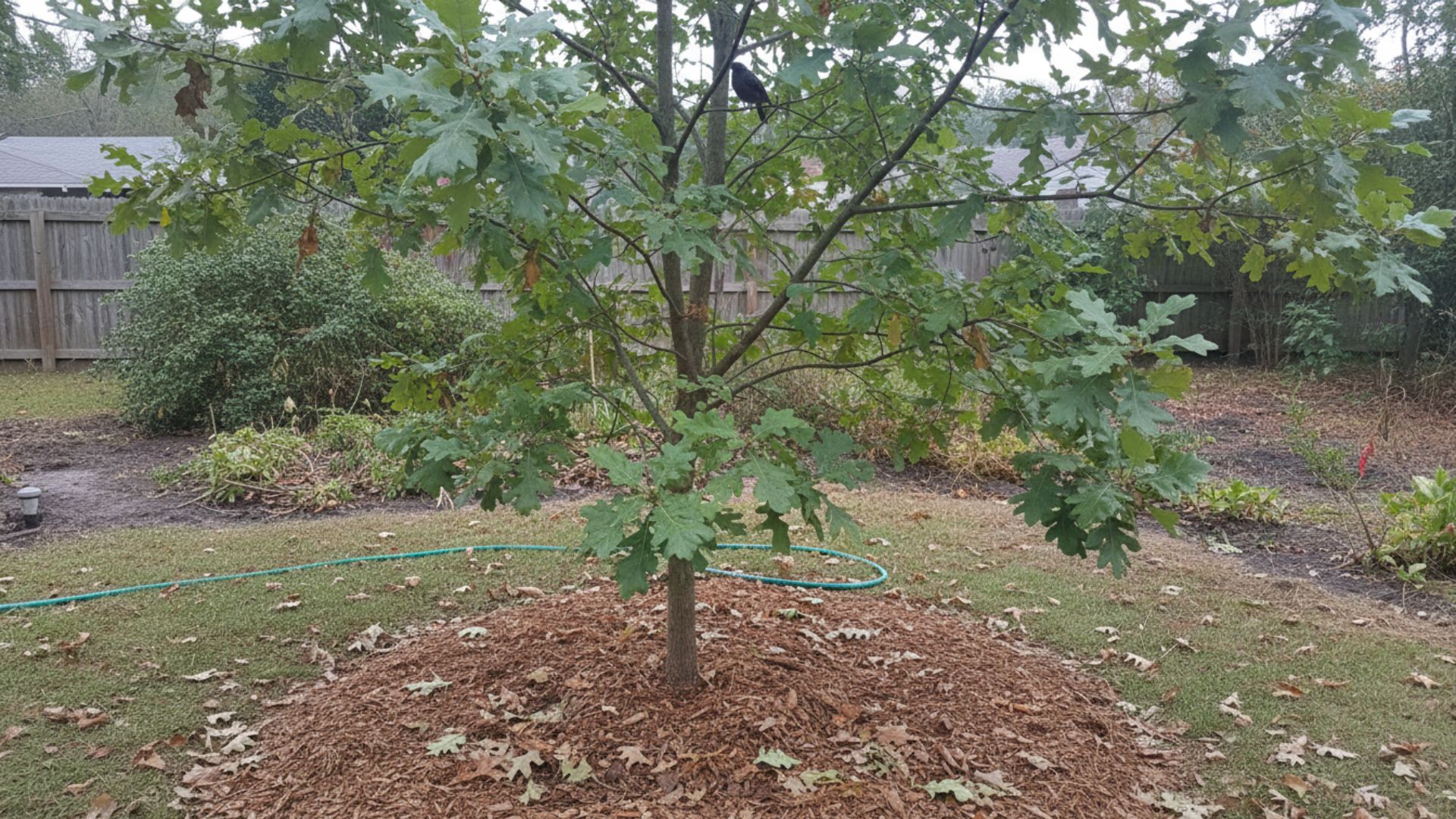
I’ll never forget the summer I planted a single native serviceberry at the back of my border — a scrubby little thing that my neighbor said would never amount to much. Within two seasons, I was standing at the kitchen window watching a pair of cedar waxwings strip every berry from its branches while a yellow warbler hunted insects through the leaves below. I’d gardened for thirty years at that point, and nothing I’d ever done with my tidy rows of hybrid roses and ornamental grasses had produced a moment quite like that one. It stopped me cold, and I started asking why. What I found changed the way I garden permanently. I’m not going to ask you to rip everything out and start over — that’s not realistic, and it’s not necessary. What I’m going to show you is that replacing just 20% of your garden with native plants can produce measurable, real results for the wildlife in your neighborhood, and that you can do it one plant at a time, without spending a fortune or losing the garden you love.
The Caterpillar Connection: Why Birds Need More Than Birdseed
When I first started reading the research of entomologist Doug Tallamy, I felt a little embarrassed that it had taken me so long to understand something so fundamental. The connection between native plants and wildlife isn’t just about berries or nectar — it’s about caterpillars. Most songbirds, during nesting season, feed their chicks almost exclusively on caterpillars and other soft-bodied insects. A single clutch of chickadees requires somewhere between 6,000 and 9,000 caterpillars just to fledge. Six to nine thousand. That number stopped me in my tracks the first time I read it. And caterpillars don’t eat just anything — the vast majority of them are specialists that can only complete their life cycle on specific native plants. A non-native ornamental tree, however beautiful it may be, is essentially a food desert for these insects.
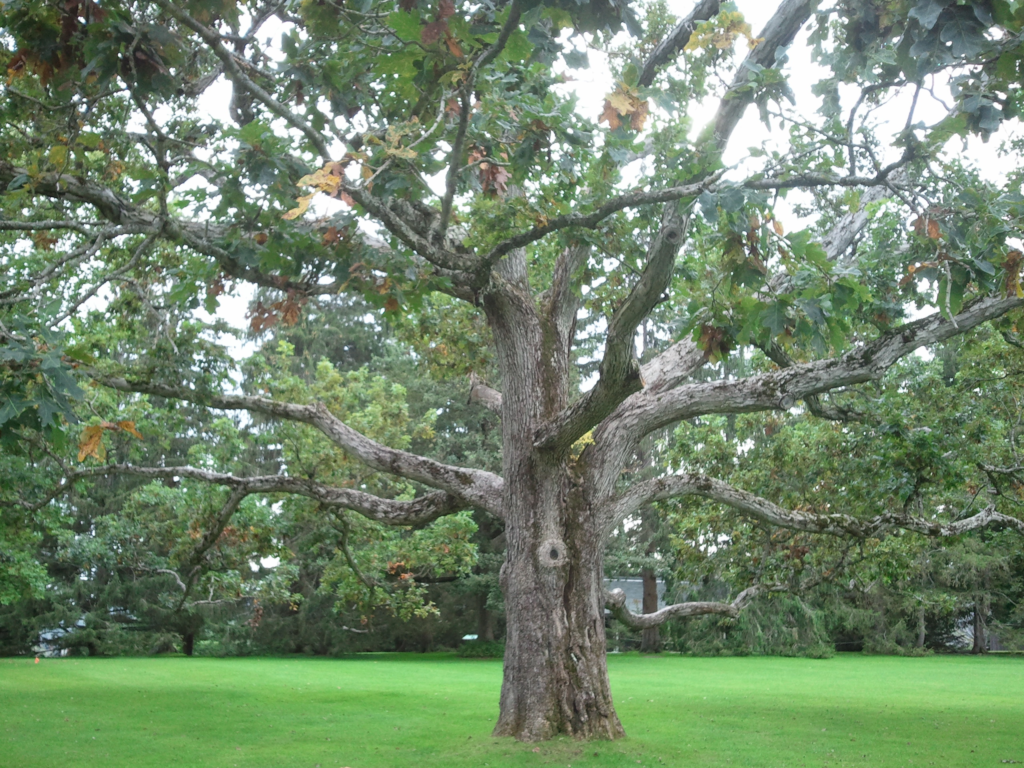
Tallamy’s research found that a single native oak tree supports more than 500 species of moth and butterfly larvae. Five hundred. Meanwhile, the Bradford pear — that ubiquitous ornamental you see lining suburban streets everywhere — supports fewer than five. It’s not that non-native plants are ugly or useless, it’s simply that the insects in your region haven’t had thousands of years to develop relationships with them. They don’t know what to do with a Bradford pear. They never learned.


The native oak — whether you’re growing Quercus alba in the east or Quercus lobata in California — is what ecologists call a keystone species. Remove it and the whole ecological community it supports begins to unravel. Plant it and you’ve done more for local wildlife in a single afternoon than a lifetime of leaving birdseed out. I know not everyone has space for a full-size oak, and I’ll come back to that. But even a young oak in a moderate-sized garden begins supporting insects within its first few years, and the investment pays compounding ecological dividends for centuries.
Why 20% Is Enough to Make a Real Difference
Here’s what surprised me most when I started digging into the science: you don’t need to go all the way. Research published through the National Wildlife Federation found that even a 20% shift toward native plants in a garden produces measurable biodiversity improvement within two to three seasons. That’s not a long time in gardening terms. Two to three years is about the time it takes a peony to hit its stride or a new rose to establish properly. We think nothing of waiting that long for a plant to perform — and the wildlife returns happen in that same window.
Think about what 20% actually means in a practical sense. If you have twelve established beds or significant plantings, that’s roughly two to three of them. If you have a large mixed border, it means a third of it swapped over time. It doesn’t mean digging everything up on a Saturday and starting from scratch. It means that when a plant dies or underperforms — and some always do, that’s gardening — you replace it with a native equivalent rather than reaching for what you’ve always bought. It means adding a native shrub to the back of a border where you’ve been meaning to fill a gap for three years anyway. The 20% threshold is genuinely achievable without disrupting a garden you’ve spent decades building.
Starting With Goldenrod: The Plant That Gets an Unfair Bad Reputation
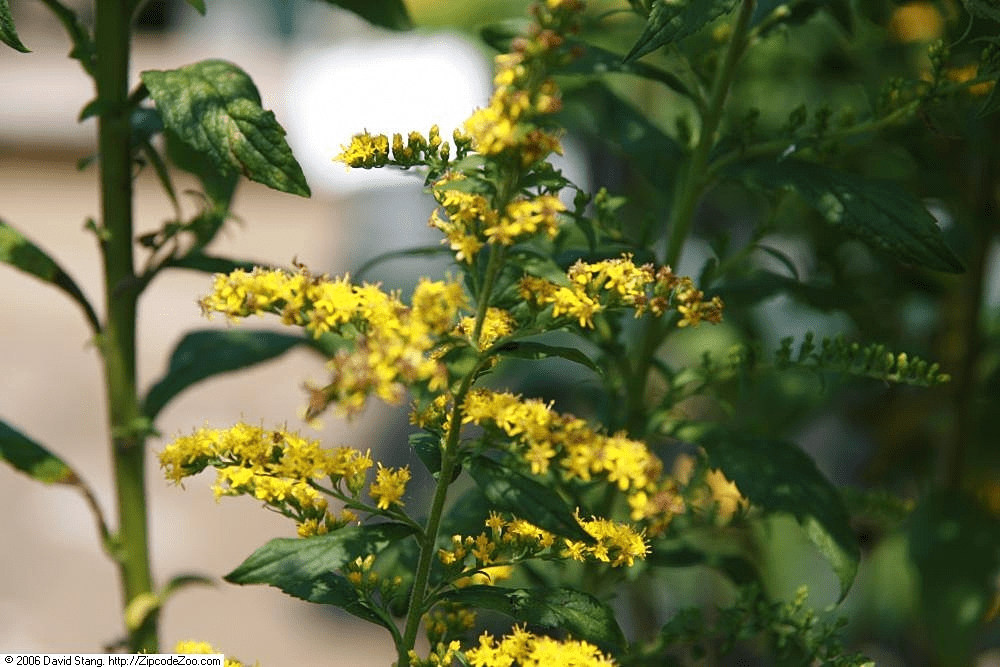
I want to defend goldenrod for a moment, because I’ve heard it maligned at every garden club meeting I’ve attended for thirty years, and it doesn’t deserve it. People blame goldenrod for hay fever when the real culprit is ragweed, which blooms at the same time and has wind-dispersed pollen. Goldenrod’s pollen is heavy and sticky — it’s carried by insects, not air — and it’s essentially harmless to allergy sufferers. What goldenrod actually is, is one of the most ecologically productive plants you can put in a North American garden.
Native Solidago species support more than 100 species of insects, including specialist bees that depend on goldenrod pollen exclusively during late summer and fall. The blooms are alive with activity from August through October, which is exactly when many other flowers have given up for the season. The seeds feed finches and sparrows through early winter. I grow Solidago rugosa ‘Fireworks’ in my border — it has an arching, fountain-like habit that looks absolutely nothing like the roadside weed people picture — and it earns its keep every single year without any fuss, division, or coddling from me.
Adding a Native Shrub: Elderberry as the Backbone of a Wildlife Garden
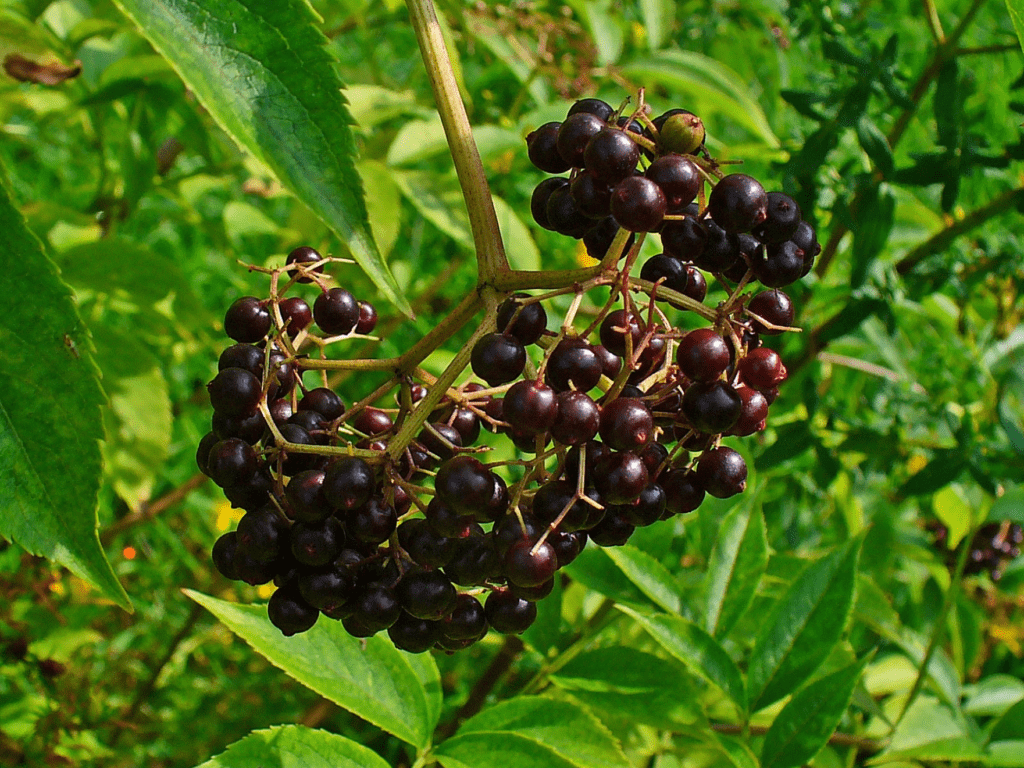
If I had to choose a single native shrub to recommend to someone just starting out, it would be American elderberry — Sambucus canadensis. I planted my first one about fifteen years ago in a damp, awkward corner where nothing else wanted to grow, expecting it to be unruly and plain. What I got was a shrub that bloomed with flat-topped white flower clusters in June, drew in more pollinators than almost anything else in the garden, and then produced enormous drooping clusters of deep purple-black berries in late summer that the birds found before I could even think about harvesting them for jelly. It grew to about eight feet in three years with almost no input from me.
Elderberry supports more than 40 species of birds through its fruit alone. The flowers attract specialist native bees, beetles, and flies. The hollow stems provide nesting habitat for stem-nesting native bees when the canes are cut back. And if you choose a cultivated selection like ‘Bob Gordon’ or ‘Adams,’ you get larger berries and a tidier habit without sacrificing the ecological value. It tolerates wet soils, part shade, and fairly rough conditions — a quality I appreciate in a plant, because my garden has plenty of challenging spots.
How to Find and Source Native Plants Without Getting Overwhelmed
The single most practical thing I can tell you about sourcing native plants is this: start with your local native plant society. Almost every region in North America has one, and they are invariably run by enthusiastic, knowledgeable people who will happily point you toward reputable nurseries, plant sales, and seed sources for your specific county or ecoregion. I’ve attended native plant sales where I bought established goldenrod, wild bergamot, and native ferns for two or three dollars a pot — prices that put the big garden centers to shame.
When you’re shopping at a general nursery, look for the botanical name, not just the common name, because “coneflower” sold at a mass-market garden center might be a hybrid cultivar with modified pollen that insects can’t use effectively, rather than the straight species Echinacea purpurea your local bees evolved with. The National Wildlife Federation’s Native Plant Finder at nwf.org is an excellent free tool — you enter your zip code and it returns a list of native plants for your region ranked by the number of wildlife species they support. I refer to it regularly, even now.
One more thing I’ve learned the hard way: avoid plants labeled “nativars” — cultivated varieties of natives — if you can identify them, particularly ones with heavily doubled flowers or dramatically altered leaf color. These traits can reduce pollen and nectar availability or interfere with leaf chemistry that insects rely on. A straight species or a minimally modified cultivar will always do more ecological work than a showy nativar bred primarily for ornamental appeal.
Quick-Fire FAQ
Q: Do I have to remove all my non-native plants to make a difference for wildlife?
A: Absolutely not — research shows that even a 20% shift toward natives produces measurable biodiversity gains within two to three seasons. Replace plants gradually as they die or underperform, and let the garden evolve on its own timeline.
Q: I have a small garden — is there any point planting a native tree when I barely have space?
A: Yes, and a native shrub or small native tree like a serviceberry (Amelanchier spp.) does real ecological work even in a compact space. Focus on natives with the highest wildlife value per square foot, like goldenrod, native viburnum, or a dwarf oak species suited to your region.
Q: How do I know which plants are truly native to my area, not just native to North America?
A: Use the National Wildlife Federation’s Native Plant Finder at nwf.org — enter your zip code and it returns plants native specifically to your ecoregion, ranked by ecological value. Your local native plant society is also an invaluable and free resource.
Q: Will native plants look “weedy” and upset my neighbors?
A: Many native plants are genuinely beautiful in a garden setting — goldenrod cultivars, native asters, elderberry, and serviceberry are all ornamentally attractive and unlikely to raise eyebrows. A tidy garden edge or a simple border of mulch signals intentionality and tends to satisfy even the most particular neighbors.
— Grandma Maggie
hello world
hello world
metoprolol succinate xl
metoprolol succinate xl
generic for viagra
generic for viagra
mobic for pain relief
mobic for pain relief