
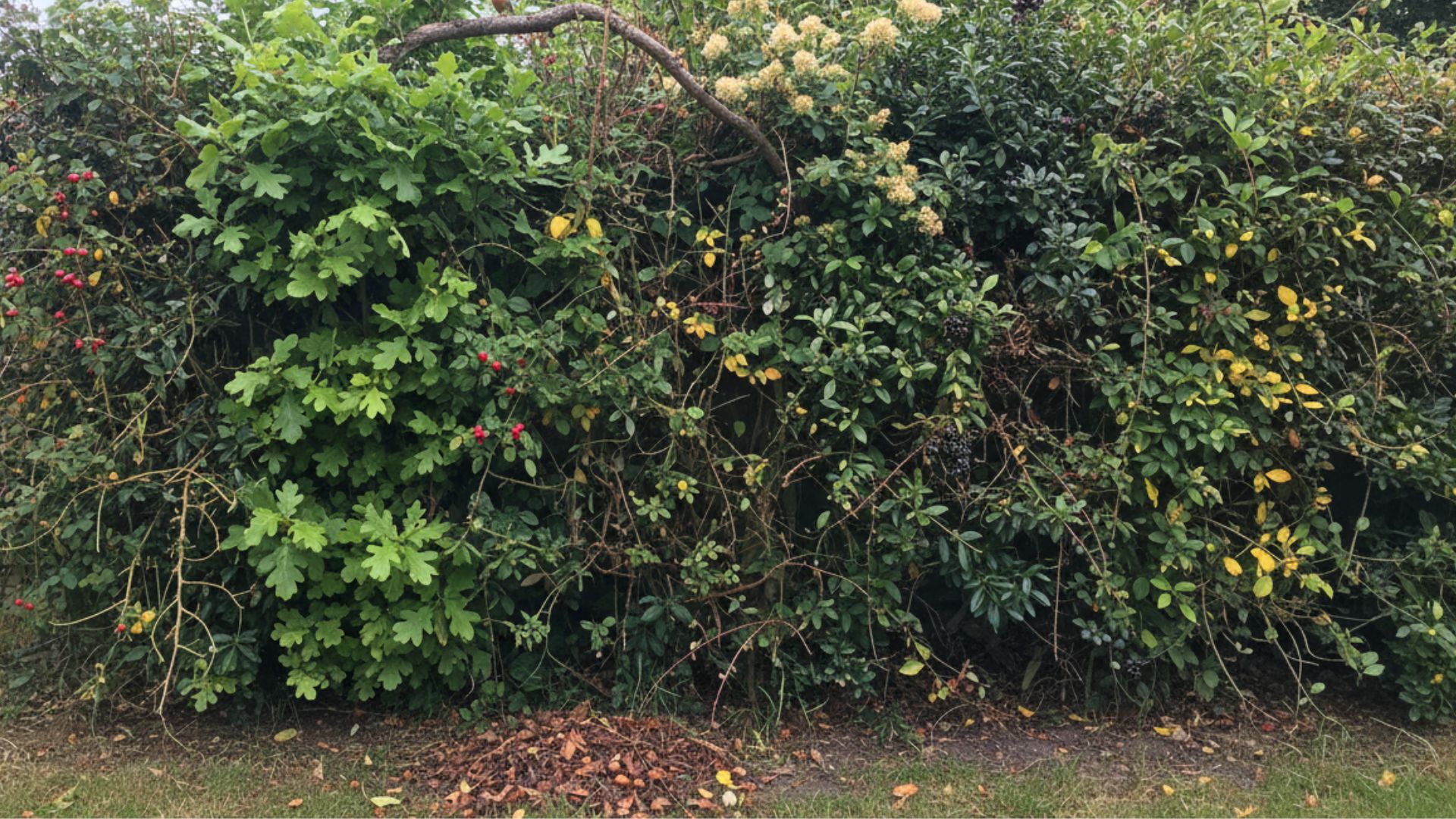
About fifteen years ago I pulled out the last section of the old larch-lap fence that used to run along the back boundary of my garden, and in its place I put in a straggling line of bare-root whips — hawthorn, blackthorn, a couple of hollies, and two elder cuttings I had rooted in pots the previous autumn. My neighbours thought I had lost the plot entirely. Within three years a pair of dunnocks nested in the thickest part. Within five, a hedgehog was wintering beneath the base of the blackthorn. There are now robins, wrens, bullfinches, blackbirds, and long-tailed tits using that hedge at different points across the year, and I have never once wished I had kept the fence. If you are thinking about your garden boundary and wondering whether a hedge might be worth the patience it takes to establish, I want to share everything I have learned over those fifteen years so you can make that decision with confidence.
Why a Fence Cannot Do What a Hedge Does for Wildlife
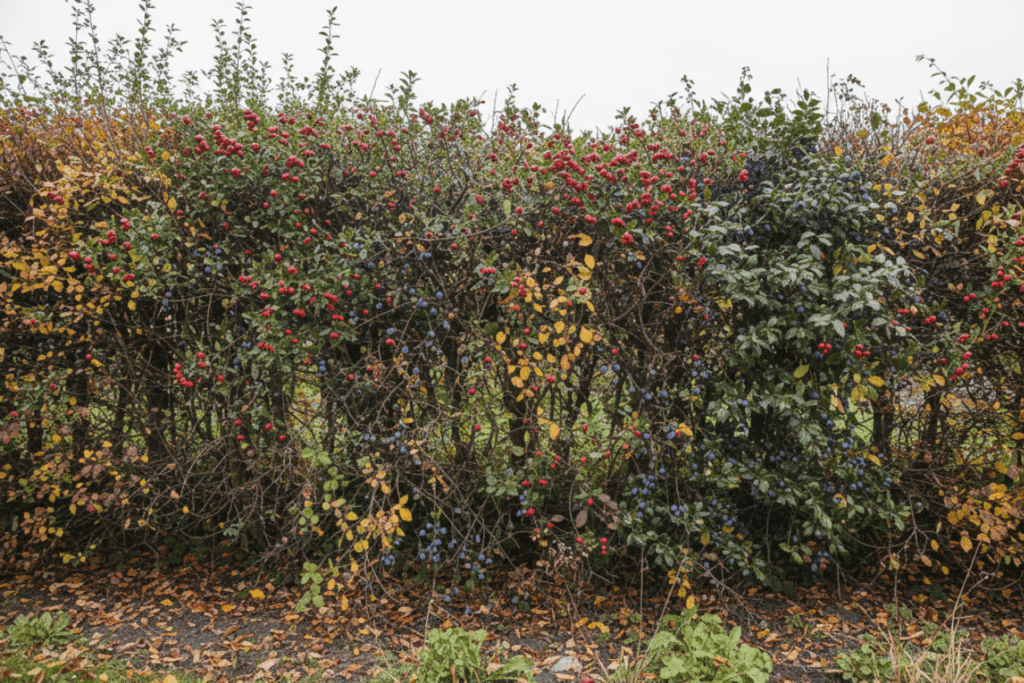
A fence is a barrier. It keeps things in or out, it marks a line on the ground, and that is essentially all it does. A hedge is an ecosystem. It provides nesting sites at multiple heights for birds with very different requirements — a wren will nest in the dense tangled base while a chaffinch goes higher up in the canopy. It offers a corridor of shelter that allows small mammals to move through the landscape without exposure to predators. It intercepts wind and creates a microclimate on both sides that extends your growing season and reduces frost pockets near the ground. A solid panel fence does precisely none of these things, and a wall does even less.
The research behind this is not complicated. The Wildlife Trusts estimate that a well-established mixed native hedge can support over twenty breeding bird species across a season. Hedgehogs — whose numbers have fallen catastrophically in recent decades — depend on hedgerows for both nesting and hibernation cover, and they cannot tunnel under or climb over a panel fence. Shrews, voles, and bank voles move along the base of hedges rather than crossing open ground, and that movement keeps them connected to food sources and mates. A ten-metre run of mixed native hedge planted along a back boundary links your garden to every other green space a foraging animal can reach, turning your patch into a node in a much larger network rather than an isolated island.


Hawthorn — Crataegus monogyna — is the anchor plant of any British native hedge, and I would always recommend it as at least a third of your planting mix. It is ferociously thorny, which gives nesting birds the protection they need from cats and corvids. It flowers in May with a froth of white blossom that feeds hundreds of species of insects, which in turn feed nestlings at exactly the right moment. By October those same flowers have become crimson haws — one of the most important berry crops in the hedgerow calendar. I have counted redwings stripping a single hawthorn stem of every berry within a matter of minutes on a sharp November morning. Bare-root hawthorn whips are cheap, widely available from native tree nurseries, and remarkably easy to establish even on difficult soils.
Choosing Your Species: Blackthorn, Holly, and Elder
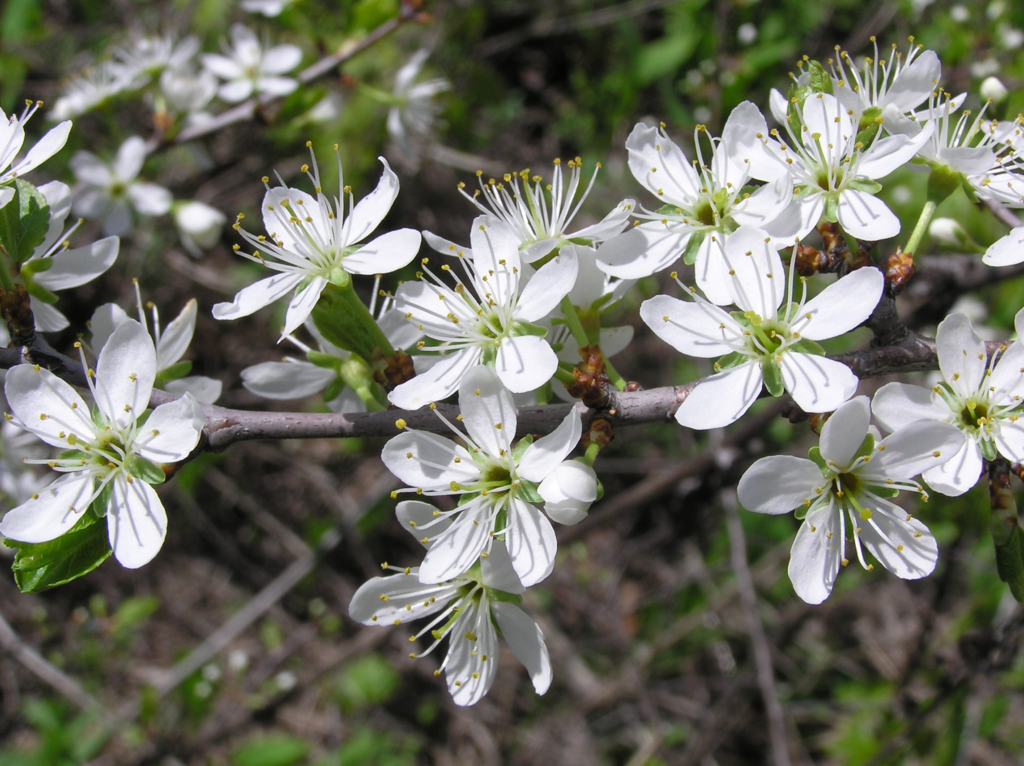
Once you have your hawthorn backbone — I usually aim for roughly one hawthorn in every three plants — the other species fill in different niches and extend both the structural and food value of the hedge across the whole year. Blackthorn (Prunus spinosa) is my second choice, planted at about one in four. It suckers naturally and fills gaps, its thorns are even more vicious than hawthorn’s, and it flowers in March before the leaves open — which means it provides nectar at the leanest time of year for bumblebee queens just out of hibernation. The sloes that follow in autumn are bitter to us but loved by thrushes, and they persist on the stem well into winter when other food sources are exhausted.
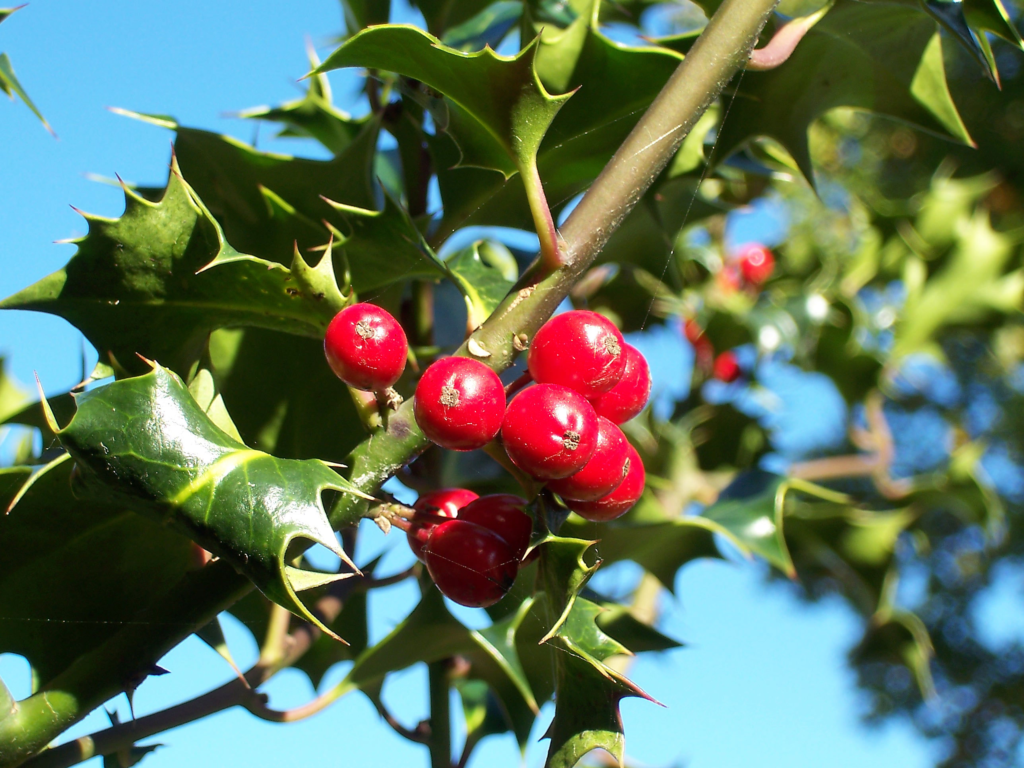
Holly (Ilex aquifolium) brings something neither hawthorn nor blackthorn can offer: year-round evergreen cover. I plant one holly for every five or six whips, always making sure to include at least one female plant (you need both sexes within pollination range for berries, so check the label carefully when buying). The dense, spiny leaves make holly the single best nesting site in any hedge — a blackbird sitting tight on eggs inside a holly is virtually impossible for a predator to reach. The red berries that ripen from October onwards are a crucial food source for fieldfares, redwings, and mistle thrushes arriving from the continent, and on a good year a large holly can hold its crop right through to February.
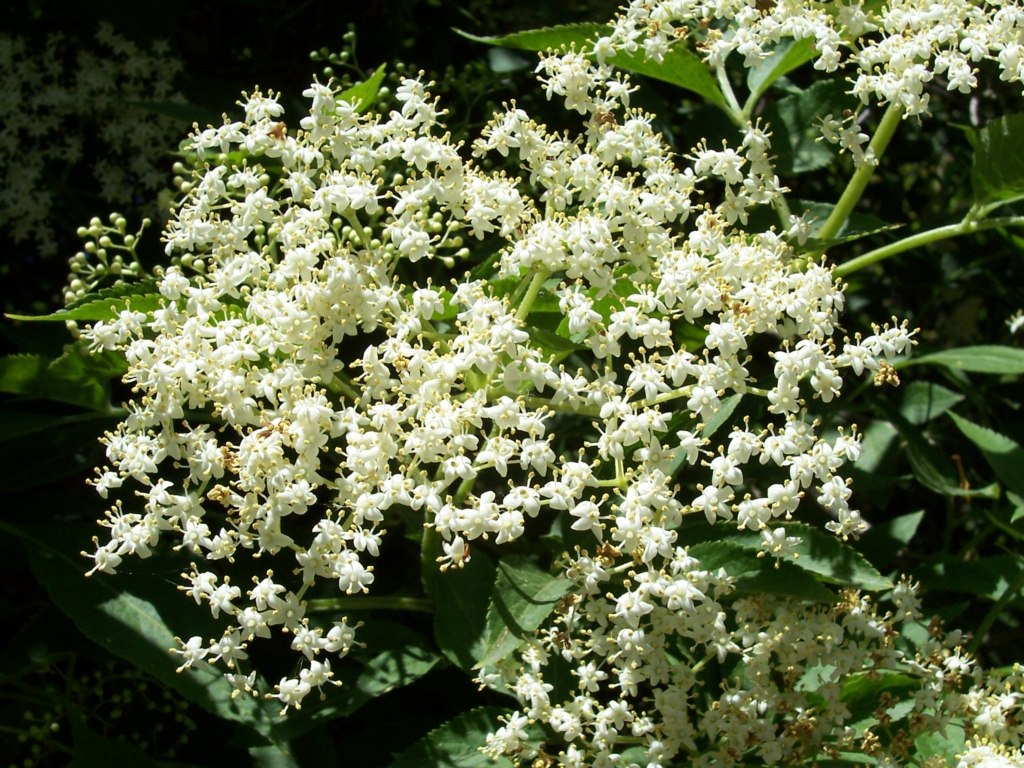
Elder (Sambucus nigra) is the fast grower that fills in the gaps while the slower species get established. I usually put in one elder for every eight or ten plants, positioned at intervals along the hedge. It is softer and less spiny than the others, so I would not rely on it for nesting cover, but the flat-topped flower heads in June are extraordinary for insects — I have counted dozens of hoverfly species on a single elder in bloom. The heavy clusters of black elderberries that follow are eaten by almost every bird in the garden, and the hollow stems left by dead branches provide nesting sites for solitary bees. Do be prepared to cut elder back hard if it starts to dominate, because it grows much faster than its neighbours and can shade them out.
Spacing, Planting, and the First Three Years
Bare-root whips are available from late November through to March, and this is by far the most cost-effective way to plant a hedge. A bare-root hawthorn whip 40–60 cm tall will cost you somewhere between 50p and a pound from a specialist native tree nursery, compared with five or ten pounds for a potted specimen at a garden centre. For a mixed hedge I plant in a double staggered row, with plants spaced 45 cm apart within each row and the two rows 40 cm apart from each other. This gives you around four to five plants per linear metre, which sounds like a lot but produces a much denser, more wildlife-rich hedge than a single row ever would.
Preparation matters enormously in those first few years. I clear a strip at least 60 cm wide, remove all perennial weeds thoroughly — couch grass and bindweed will strangle young whips if you leave them — and dig in some garden compost or well-rotted manure if the soil is very poor. After planting, I lay a membrane or a thick mulch of wood chip over the planting strip to suppress weeds and retain moisture. In the first summer, if it is dry, water regularly. The plants are trying to establish root systems in unfamiliar ground, and a dry first summer is the single most common reason a new hedge fails. After that, a native hedge is essentially self-sufficient.
After planting, cut the whips back by a third to a half. I know it feels brutal when they are already small, but this initial hard cut encourages the plants to branch from low down, which is exactly what you want for a dense, stock-proof, wildlife-rich hedge. A hedge that is allowed to shoot straight up without this early training becomes a row of leggy shrubs with a bare base — useful for almost nothing. In the second year, cut back again by a third. By the third year you can start to see the structure forming and ease off, letting the hedge gain some height.
Berries, Hips, and the Winter Food Calendar
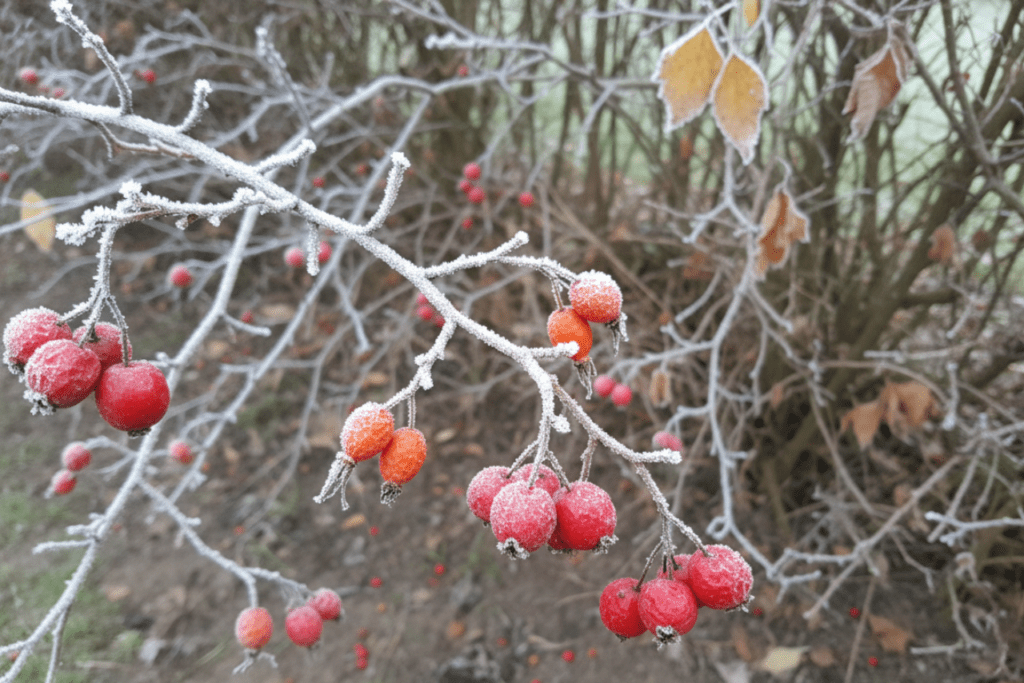
One of the things I love most about a mixed native hedge is the way it provides food across an extraordinarily long season. If you include dog rose (Rosa canina) as an occasional plant — one or two per ten-metre run, woven into the mix — you extend that food calendar even further. The hips that dog rose produces are among the last to be stripped by birds; I have seen hips still hanging in February when everything else has gone. Elderberries are ready first, typically in August and September. Hawthorn haws and sloes follow through October and November. Holly berries, being less palatable to most birds, persist the longest — sometimes right through to March — and this staggering of the food supply is something no garden centre planting scheme can replicate.
The Wildlife Trusts estimate that the berries, hips, and sloes produced by a ten-metre native hedge can provide food for birds and small mammals continuously from August through to February — six full months of the year when gardens and farmland offer very little else. I have watched a fieldfare, newly arrived from Scandinavia and clearly starving after a sea crossing, spend an entire morning systematically working its way along my hawthorn and then moving on to the holly. That bird may well have survived the winter because of what my hedge provided. There is a particular satisfaction in a garden that feeds wild creatures through the hardest months of the year.
When and How to Trim Without Disturbing Nesting Birds
The single most important rule about hedge trimming is one that took me an embarrassing number of years to fully internalise: never trim between March and August. In Britain this period covers the main nesting season for almost all garden birds, and a hedge that appears empty to a casual glance may contain active nests at almost every stage of the breeding cycle simultaneously. Trimming during this period is not only ecologically damaging but is also an offence under the Wildlife and Countryside Act 1981 if it results in the destruction of an active nest — so there is a legal as well as a moral reason to wait.
My preferred time to trim is late February, before the nesting season begins in earnest, or alternatively in September after the main flush of nesting has finished and before the berry crop is fully set. I trim to a slightly A-shaped profile — wider at the base than the top — which allows light to reach the lower stems and keeps the base of the hedge dense. A flat-topped hedge shades its own base and gradually loses vigour at ground level, which is exactly where hedgehogs and small mammals need cover. I use a petrol hedgetrimmer for the main work and loppers for any thick stems, and I always aim to remove no more than a third of the current year’s growth in any single cut.
After ten years of growth and careful management, my fifteen-metre hedge is now about two metres tall and perhaps a metre and a half wide at the base. It requires one good trim per year, taking me about two hours with a hedgetrimmer and a tidy-up of the clippings. In return it gives me a living boundary that costs nothing to maintain beyond those two hours, provides year-round privacy that no fence panel has ever matched, and supports more wildlife in a single season than the entire rest of my garden combined. If there is one single change I would recommend to any gardener who wants to do more for wildlife, this is it.
Quick-Fire FAQ
Q: How long before a native hedge becomes useful wildlife habitat?
A: Birds will begin using a new hedge for nesting as early as the second or third year, and hedgehog hibernation sites can form once the base becomes dense enough, typically by year four or five.
Q: Can I plant a native hedge right against an existing fence?
A: Yes — planting 30–40 cm from the fence gives the roots room to develop, and within a few years the hedge will stand independently so the fence can be removed if you choose.
Q: Do I need to plant both male and female holly to get berries?
A: Yes, you need at least one male within about 50 metres for pollination — check the label when buying, as many named varieties are one sex only.
Q: Is it too late to plant bare-root whips in February?
A: February is one of the best months to plant bare-root whips as long as the ground is not frozen — the plants are still fully dormant and will root quickly once the soil begins to warm in March.
— Grandma Maggie
ivermectin for rosacea treatment
ivermectin for rosacea treatment
azithromycin for strep throat
azithromycin for strep throat
vardenafil
vardenafil
doxycycline
doxycycline
diflucan yeast medication
diflucan yeast medication