
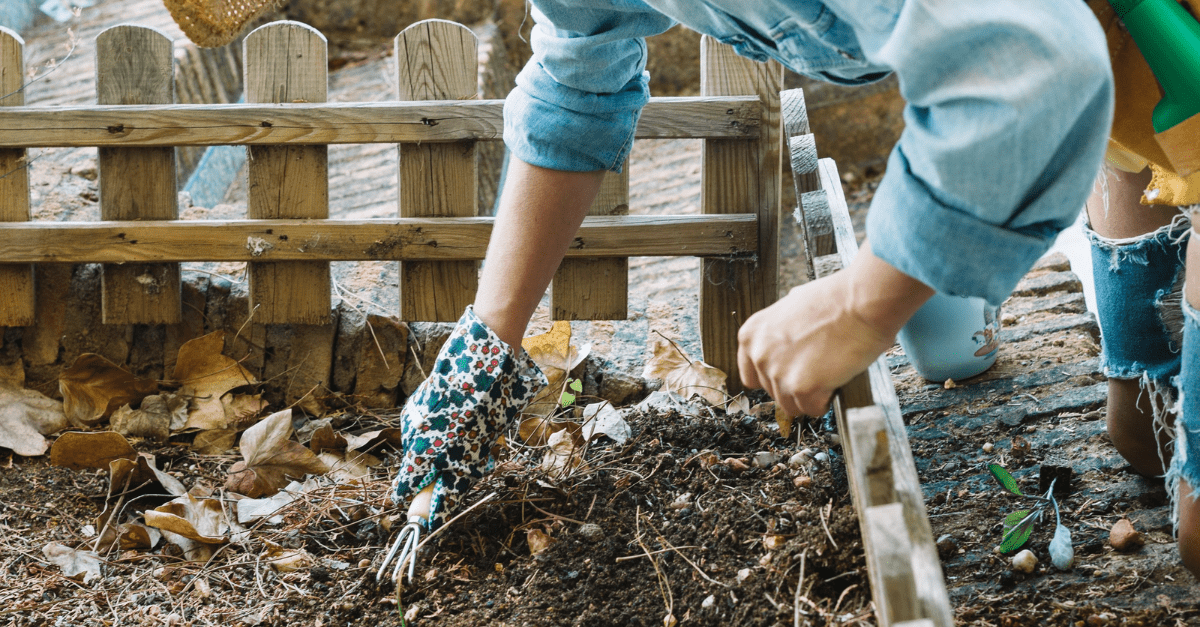
I’ve been gardening for more decades than I care to count, and if there’s one practice that’s transformed my garden more than any other, it’s mulching. A good layer of mulch is like tucking your garden beds in with a cozy blanket — it keeps moisture where it belongs, moderates soil temperature, suppresses weeds, and slowly feeds the soil as it breaks down. Best of all, it can genuinely cut your watering needs in half or more. Let me share what I’ve learned about choosing and using the right mulch for your garden.
Why Mulch Is Your Garden’s Best Friend
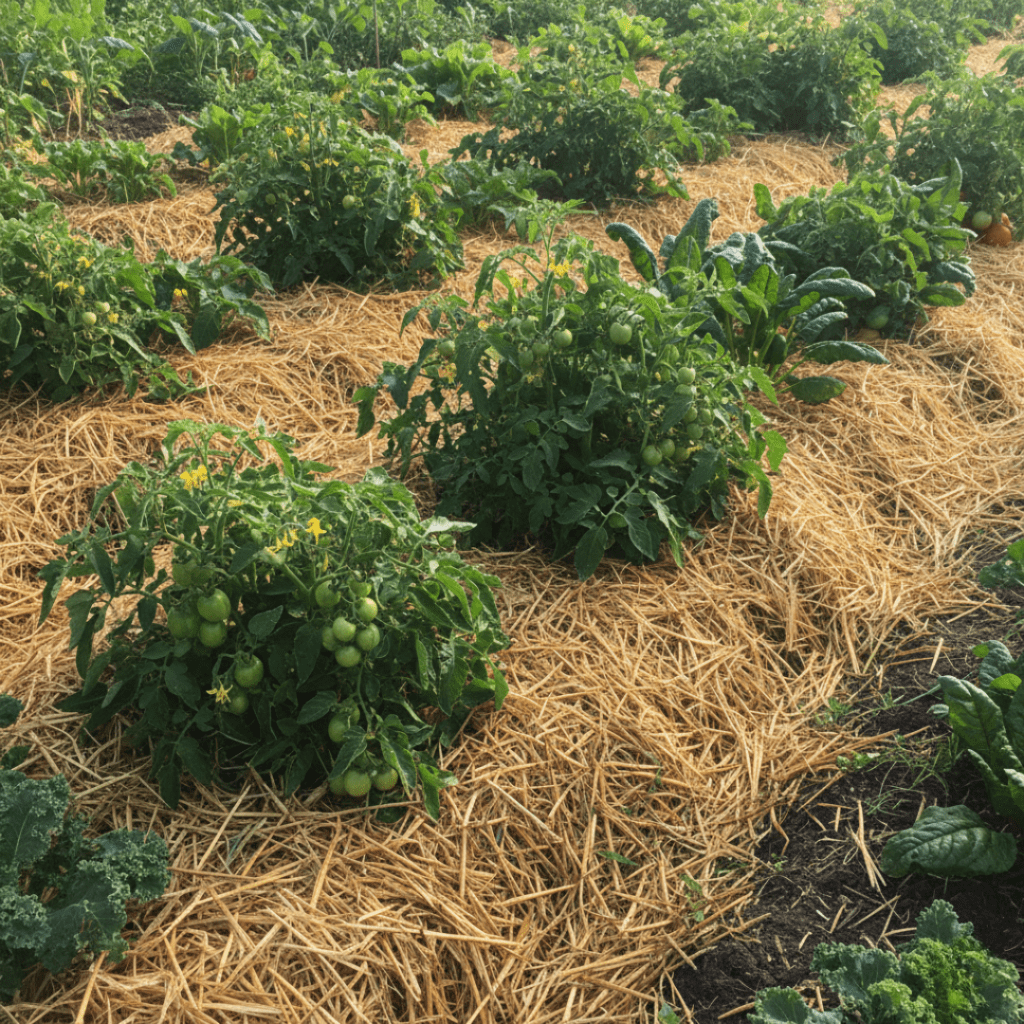


Exposed soil loses moisture fast—the sun bakes it dry, wind carries away humidity, and heavy rain can create a hard crust that repels water instead of soaking it in. Mulch solves all these problems by creating a protective layer that keeps soil cool, moist, and loose.
The water savings are impressive. Unmulched garden beds need watering every day or two during summer, while mulched beds can go four to five days between waterings, even during the hottest weeks of July. This not only saves time and water but also creates healthier conditions for plant roots.
Mulch also acts as insulation. On hot days, it keeps soil 10-15 degrees cooler than bare ground, reducing stress on roots and beneficial soil organisms. In winter, it protects against freeze-thaw cycles that can push plants out of the ground. Year-round, mulch translates to healthier, more vigorous plants.
Organic Mulches: My Top Choices
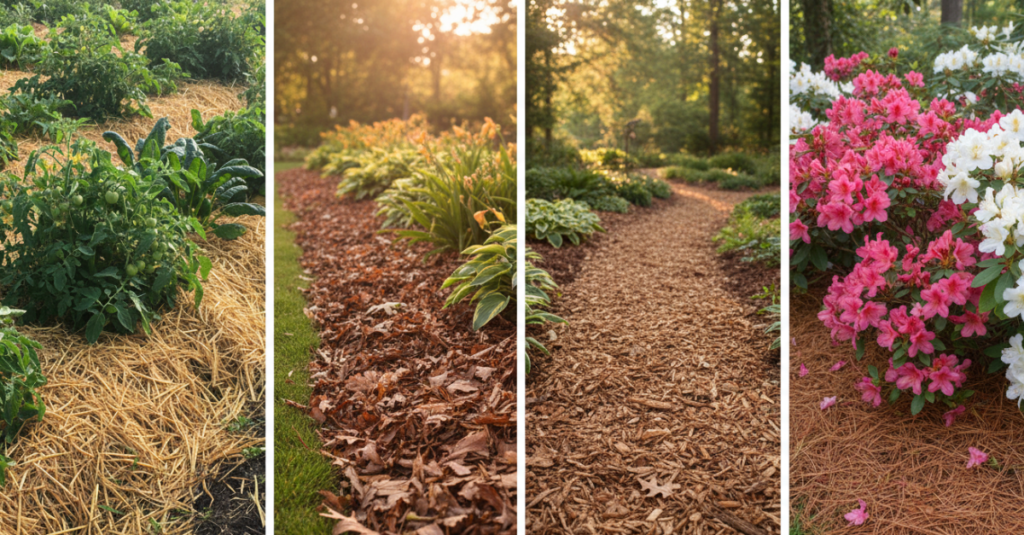
Organic mulches break down over time, which means they conserve water and improve your soil. Here are the best options:
Straw is ideal for vegetable gardens. A four-inch layer keeps soil moist for days and suppresses weeds effectively. It’s lightweight, easy to spread, and lasts most of the growing season. Just make sure you’re buying straw, not hay—hay is full of weed seeds that will take over your beds.
Shredded leaves are free if you have trees. Run fall leaves through a mulching mower, and you’ll have excellent mulch for flower beds and shrubs. Shredded leaves form a moisture-retaining mat that allows water and air through, then break down by spring to feed the soil. Don’t use whole leaves—they mat too tightly and repel water.
Wood chips work best for pathways, around trees, and in permanent plantings. They’re attractive, long-lasting (2-3 years), and create comfortable walking surfaces. Since wood chips tie up nitrogen as they decompose, avoid using them around vegetables unless you add extra fertilizer. They’re perfect for established shrubs and perennials.
Pine needles are great for acid-loving plants like blueberries and azaleas. They decompose slowly, stay put on slopes, and allow water through easily. Don’t worry about the myth that they acidify soil—their effect is minimal.
Grass clippings can work in thin layers (one inch maximum), but they’ll turn slimy if piled thick. Use them as quick mulch around summer vegetables, and make sure your lawn hasn’t been treated with herbicides.
Compost makes excellent mulch for vegetables and annual flowers. A one to two-inch layer feeds plants while holding moisture, though it breaks down quickly and needs monthly refreshing during the growing season.
Inorganic Mulches: When and Where to Use Them
Inorganic mulches don’t break down, so they won’t improve your soil—but they also won’t need replacing. Use them where permanence matters more than soil enrichment.
Landscape fabric with stone suits permanent pathways and low-maintenance foundation plantings. The fabric blocks weeds while letting water through, and the stone layer on top reduces evaporation. Skip this option in vegetable beds or anywhere you want active soil life.
River rock and pebbles work beautifully around succulents, cacti, and Mediterranean herbs that need excellent drainage. The stones reflect heat and prevent moisture from collecting around plant crowns. They’re also perfect for containers and specimen plantings where you want a polished, permanent appearance.
Rubber mulch is best avoided in garden beds. While durable, it offers no soil benefits, can leach chemicals, and becomes extremely hot in summer sun. It has safety advantages for playgrounds, but organic mulches are the better choice for gardens.
How to Apply Mulch for Maximum Water Savings
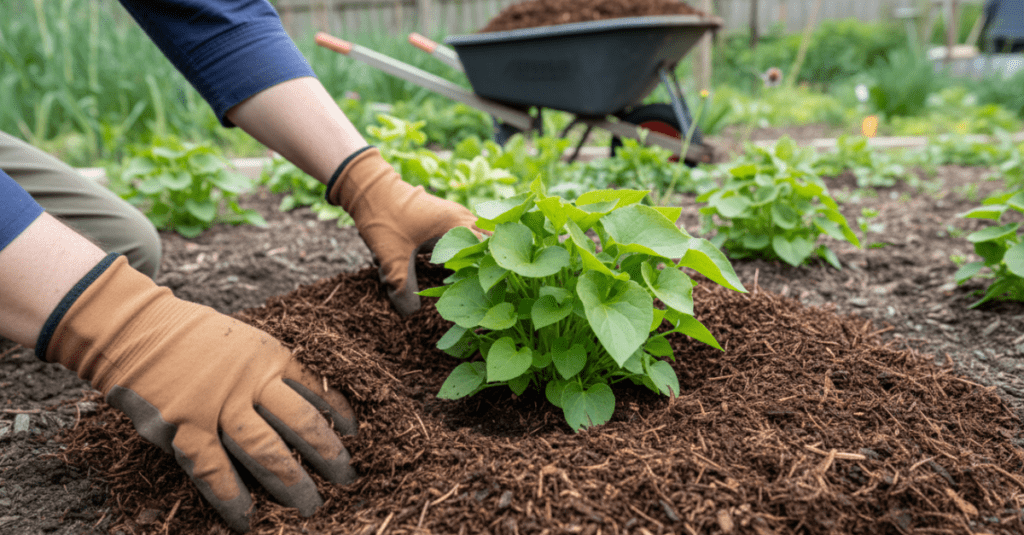
Start with clean beds. Remove all weeds before mulching—mulch suppresses new weed seeds but won’t smother established weeds, which will simply push through.
Water deeply first. Soak beds thoroughly, then apply mulch the next day when soil is moist but not muddy. This locks moisture in from the start. Never mulch dry soil—you’ll just trap the dryness.
Apply the right depth. Use 2 inches for fine materials like compost, or 3-4 inches for coarser materials like straw or wood chips. Too much mulch (6-8 inches) prevents water from reaching roots and creates pest problems.
Keep mulch away from stems. Leave a 2-3 inch gap around plant bases and tree trunks to prevent rot and discourage rodents. Avoid “mulch volcanoes”—spread mulch flat like a donut, not piled into a cone.
Refresh throughout the season. Check beds monthly and add thin layers where coverage has thinned. As organic mulches break down into the soil, they’re doing double duty—protecting and feeding the earth.
Common Mulching Mistakes and How to Avoid Them
Piling mulch against stems. Moisture trapped against bark causes rot and disease. Always leave a gap.
Using weed-seed-laden materials. Hay, uncomposted manure, or weedy grass clippings will create more problems than they solve. Source materials carefully.
Mulching dry soil. Water deeply first, then mulch. If you’ve already mulched over dry ground, pull it back, water, and replace.
Mulching too early in spring. Wait until soil warms to 60°F for warm-season crops. Early mulching can delay planting by weeks.
Using treated wood products. Treated lumber can leach chemicals into soil. Use only untreated, natural wood from trees and brush—never demolition debris.
Mulch and Watering: How They Work Together
Mulch doesn’t eliminate the need to water — it makes watering more efficient. Here’s how I’ve adjusted my watering practices to work with mulch.
Water less frequently but more deeply. Without mulch, light daily watering keeps the surface moist but encourages shallow roots. With mulch, I water every three to five days (depending on weather) but soak the soil thoroughly each time. Deep watering trains roots to grow down where moisture is more stable.
Check soil moisture under the mulch, not on top. The mulch surface might look dry while soil beneath is still moist. I push my finger down through the mulch into the soil to check — if it’s moist two inches down, I don’t need to water yet.
Use soaker hoses or drip irrigation under mulch for ultimate efficiency. The water goes straight to roots with zero waste to evaporation. I run drip lines in my vegetable beds before mulching, then cover everything with straw. It’s a beautiful system — water seeps into soil, mulch holds it there, and plants thrive with minimal input from me.
Adjust watering after rain. Mulch helps soil absorb rainfall more effectively by preventing surface crusting. After a good rain, I often find I can skip a week or more of watering because the mulch has held that moisture in place. I’ve learned to trust the system and not water by calendar but by observation.
Special Considerations for Different Garden Areas
Vegetable gardens: Straw, shredded leaves, or compost. These break down quickly and get worked into the soil each season. Use wood chips or cardboard topped with straw for paths.
Perennial beds: Shredded bark, wood chips, or shredded leaves in a 3-inch layer. Refresh every year or two—the slower breakdown suits plants that aren’t replanted annually.
Trees and shrubs: Wood chips or shredded bark, 3-4 inches deep, spread to the drip line but kept away from trunks. This mimics the natural forest floor.
Slopes: Pine needles, shredded bark, or erosion-control blankets. These materials stay put even in heavy rain.
Containers: Thin layers of compost, fine bark, or decorative moss retain moisture in pots that dry out quickly.
Making Your Own Mulch: Free Resources
You don’t need to buy mulch by the truckload. Many excellent mulches are available free or cheap if you know where to look.
Collect leaves from your yard or neighbors in fall. Run them through a shredder or mower and you have months worth of mulch. I store extra shredded leaves in large bags or bins for use throughout the growing season.
Contact local tree service companies and ask if they’ll deliver wood chips. Many are happy to dump a load for free because it saves them disposal fees. One load can last years. Make sure they’re not bringing treated wood or diseased material.
Save your grass clippings instead of bagging them. Let them dry for a day, then use them as mulch. Free, abundant, and otherwise wasted.
Grow cover crops in off-season beds, then cut and use them as mulch. Clover, rye, and buckwheat all make excellent chop-and-drop mulch that feeds the soil as it protects it.
Check with local sawmills or lumber yards for sawdust or wood shavings. These need to be composted first or used only around established plants because they tie up nitrogen aggressively as they decompose.
General Mulching Principles I Always Use
Match the mulch to the purpose. Quick-decomposing materials like grass clippings suit annual beds; long-lasting wood chips suit permanent plantings.
Never mulch over perennial weeds or you’ll just make them harder to remove later. Weed first, then mulch.
Rake or fluff settled mulch occasionally to maintain good air circulation and prevent matting, especially with fine materials like grass clippings or shredded leaves.
Don’t be afraid to mix different mulches. I often use cardboard or newspaper as a bottom layer for serious weed suppression, then top with straw or wood chips for aesthetics and function.
Equipment and Application Tips
A wheelbarrow or garden cart makes spreading mulch much easier on your back.
Use a pitchfork for spreading straw and light materials; a flat shovel works better for wood chips and compost.
Wear gloves when handling wood chips or rough materials to prevent splinters.
For large areas, consider renting a mulch blower if available — it can save hours of labor.
Long-Term Soil Benefits
After a few years of consistent mulching, you’ll notice soil transformation. The hard clay bed I started with has become loose, crumbly, and dark with organic matter. Earthworms are abundant. The soil stays moist longer, drains better during heavy rain, and grows healthier plants with less input from me.
This improvement happens because mulch feeds soil life. Fungi, bacteria, worms, and beneficial insects all thrive under that protective layer. They process the organic matter, create soil structure, and release nutrients slowly and steadily. It’s a cycle that builds on itself — better soil holds water better, which supports more life, which improves soil further.
One small ritual I keep: each spring when I pull back mulch to refresh beds, I pause to appreciate the dark, sweet-smelling soil beneath. It’s evidence of nature working with me, transforming rough materials into living fertility. That moment of gratitude reminds me why I garden.
Quick-Fire FAQ
Q: Can I mulch too heavily?
A: Yes — more than four inches can prevent water and air from reaching roots, and mulch piled against stems causes rot; stick with two to four inches and keep it away from plant bases.
Q: Does mulch attract termites or other pests?
A: Wood mulch can harbor termites if piled against house foundations, so keep mulch at least 12 inches away from structures; in garden beds away from buildings, pest issues are minimal.
Q: Should I remove old mulch before adding new?
A: No need — old mulch that’s decomposing into soil is valuable organic matter; just add fresh mulch on top to maintain proper depth.
Q: Can I use black plastic as mulch?
A: Black plastic warms soil and suppresses weeds but doesn’t allow water or air through and doesn’t improve soil; I use it only for short-term purposes like warming soil for heat-loving crops, then remove it.
— Grandma Maggie