
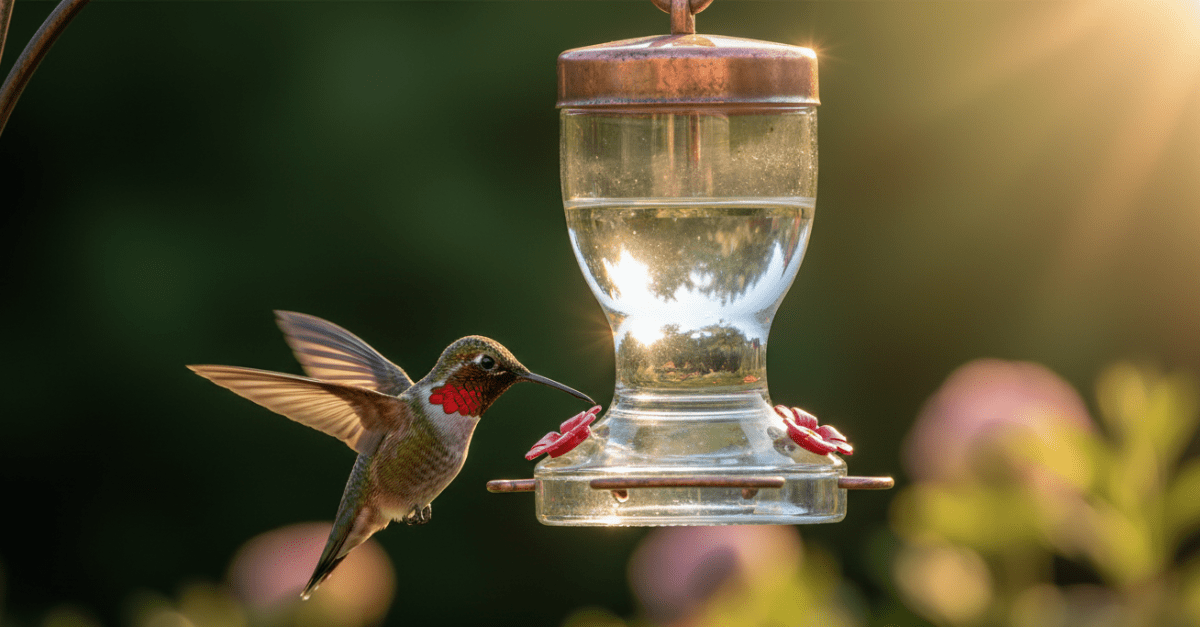
I worry when I see bright red nectar being sold for hummingbirds. That dye is unnecessary and can harm these tiny birds over time. I’ll show you a simple, safe nectar recipe and all the tips I use to keep visitors healthy and coming back.
The Only Nectar You Need: Sugar and Water
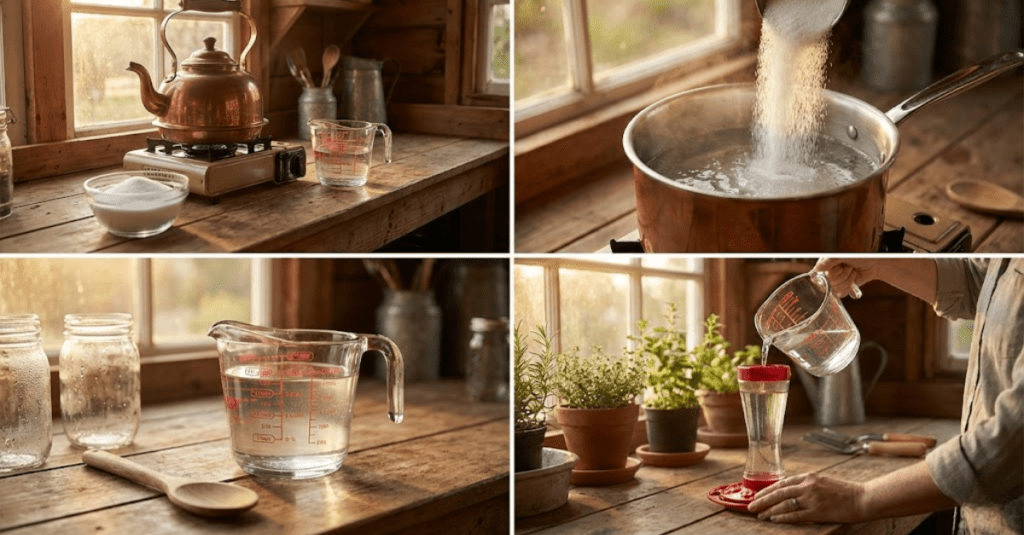
Use 1 part white granulated sugar to 4 parts water — that’s the sweet spot hummingbirds prefer. Boil the water, stir in the sugar until dissolved, let the mixture cool, and fill your feeder. Boiling helps dissolve the sugar and sanitizes the water a little, so your nectar stays fresher longer. Don’t add honey, brown sugar, molasses, or artificial sweeteners — they can ferment, grow mold, or be toxic.
Why Skip Red Dye? Please Don’t Use It
Manufacturers sometimes add red dye to make the nectar look more attractive to people, but the red parts on most feeders are plenty to catch hummingbirds’ attention. Artificial dyes can stress birds’ organs and have been linked to health problems in some studies — they’re simply unnecessary when natural nectar or a simple sugar solution does the job. Keep it clear and safe; your tiny guests will find it just fine.
Cleaning and Changing Schedule: The Rules That Matter
- Change nectar every 2–3 days in cool weather and every day in hot weather. Warm temperatures speed bacterial and fungal growth, turning nectar cloudy and dangerous quickly.
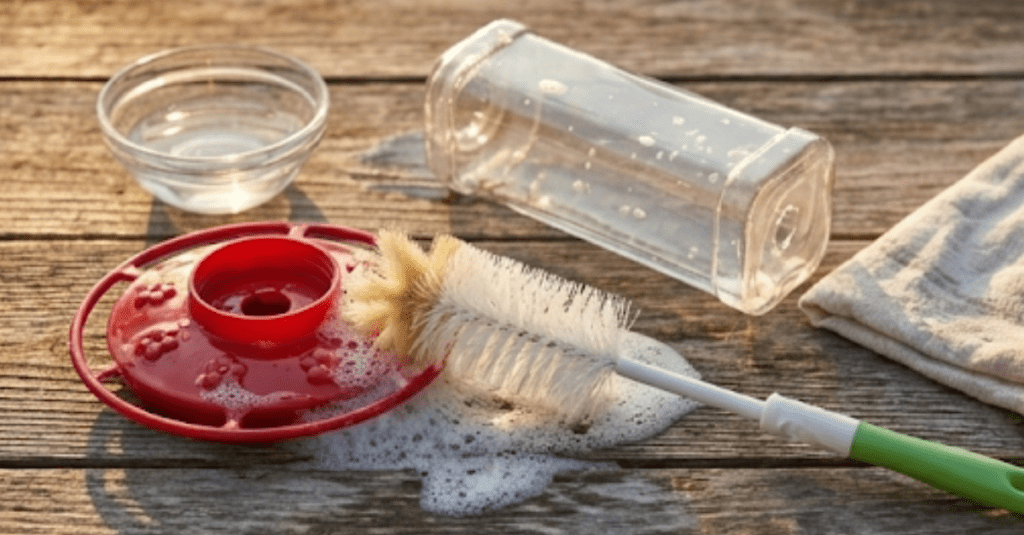
- Clean feeders thoroughly each time you refill: use hot soapy water or a 1:4 vinegar-to-water soak, scrub with a bottle brush to reach narrow ports, rinse well, and let the feeder dry before refilling. Avoid strong chlorine smells — rinse until the scent is gone.
- Watch for signs of spoilage: cloudy nectar, bubbles, or an off smell mean it’s time to clean and replace immediately.
Placement, Safety, and Neighborly Tips
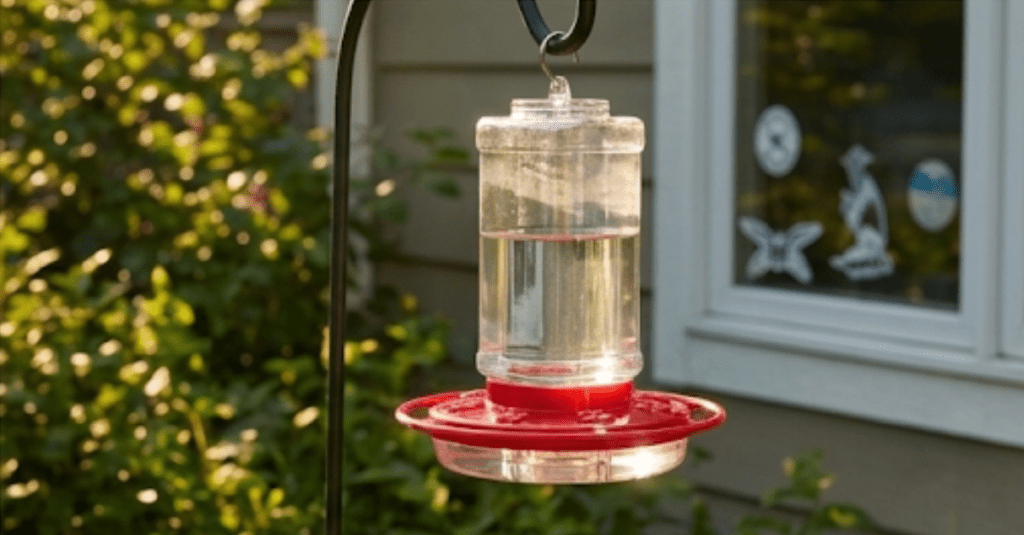
Hang feeders 5–10 feet from windows to reduce collision risk, or use window decals and place feeders slightly farther away so birds have time to react. Position feeders near shrubs or trees so hummingbirds can dart to cover quickly — but not so close that predators like cats can ambush them. I like to hang feeders within 2–4 meters of a sheltered branch; the birds use that nearby shelter as a lookout and resting spot between sips.
Dealing with Ants, Bees, and Wasps
Ant moats and bee guards help keep other insects from dominating your feeder. An ant moat — a small water-filled reservoir above the feeder hook — stops ants climbing down to the ports. Bee guards or feeder designs with narrow feeding ports discourage bees. If hummingbirds are being chased away by aggressive wasps, move the feeder a few feet: hummingbirds are surprisingly flexible and will usually continue to visit a new spot once they discover it.
Use Feeders as a Helpful Supplement, Not a Replacement
Feeders are an excellent supplement, especially when natural flowers are scarce, but they aren’t a substitute for native nectar plants. Plant native bee balm (Monarda), trumpet honeysuckle (Lonicera sempervirens), and cardinal flower (Lobelia cardinalis) to offer natural nectar sources and to give hummingbirds food year-round. A mix of feeders and flowering natives supports healthier birds and draws more species to your garden.
What Else to Avoid and Extra Safety Notes
- Don’t use food coloring, red dye or preservatives. Clear sugar water is safest.
- Never give hummingbirds processed sweet drinks like soda, artificial sweeteners, or honey mixtures; these encourage harmful bacteria and can be fatal.
- If a feeder sits unused for long stretches, empty and clean it — stale sugar water can become a hazard for any wildlife that investigates.
Seasonal Care and Hot-Weather Watch
In summer heat, nectar ferments and molds quickly so change it every day or chill it before filling to slow spoilage. In cool autumns and springs you can stretch refills to 2–3 days, but always change at the first sign of cloudiness. During migrations, keep feeders going — many migrating hummingbirds rely on consistent nectar sources along their routes.
Quick Troubleshooting from My Porch
- Cloudy nectar after a day: heat was high; change daily and keep feeder in a slightly shaded spot.
- Ant trail down the hanger: add an ant moat or a smear of petroleum jelly on the hanger above the feeder (keeps ants from crossing).
- Bees clustered at ports: fit a bee guard or try a feeder with smaller feeding holes; also move it slightly away from nearby flowers where bees forage.
A Small Ritual I Always Do
Each morning I check the feeder as I make tea: a quick swirl to see if the nectar is clear, a sniff to detect off-odors, and a little top-up if it’s gone. It takes a couple of minutes and it’s paid me back in countless hummingbird visits and the soft blur of wings at dawn.
Quick-Fire FAQ
Q: Can I use honey or brown sugar in hummingbird nectar?
A: No — honey and unrefined sugars can encourage harmful microbes and should never be used; stick to plain white granulated sugar.
Q: How often should I change feeder nectar in summer?
A: Change it daily in hot weather, as warm temperatures speed fermentation and mold growth.
Q: Will a clear feeder still attract hummingbirds without red dye?
A: Yes — the red parts of the feeder are enough to attract them; planting red or tubular native flowers also helps them find your yard.
Q: What’s the best way to clean a narrow-feeder?
A: Soak with warm soapy water or a 1:4 vinegar solution, scrub with a bottle brush that fits the tube, rinse well, and air dry before refilling.
— Grandma Maggie