
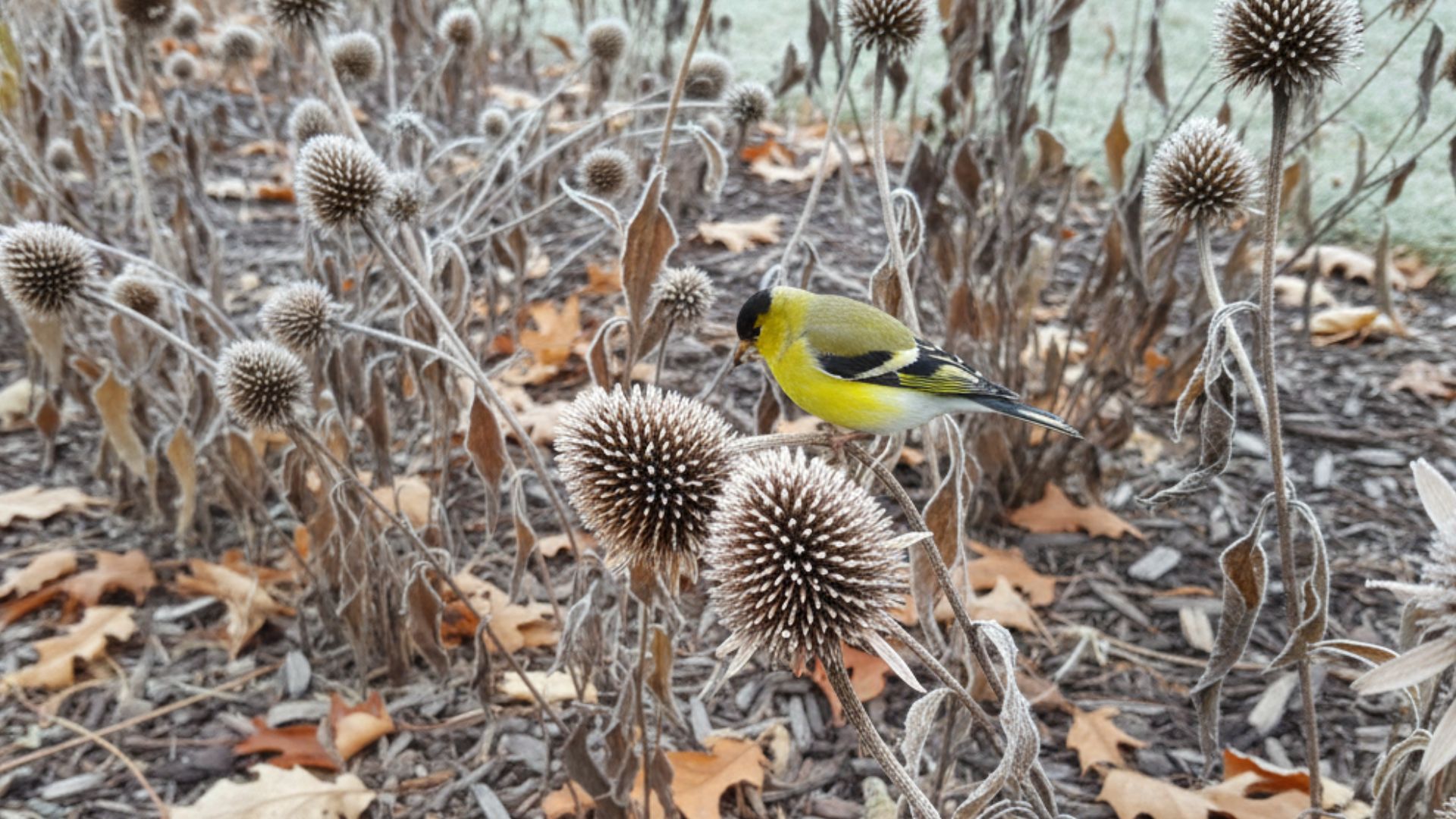
I have to be honest with you: I spent the first thirty years of my gardening life convinced that a tidy garden was a good garden. Every October, I’d be out there with my secateurs, snipping back the coneflowers, cutting the sunflower stalks to the ground, bundling up the ornamental grasses, and hauling it all to the compost heap. The border looked neat, the paths were clear, and I went inside feeling very satisfied. Then a neighbour mentioned that she’d stopped cutting everything back in autumn, and I thought she’d lost the plot entirely. I tried it anyway — just to prove a point — and by the following January, I had goldfinches on the coneflower seedheads, a pair of sparrows working through the sunflower remnants, and what I later identified as a mason bee emerging from a hollow stems of my Joe Pye weed in early April. I have not cut back in autumn since, and I’d like to tell you exactly why.
Why the Tidiest Gardens Are Often the Emptiest
What You’re Actually Removing When You Deadhead in Autumn
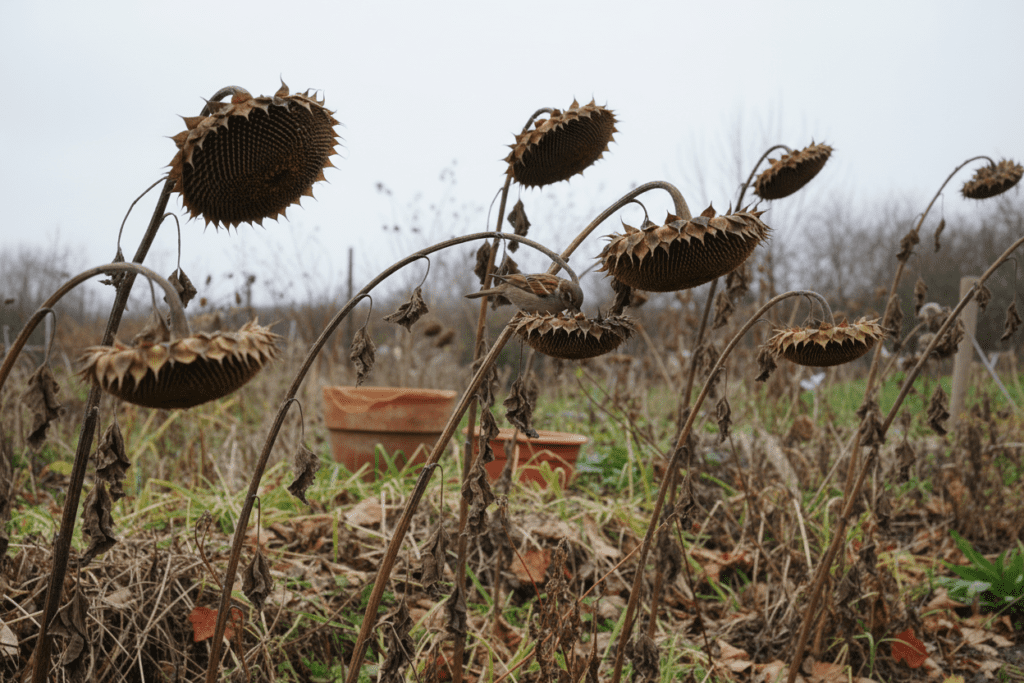
When I talk to other gardeners about leaving seedheads standing, the most common response I get is that they worry it will look messy or encourage weeds. Both concerns are understandable, and I’ll address them in a moment. But first, I want you to think about what you are actually removing when you cut everything back in October or November. You are removing food. You are removing shelter. You are removing the only warm, dry, protected spaces that dozens of small creatures have spent months preparing to use. A hollow stem is not garden waste — it’s a winter flat for a solitary bee or a lacewing. A seedhead is not clutter — it’s a food cache that goldfinches have been watching since August. When we cut it all down and haul it away, we don’t just tidy the garden. We effectively evict everything that was depending on it.
The research backs this up thoroughly. The Xerces Society, which focuses on invertebrate conservation, has documented how the hollow stems of pithy or pith-filled plants — things like coneflowers, Joe Pye weed, elderberry, and ornamental grasses — provide overwintering sites for more than a hundred species of native bees alone, never mind beetles, lacewings, and other beneficial insects. These creatures don’t migrate. They can’t. They overwinter as eggs, pupae, or adults in whatever sheltered spaces they can find, and when those spaces are removed wholesale every autumn, the populations simply don’t recover as they should by spring.


Echinacea — the coneflower — was the plant that converted me, so I’ll start there. Once the petals drop in late summer, those spiky, dome-shaped seedheads persist for months, and they are among the best winter bird feeders you can have in a garden. The seeds are small enough for finches but calorie-dense enough to matter on a cold January morning. I’ve counted five goldfinches on a single large clump at once, and I’ve never bought a single bag of niger seed since I started leaving my coneflowers standing. Beyond feeding birds, the hollow stems at the base of mature Echinacea plants — cut to about twelve inches rather than removed entirely — provide nesting cavities for small solitary bees come spring.
The Plants Worth Leaving — and What Each One Offers
Not every plant in the garden needs to be left standing, and I’m not suggesting you abandon all tidying. What I’m suggesting is that you make deliberate choices about which plants do the most wildlife work over winter, and protect those. In my experience, a handful of species deliver the majority of the benefit.
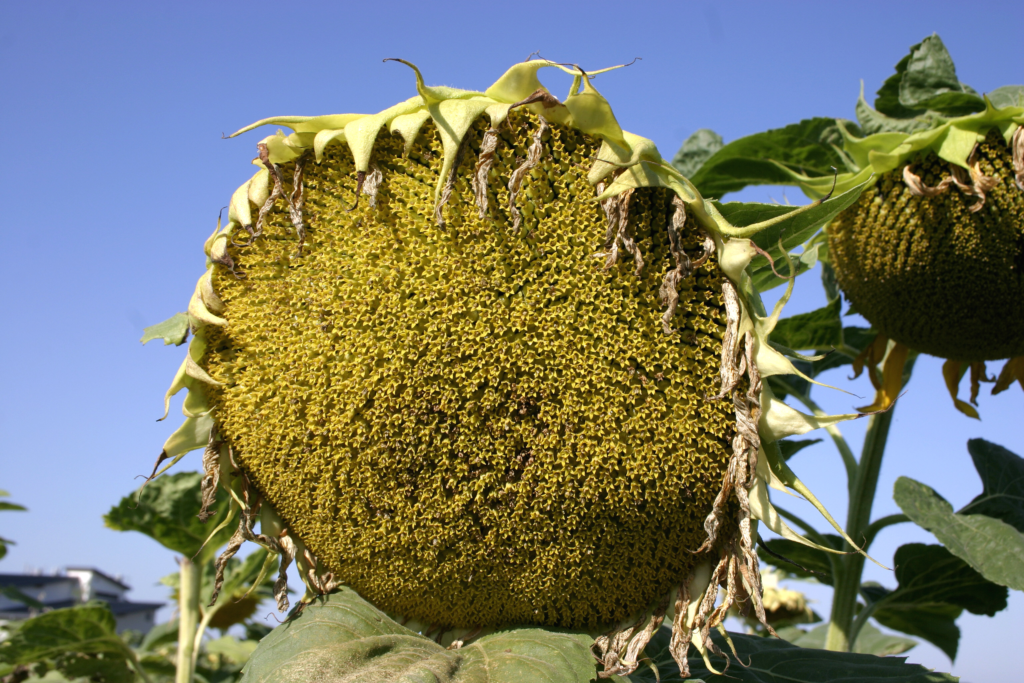
Sunflowers — Helianthus annuus — are perhaps the most dramatic winter bird feeder in the garden. I grow several varieties specifically to leave standing: the tall, multi-headed ones that produce dozens of smaller seedheads are better than the giant single-headed types, because they feed more birds simultaneously and the stems don’t topple as readily. Nuthatches, sparrows, chickadees, and house finches all work through sunflower heads methodically through November, December, and January. The trick is simply not to cut them down. Leave them exactly where they grew. The stems will dry, brown, and look stark, but on a bright February morning with a nuthatch working headfirst down the stalk, they are more beautiful than any ornamental arrangement I could devise.
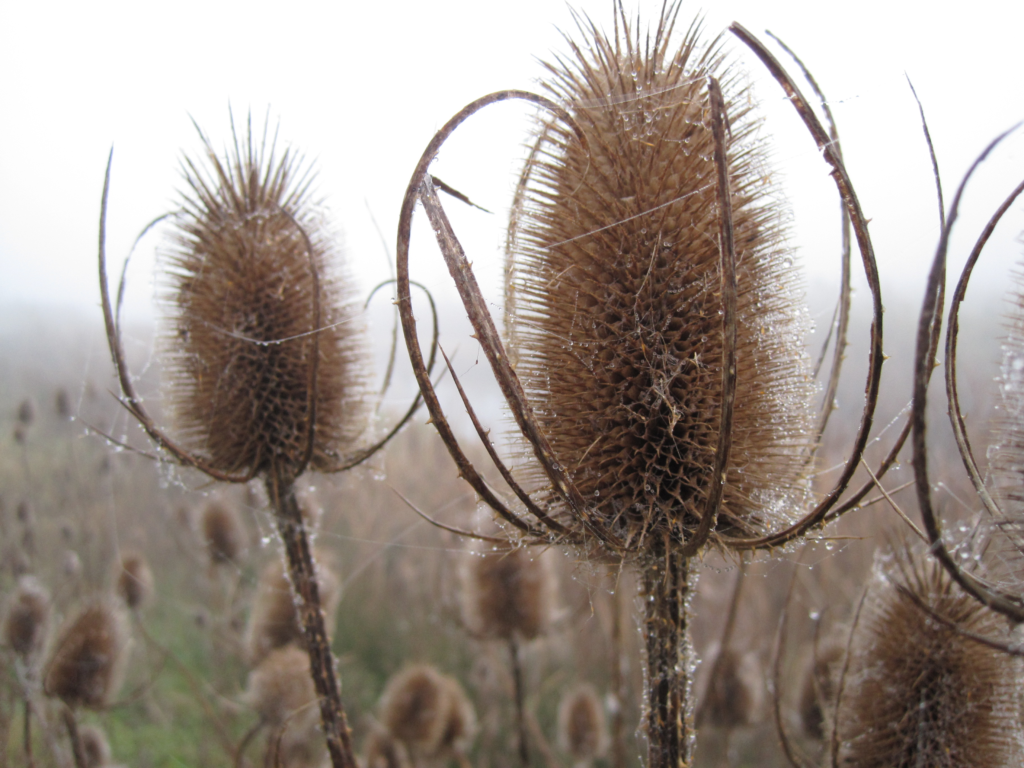
Teasel — Dipsacus fullonum — is a plant I resisted for years because of its thuggish reputation for self-seeding. And it’s true, you need to manage it: if you leave every seedhead to drop, you’ll have teasels in every corner of the garden by midsummer. But if you leave two or three standing through winter and then remove them before they drop their seeds in spring, you get all the wildlife benefit with none of the invasion. Goldfinches are particularly drawn to teasel seedheads — I’ve had five or six at a time clinging to a single stem in January, their red foreheads bright against the grey sky. The architectural quality of dried teasel is also genuinely lovely, especially with frost on the spines.
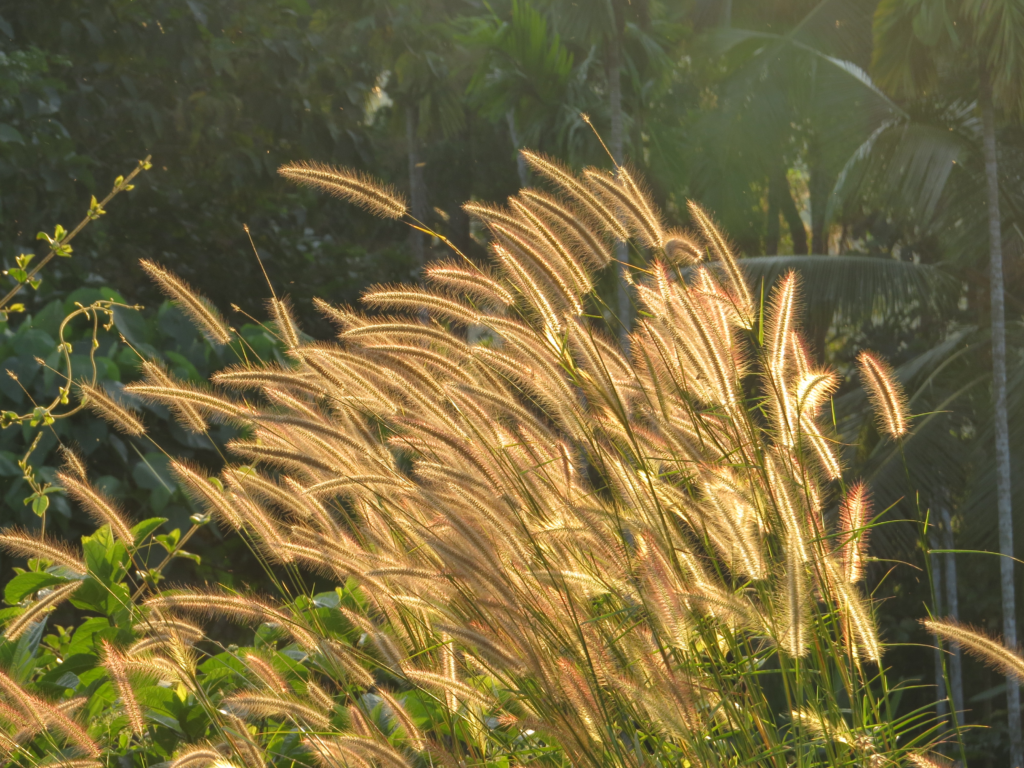
Ornamental grasses are different from seedheaded perennials in that their winter value is primarily structural and insulative rather than food-based, though the seeds of smaller species like little bluestem and prairie dropseed do feed sparrows and juncos. The dense clump of a large grass — a Miscanthus, a Pennisetum, a big Panicum — creates a microclimate inside its tangle of stems that is several degrees warmer than the surrounding air. Overwintering beetles, spiders, and small insects shelter there in the hundreds. I cut my ornamental grasses in late February or early March, before the new growth starts to push through, and I always find something living inside: a tiny spider, a hibernating beetle, once a chrysalis I moved carefully to the shed wall to complete its transformation undisturbed.
The Hollow Stem Insects You Never Knew You Had
Most gardeners are aware that bees nest in the ground, and many have put up bee hotels with pre-drilled wooden blocks. What fewer people know is that a significant proportion of our native solitary bees — mason bees, leafcutter bees, small carpenter bees — prefer to nest in hollow or pithy plant stems rather than wood. They lay their eggs in a chamber packed with pollen, seal it with mud or leaf pieces, and the larva develops through winter, emerging as an adult in spring when the weather warms.
The stems they use most readily are the ones we tend to cut down: Joe Pye weed, cup plant, elderberry, Echinacea, and the upright dead stems of annuals like sunflowers. The stem needs to be at least four to five millimetres in diameter for most species, with a hollow or soft pithy centre, and it needs to be standing upright — bees won’t use a stem that’s lying on the ground. When you cut everything to the ground in October, you remove every one of these potential nesting sites just as the bees are beginning their overwintering cycle. Leaving stems cut to around twelve to eighteen inches — not flat to the ground — provides hundreds of sheltering opportunities per plant.
Lacewings and ladybirds — both enormously valuable garden allies because of their appetite for aphids — also overwinter in plant debris and hollow stems. After fifty years of gardening I have never needed to spray for aphids, and I’m convinced that a significant part of the reason is that I’ve never cleared away the habitat that keeps their predators alive through winter.
When and How to Cut Back in Spring
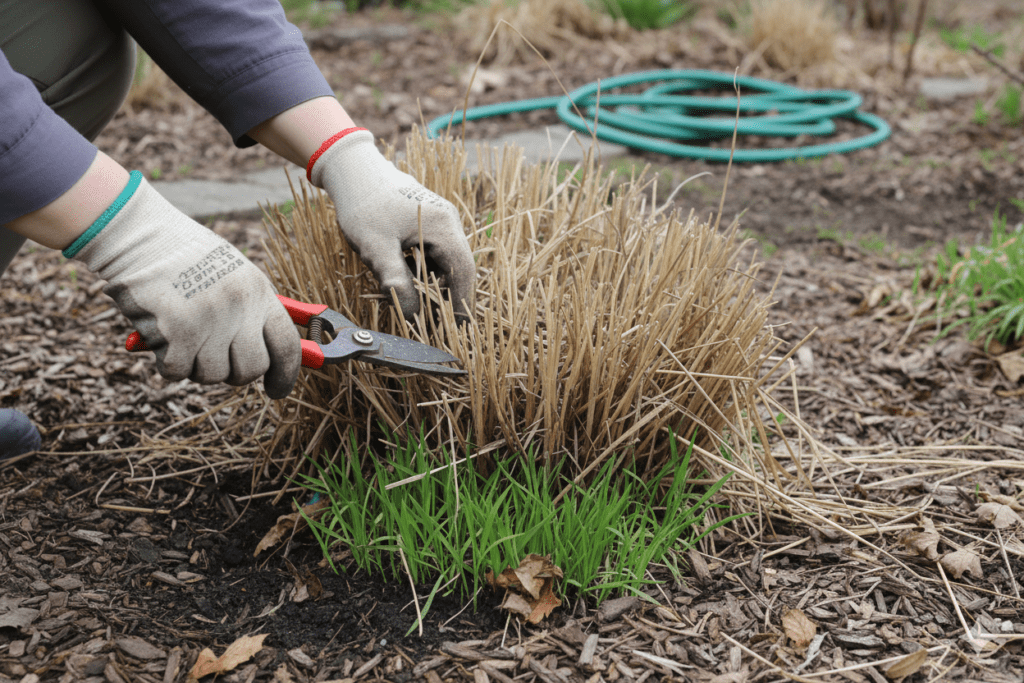
Switching your cut-back from autumn to early spring is the single practical change required, and I’ve found it makes spring gardening easier, not harder. Here’s how I approach it in my own garden.
I wait until I see the first genuine signs of spring activity: typically when the snowdrops are finishing, the crocuses are open, and I can see new basal growth beginning at the base of my perennials. In my part of the country that tends to be late February to mid-March. At that point, I cut the old stems down — but not to the ground. I cut to about six inches, which leaves the bottom portion of the stem intact for any insects that haven’t yet emerged. I leave those six-inch stubs in place until late April, by which point the new plant growth has overtaken them visually and most overwintering insects have emerged.
The cuttings themselves go into a loose pile at the back of the garden rather than the green waste bin — a brushpile of cut stems provides additional shelter and is used by wrens, hedgehogs, and slow worms. Nothing leaves the garden in a bag if I can avoid it. I’ve found that the garden cleans up far more quickly in spring than it ever did in autumn, because by March I’m energised and ready to be out there, whereas by October I’m tired and the days are short and the whole job felt like a chore.
One more thing worth saying: the visual argument for leaving seedheads is stronger than most people expect. A winter garden with standing grasses, coneflower seedheads, and teasel spires — especially with a frost on them — has a quiet, structural beauty that a bare-cut border simply doesn’t. It was the aesthetic pleasure of it, as much as anything, that persuaded me to make it permanent. Now I look forward to January mornings in a way I never did before.
Quick-Fire FAQ
Q: Won’t leaving seedheads standing cause weed problems from self-seeding?
A: Some self-seeding does occur, particularly with teasel and Echinacea, but cutting back in late February — before seeds drop en masse — keeps it manageable. A small amount of self-seeding is a feature, not a problem.
Q: Does this work in a small urban garden, or do you need a lot of space?
A: It works in any sized garden — even a few pots of coneflowers left uncut will feed birds and shelter insects. The smaller the garden, the more every standing stem matters.
Q: What about plants that are prone to disease — should those still be cut back in autumn?
A: Yes — diseased material such as mildew-affected phlox or rust-infected hollyhocks should still be removed in autumn and not composted. Healthy stems are the ones worth leaving.
Q: My neighbours complain the garden looks untidy in winter — what do I tell them?
A: Invite them over on a frosty morning when the goldfinches are feeding on the teasel — that tends to settle the argument immediately.
— Grandma Maggie
metoclopramide hcl
metoclopramide hcl
diflucan generic
diflucan generic
remeron 15 mg weight gain
remeron 15 mg weight gain
what is zoloft
what is zoloft
augmentin for sinus infection
augmentin for sinus infection