
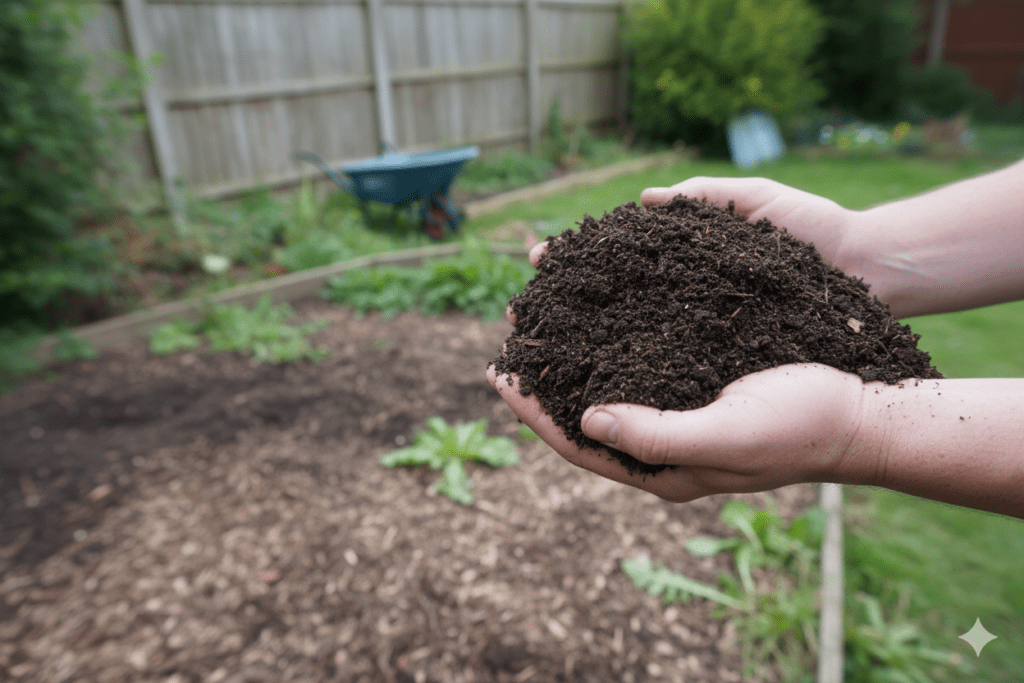
After fifty years of gardening, if you told me I could only pass on one skill to the next generation, it would be composting. Not the slow, neglected heap in the corner of the yard that takes a year to become anything useful — I’m talking about the kind of composting that turns your kitchen scraps and yard waste into dark, crumbly, sweet-smelling soil in less than three weeks. I stumbled onto the Berkeley hot composting method about twenty years ago when I was desperate for compost in the middle of a growing season, and it changed everything. I had transplants waiting, beds that needed amending, and nothing but a pile of leaves and chicken coop bedding to work with. Eighteen days later, I had finished compost. Let me walk you through exactly how to do this, because once you see how fast it works, you’ll never go back to the slow way again.
Why Hot Composting Gives You Better Results in a Fraction of the Time


The difference between cold composting and hot composting comes down to one word: biology. In a cold compost pile, the same organisms working in the cool forest floor slowly nibble away at your scraps over six to twelve months. Hot composting is a completely different process. When you build a pile correctly and maintain the right conditions, you create an environment where heat-loving thermophilic bacteria take over within forty-eight hours, driving internal temperatures between 131 and 160 degrees Fahrenheit. At those temperatures, weed seeds are killed, plant pathogens are destroyed, and decomposition happens at a pace that still amazes me after all these years. Cold composting simply can’t do that — which is why I used to find tomato volunteers sprouting everywhere I spread my old compost.
The Berkeley method was developed at the University of California, Berkeley, and it works by giving those thermophilic bacteria exactly what they need: the right balance of carbon and nitrogen, consistent moisture, and regular oxygen through turning. I’ve watched this process turn a shoulder-high pile of raw materials into a third of its original volume in just over two weeks, producing compost so rich and fine you’d swear it came out of a bag from the garden center. The finished product smells like a forest floor after rain — earthy and clean. If your compost has ever smelled like anything other than that, this method will fix it.
Gathering Your Materials: The Browns-to-Greens Ratio That Actually Matters
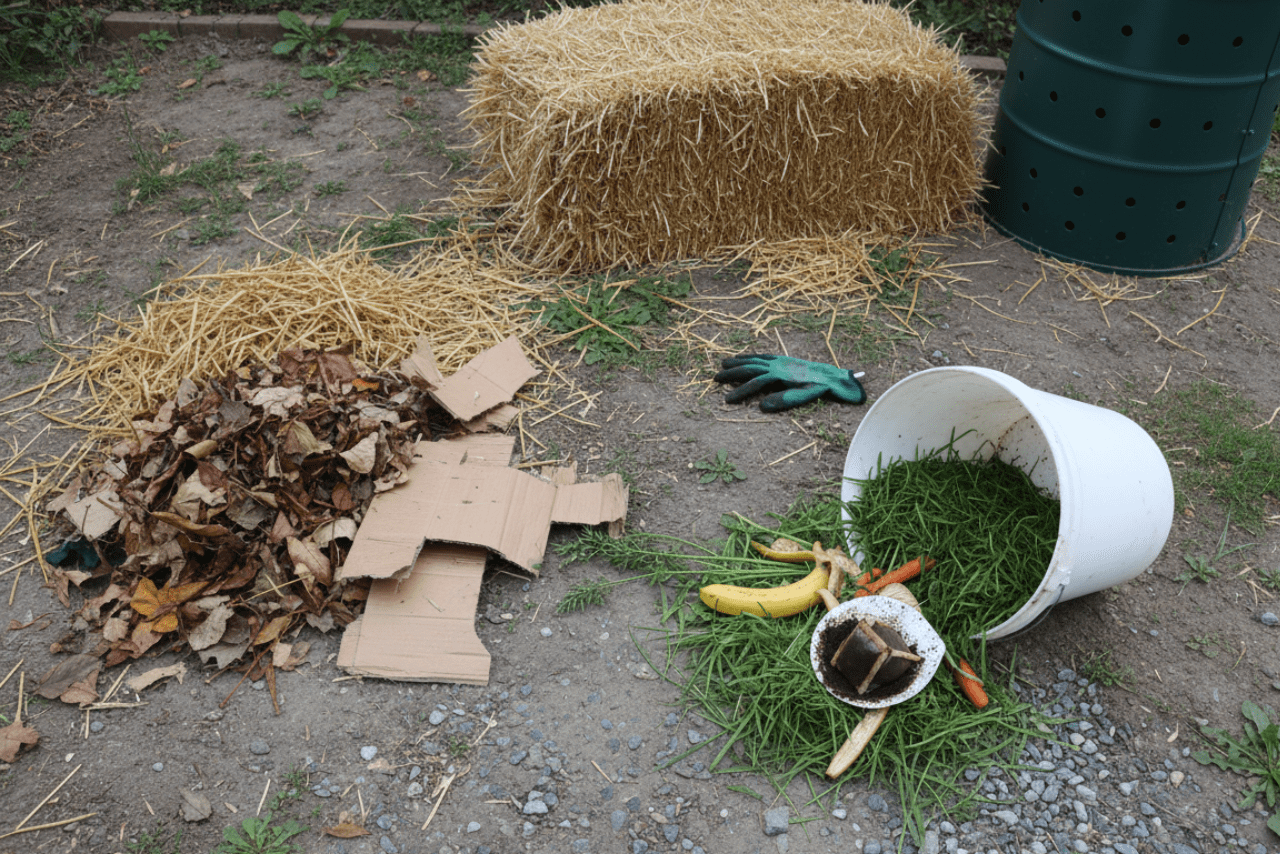
Before you build your pile, you need enough material gathered in one place. This is the part most people skip, and it’s why their hot compost attempts fail. You can’t add to a Berkeley pile as you go — you need everything on hand from the start. The target carbon-to-nitrogen ratio is roughly 25 to 30 parts carbon to 1 part nitrogen. In practice, that translates to about two to three parts brown material for every one part green material by volume. Browns are your carbon sources: dried leaves, straw, shredded cardboard, wood chips, and dry hay. Greens are your nitrogen sources: fresh grass clippings, vegetable scraps, coffee grounds, fresh weeds (without seeds), and animal manure from chickens, horses, or rabbits.
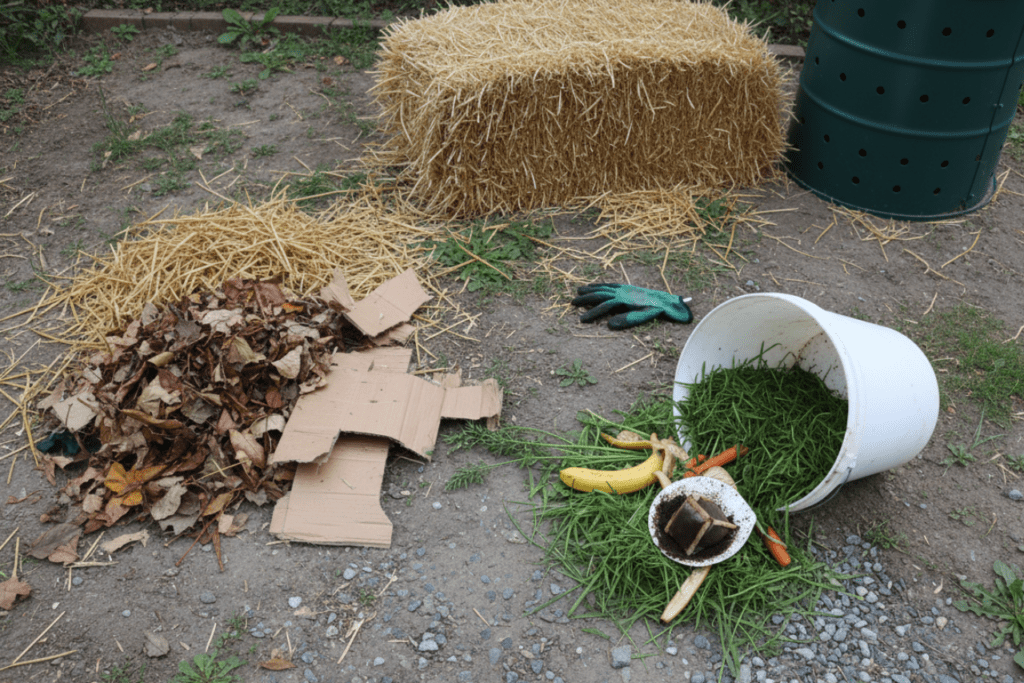
I’ve learned that you don’t need to overthink the math. In my experience, if you lay down a layer of browns about twice as thick as your layer of greens and repeat that pattern as you build, you’ll land close enough to the right ratio. The microbes are forgiving within a range. What they won’t forgive is a pile made entirely of grass clippings, which turns into a slimy, ammonia-smelling mess, or a pile made entirely of dry leaves, which just sits there doing nothing for months. I keep a stash of straw bales near my compost area year-round so I always have browns available when I have a sudden surplus of kitchen scraps or fresh garden waste.
Building Your Pile: The 18-Day Method Step by Step
Day One: Assembly Is Everything
Your finished pile needs to be at least three feet wide, three feet deep, and about four to five feet tall. Smaller piles won’t generate or hold enough heat in the core, and that’s the whole engine of this process. Start by choosing a level spot with decent drainage — you don’t want your pile sitting in a puddle. I like to lay down a few handfuls of coarse twigs or small branches at the bottom for airflow, then begin alternating thin layers of browns and greens. I emphasize thin layers — about two to three inches of browns, then one to two inches of greens, repeated until you’ve used everything. As you build, water each set of layers thoroughly. The pile should feel like a wrung-out sponge throughout: damp but not dripping. If you grab a handful and squeeze, you should get a drop or two of water but not a stream.
Once assembled, cover the pile with a tarp or old piece of carpet. This holds in heat and moisture, which is especially important if you’re composting in cooler weather. I’ve successfully run hot compost piles through late autumn by keeping them well-covered. Then you walk away. Leave the pile alone for four full days. During those first days, the mesophilic bacteria — the moderate-temperature crew — will get to work, and within about forty-eight hours, they’ll hand the job off to the thermophilic bacteria that push temperatures past 130 degrees. You can check the temperature with a long-stemmed compost thermometer, which I consider an essential tool for this method. They cost about fifteen dollars and take all the guesswork out of the process.
Days Five Through Eighteen: The Turning Schedule
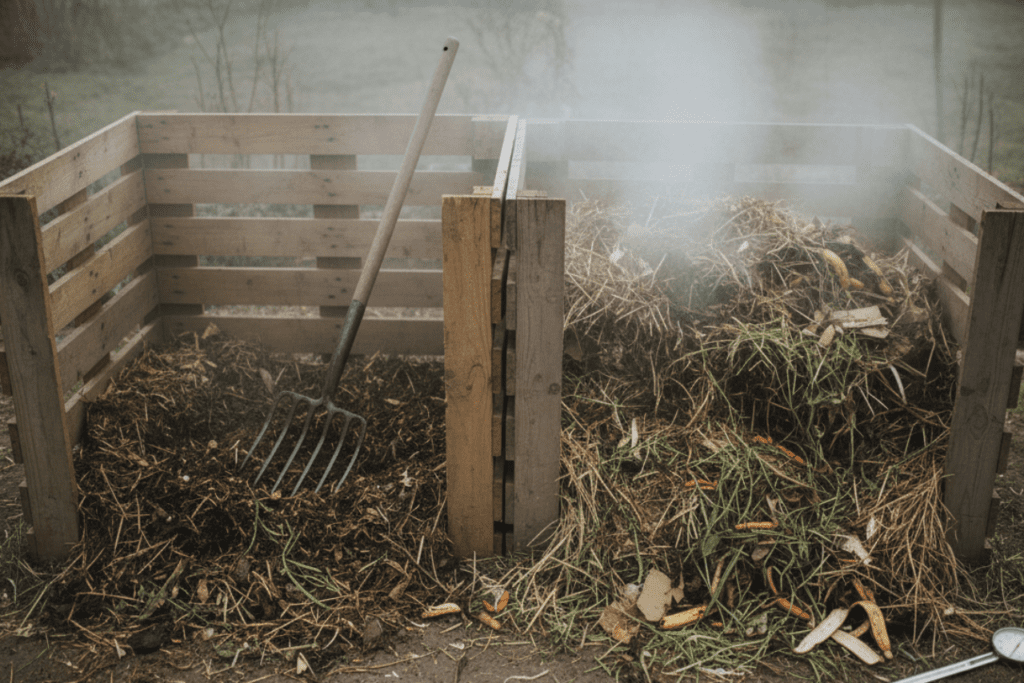
On day four or five, you’ll make your first turn. This is where the real magic happens. You’re essentially flipping the pile inside out — what was on the cool outside goes to the hot center, and what was cooking in the middle moves to the outside. Use a pitchfork, not a shovel, and work methodically. I find it easiest to fork everything into an adjacent space rather than trying to turn it in place. If you have two compost bins side by side, even better. After this first turn, you’ll turn the pile every other day: day 5, day 7, day 9, day 11, day 13, day 15, and day 17. By day 18 or 19, you should have finished compost.
During the first week of turning, your pile will be steaming and visibly active. Peak temperatures typically hit between days seven and nine, often reaching 150 to 160 degrees in the core. If the temperature climbs above 160, turn it immediately — you’ll kill the beneficial bacteria you need. If it won’t climb above 120, your pile is likely too dry (add water while turning), too wet (spread it out for a few hours, then rebuild), or too low in nitrogen (mix in a few handfuls of blood meal or fresh grass clippings). During the second week, you’ll notice the pile cooling gradually as the raw materials break down and the microbial frenzy slows. The volume will shrink to roughly a third of what you started with. By the end, the compost should be dark brown, crumbly, and smell like rich earth.
What Can Go Wrong (And How I’ve Fixed It)
I won’t pretend this method is foolproof — it took me three attempts before I got my first batch right. The most common problem is a pile that refuses to heat up. Nine times out of ten, this means the pile is too small, too dry, or doesn’t have enough nitrogen. If you built it at least three feet in each dimension, check moisture first. That wrung-out sponge test is your best friend. If moisture is fine, the issue is almost certainly your browns-to-greens ratio tipping too far toward carbon. Toss in a bucket of fresh grass clippings or a few cups of blood meal when you turn, and you’ll usually see the temperature jump within a day.
If your pile smells like rotten eggs, it’s gone anaerobic — meaning the center has lost oxygen and the wrong type of bacteria has moved in. The fix is simple: turn it immediately and, if it’s waterlogged, mix in dry straw or shredded cardboard as you go. An ammonia smell is different — that means you’ve got too much nitrogen. Add more brown material and turn well. I keep a bag of dry sawdust from a local woodworker near my compost bins for exactly this purpose. A handful mixed in during turning absorbs excess nitrogen beautifully. And if materials aren’t breaking down evenly, the culprit is usually particle size. Chop or shred anything thicker than a pencil before adding it. Corn cobs, thick stems, and large branches won’t break down in 18 days no matter how hot your pile gets.
Making This Work in Real Life
Timing Your Batches for When You Actually Need Compost
One thing I love about the Berkeley method is how it lets you plan your compost around your planting schedule. I start my first batch in early spring, about three weeks before I plan to amend my beds. By the time I’m ready to transplant seedlings, I have fresh, nutrient-rich compost to work into the top four to six inches of soil. In midsummer, I’ll run another batch timed for fall planting. You could even stagger batches a week apart if you need a steady supply — each pile is independent once built. I’ve had seasons where I produced four separate batches between March and October, each taking less than three weeks from start to finish.
The turning schedule does require commitment, and I won’t sugarcoat that. Every other day for about two weeks means you need to be around and willing to spend ten to fifteen minutes with a pitchfork. It’s not hard work exactly, but it is consistent work. I’ve found that making it part of my morning routine helps — I check the temperature, turn if it’s a turning day, and add water if the pile feels dry on the surface. On non-turning days, I just peek at the thermometer and move on. After fifty years of gardening, I can tell you that those ten minutes every other day are the best investment of time I’ve ever made in my soil. One batch of Berkeley compost gives me more usable material than six months of cold composting ever did, and the quality is noticeably better.
Using Your Finished Compost Where It Matters Most
Berkeley compost is ready to use the moment it’s finished, though I sometimes let it cure for an extra week in a separate bin if I’m not in a rush. I spread it two to three inches thick over garden beds and work it into the top layer before planting. For transplants, I mix a generous handful — about half a cup — into each planting hole. Around established perennials and fruit trees, I use it as a topdressing in spring, spreading it about an inch deep out to the drip line. One word of caution from hard-won experience: don’t use freshly finished compost in seed-starting mixes. Even properly made hot compost can harbor bacteria that are harmless to mature plants but can cause damping off in tender seedlings. Let it cure for at least two to three weeks before using it for seed starting, or better yet, save it for transplanting and bed preparation where it truly shines.
Quick-Fire FAQ
Q: Can I add meat, dairy, or cooked food to a Berkeley hot compost pile?
A: While the high temperatures can technically break these down, I don’t recommend it for backyard composting. Meat and dairy attract rodents, raccoons, and flies, and the risk isn’t worth the small amount of material you’d add.
Q: What if I miss a turning day — does the whole batch fail?
A: Missing one turn won’t ruin your compost, but it will slow things down. You might add two to four extra days to your timeline. Just pick up where you left off and keep going on the every-other-day schedule.
Q: Can I do this in winter or does it only work in warm weather?
A: The pile generates its own heat from the inside, so it works even in cold weather. Cover it with a tarp to retain warmth, and expect it to take a few extra days in freezing temperatures. I’ve made successful batches well into November.
Q: Do I really need a compost thermometer, or can I just guess?
A: You can stick a metal rod into the pile and feel if it’s too hot to hold after a few minutes, but a proper long-stemmed thermometer takes all the guesswork out. For fifteen dollars, it’s the best composting investment you’ll ever make.
— Grandma Maggie