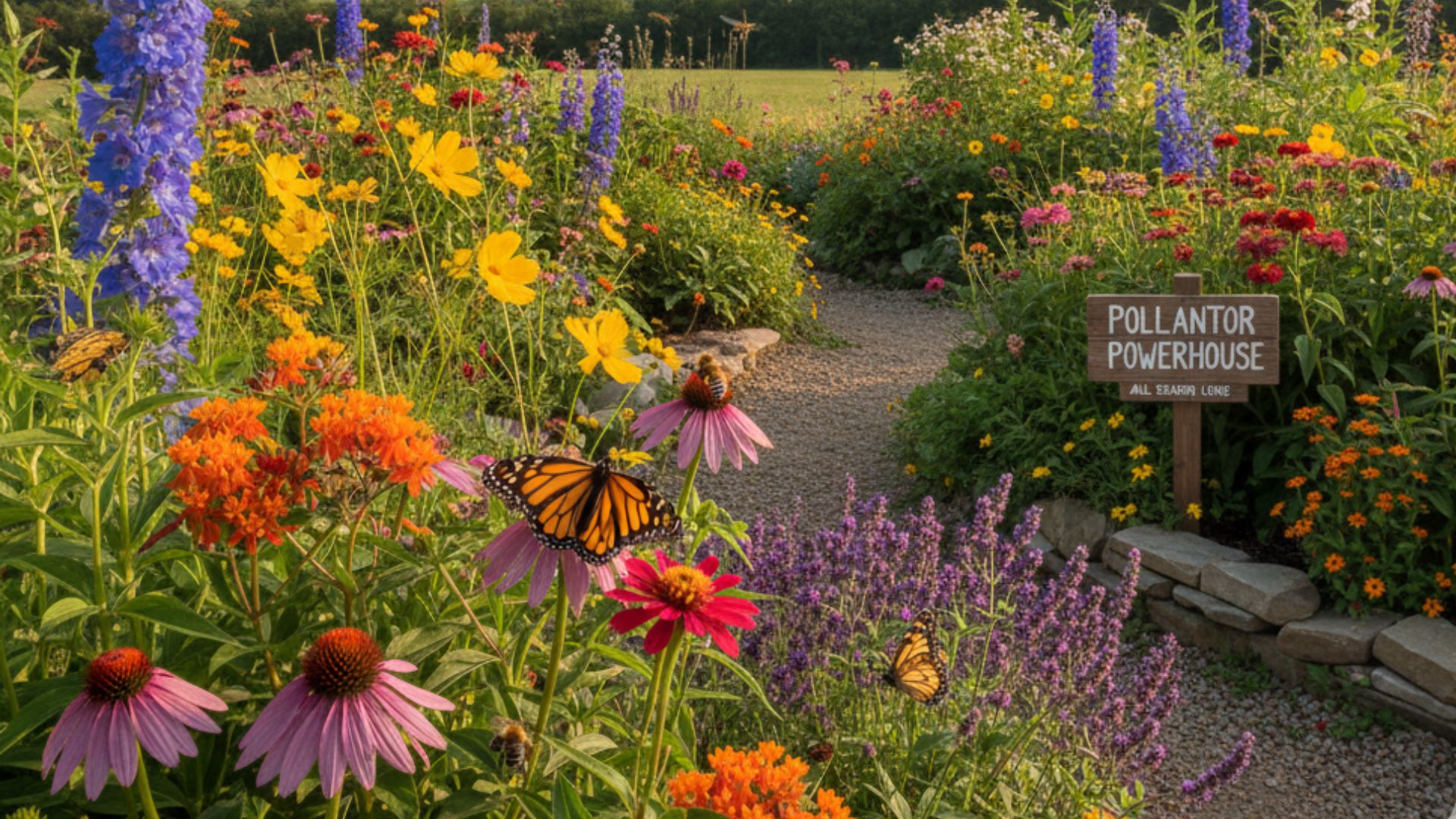
I still remember the summer my garden fell almost completely silent. I’d been so focused on keeping things tidy that I’d cut back the “weedy” patches along the fence, pulled out the sprawling catmint, and replaced the old lavender hedge with something neater and more architectural. By July, I realized I’d hardly seen a bumblebee in weeks. No hoverflies hovering at the fennel, no painted ladies drifting across the beds. It was pretty, but it was lifeless — and that was the year I understood that a garden without pollinators isn’t really a garden at all. I’ve spent the fifty years since learning exactly what these creatures need, and I want to share what works. Whether your plot is a sprawling half-acre or a sunny strip of border, you can create a season-long feast that keeps bees, butterflies, and hoverflies coming back from the first warm days of March right through the frosts of October. Let me walk you through what I’ve discovered.
Why Most Gardens Leave Pollinators Hungry
Does Your Garden Really Feed the Bees — or Just Look Pretty?
A typical suburban garden supports fewer than ten pollinator species. That number stopped me cold when I first read it, because in my own garden on a good July afternoon I can count eight or nine species of bee alone, plus a dozen butterfly species and more hoverflies than I could ever tally. The difference comes down to plant selection and — this is the part most gardeners miss — timing. Pollinators need food from early spring right through autumn, and they need flowers they can actually get into.
Native bees are responsible for pollinating roughly 80% of flowering plants and an estimated $15 billion worth of US crops annually, according to the National Wildlife Federation. Yet we routinely fill our borders with showy double flowers — roses bred for extra petals, dahlias stuffed so full they barely open — that offer almost nothing to a hungry bee. The nectar is there, locked away behind layers of petals that most insects simply cannot navigate. After thirty years of trial and error, my rule of thumb is simple: if you can see the centre of the flower easily, so can a bee.
A garden designed with continuous bloom — early bulbs, mid-season perennials, and late-season asters and sedums — can support three times more pollinator species than a conventional ornamental planting, according to research supported by the Xerces Society. Three times. That means instead of ten species of pollinators, you might host thirty. I’ve seen it happen in my own garden, and it doesn’t require ripping everything out and starting again. It requires thinking in seasons.
Early Spring: The Hunger Gap Plants That Make All the Difference
What to Grow When Bees Emerge Hungry in March and April
The first warm days of late February or early March bring queen bumblebees out of hibernation, groggy and desperately hungry after months without food. This is one of the most critical windows in the entire gardening year, and most gardens offer nothing at all. I learned this lesson from my neighbour, old Mrs. Hartley, who had a huge old flowering currant bush by her gate. Every March that bush would be alive with bees while everything else in the street was bare. I planted one the following autumn and I’ve never looked back.
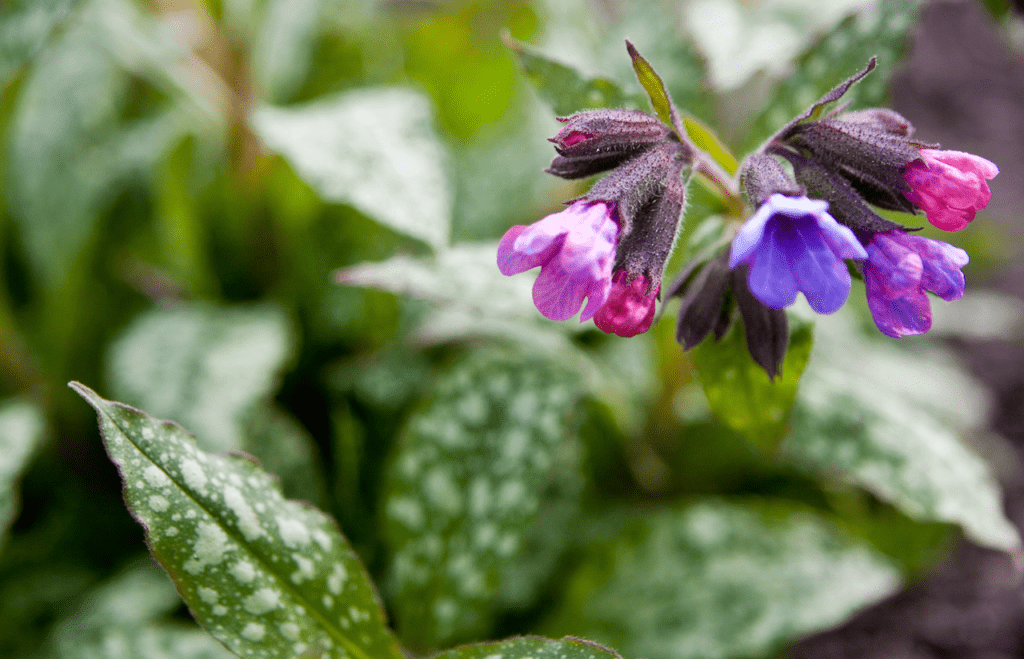
Pulmonaria (Lungwort)
Pulmonaria — lungwort — is another early hero that I grow along the shaded edge of my front border. The tubular flowers start out pink and age to blue-purple, and the long-tongued bumblebees adore them. I tuck snowdrops and crocus in among the bare soil beneath deciduous shrubs, so the very first days of warmth bring something into flower. Hellebores carry on through March and into April, their nodding flowers providing nectar on days when almost nothing else is open. The key with all of these is to plant them in clusters — a single crocus offers a mouthful; a drift of fifty crocuses keeps a bumblebee queen going for a meaningful part of her morning.
Muscari — grape hyacinth — deserves a special mention here. I have a long strip of them running along the front of my sunniest border, and by mid-April that strip hums. They naturalise freely, spreading a little further every year, and they ask for almost nothing in return.


Late Spring Into Early Summer: Building the Foundation of Your Pollinator Garden
The Workhorses That Keep Pollinators Coming Back Week After Week
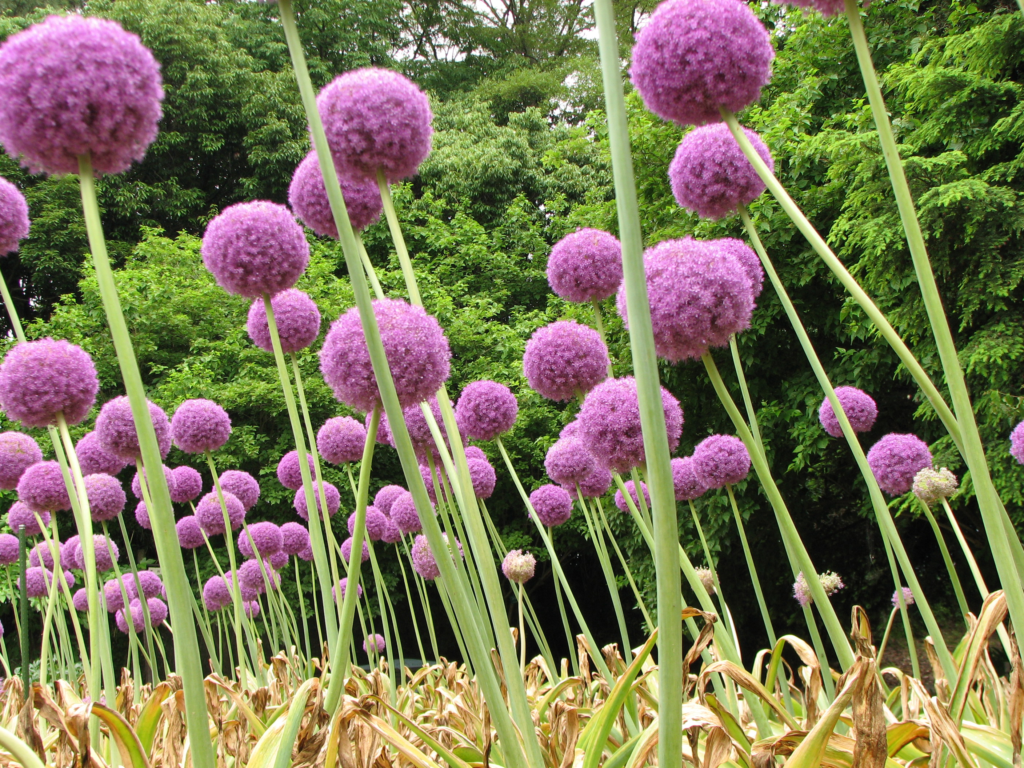
By May the garden shifts into a higher gear, and this is where your plant choices start to have the most visible impact. Alliums — the ornamental onions — are among the most reliable pollinator plants I know. My favourite is Allium ‘Purple Sensation’, which sends up 3-inch globes of rich purple flowers on 2-foot stems through May and into June. Every single floret in that globe is a tiny open flower, accessible to everything from tiny solitary bees to large bumblebees and even hoverflies.
Allium ‘Purple Sensation’
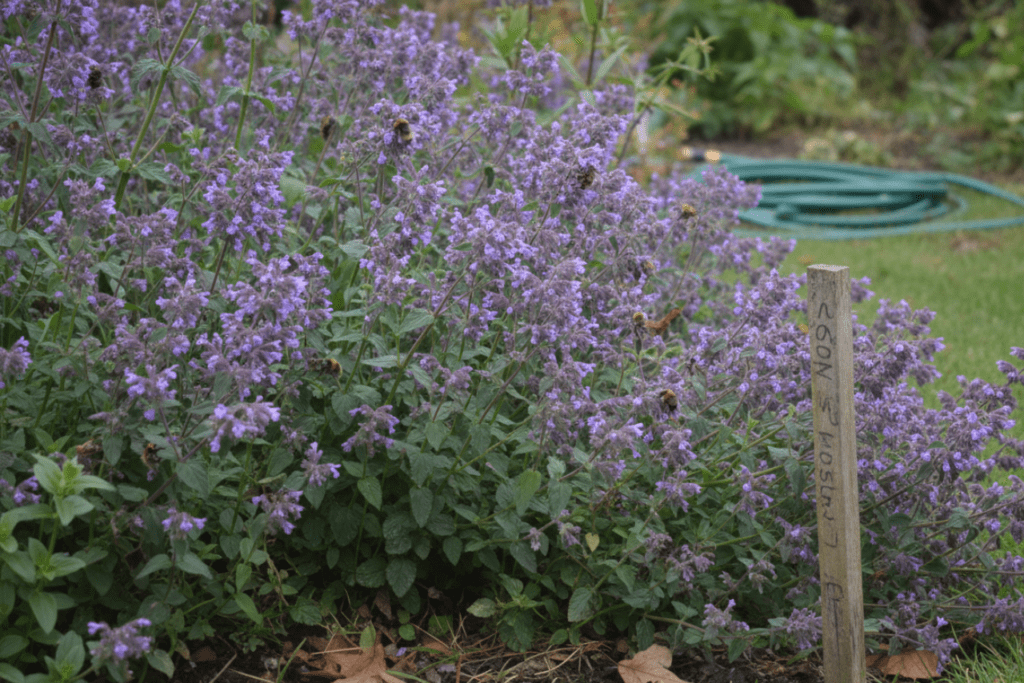
Catmint — Nepeta — is perhaps the single plant I’d rescue first if I had to start my garden from scratch. I’ve grown a long edging of Nepeta ‘Six Hills Giant’ along my main garden path for over twenty years, and every June it becomes a purple haze alive with bees. I cut it back hard after the first flush of flowers in June, give it a good drink, and within three or four weeks it pushes up a second flush that carries right through July and into August. Hoverflies love it just as much as the bees do, and because hoverfly larvae eat aphids, encouraging hoverflies is doubly good gardening sense.
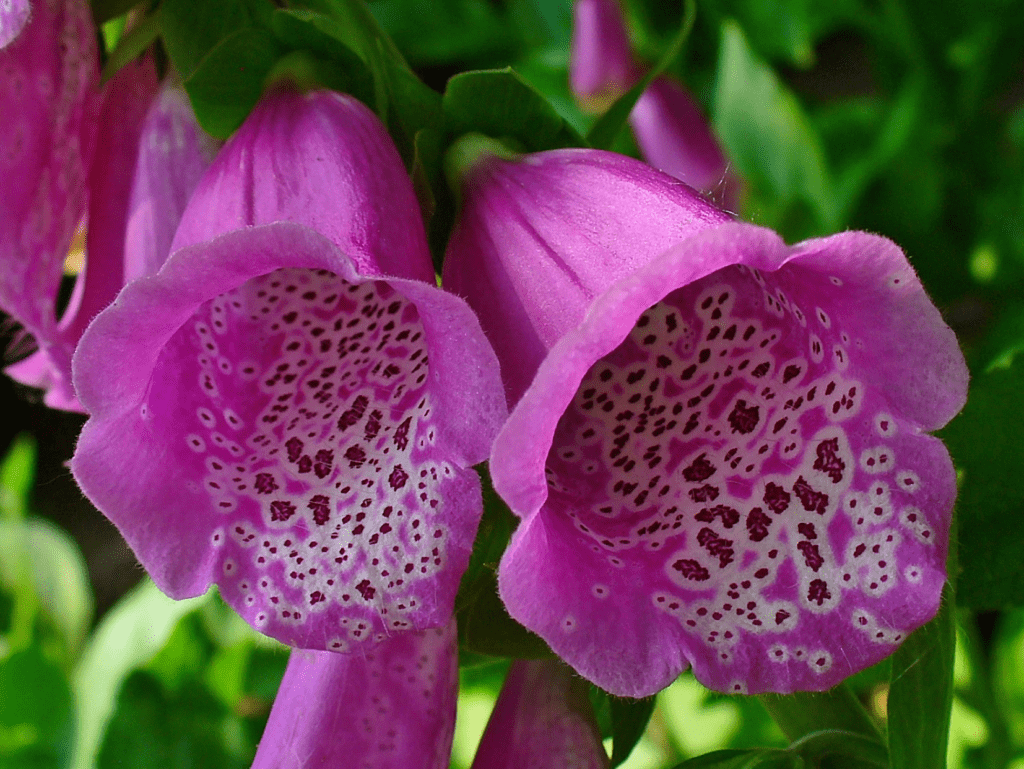
Foxgloves — Digitalis purpurea — are one of the great bumblebee plants, particularly for long-tongued species like the garden bumblebee. I’ve watched bumblebees disappear completely inside the lower flowers to reach the nectar, backing out a moment later dusted with pollen. They’re biennials, so I start new plants from seed every June to keep a continuous supply flowering in alternate years. They self-seed reliably in loose soil, so once established they often take care of themselves with very little help from me.
Digitalis purpurea (Common Foxglove)
High Summer: Keeping the Feast Going Through July and August
Mid-Season Plants That Bridge the Summer Gap Without Fuss
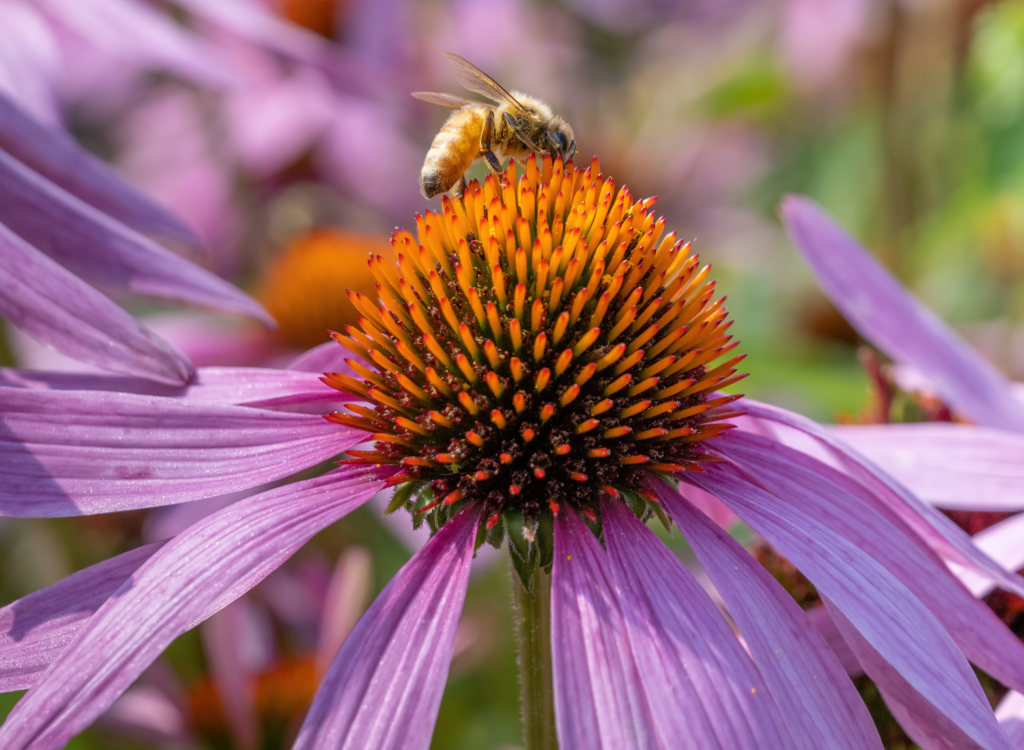
July and August can be surprisingly lean months in gardens that rely too heavily on spring-blooming plants. I’ve made a deliberate effort to fill this window with plants that thrive in the heat and keep blooming for weeks on end. Echinacea — coneflower — is at the top of my list. The large, open, daisylike flowers with their prominent central cones are landing pads for all manner of pollinators. I grow several varieties in purples, pinks, and whites, and they begin flowering in late June and keep going well into September if I deadhead regularly.
Echinacea purpurea (Purple Coneflower)
Lavender is my other great standby through high summer. I have a low hedge of Lavandula angustifolia ‘Hidcote’ running along the south-facing wall, and from late June through August it is genuinely one of the most visited spots in the entire garden. Honeybees, bumblebees of four or five different species, and a wonderful variety of small solitary bees all work the flowers from morning until evening on warm days. The trick is to shear it back by about a third immediately after the main flowering is over — it will push up new growth and often produces a modest second flush of flowers in September.
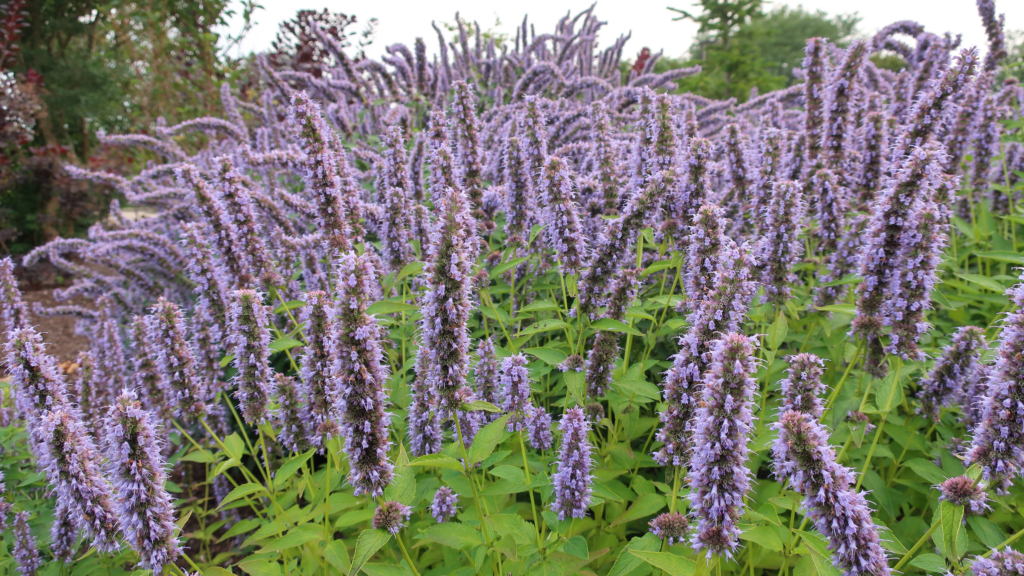
Agastache — hyssop — is a plant I came to relatively late in my gardening life, and I regret not growing it sooner. The spikes of small tubular flowers in shades of blue, purple, and orange are absolutely irresistible to long-tongued bees, and because agastache blooms for such a long period — typically from July right through September — it provides serious mid-to-late season support when many other plants are fading. I grow it in well-drained soil in full sun and give it almost no care beyond cutting the spent spikes back in autumn.
Agastache foeniculum (Anise Hyssop)
Autumn: Closing the Season With a Generous Send-Off
The Late-Season Plants That Help Pollinators Prepare for Winter
The autumn garden is where I feel most like I’m doing something genuinely important for the pollinators in my neighbourhood. By September the days are shortening and bumblebee queens are building up fat reserves for hibernation, while butterflies like red admirals and commas are seeking out nectar to fuel their autumn wanderings. Two plants above all others carry my garden through this period: asters and sedums.
Aster — particularly the New England asters like Symphyotrichum novae-angliae — begin flowering for me in late August and continue well into October. The flowers are classic open daisies with yellow centres, irresistible to almost everything flying. I grow a tall variety called ‘Septemberrubin’ that reaches about 4 feet and is absolutely covered in small pink flowers from early September onwards. On warm September afternoons I’ve counted five or six species of bee and two or three butterfly species on a single clump.
Symphyotrichum novae-angliae (New England Aster)
Sedum ‘Autumn Joy’ — properly called Hylotelephium telephium ‘Herbstfreude’ — is the other non-negotiable in my autumn garden. Its flat-topped heads of dusty pink flowers appear in August and slowly deepen to rusty copper through September and October. Hoverflies love the flat landing platform the flower heads provide, and I regularly see honeybees working the flowers on mild days right into late October. I leave the spent seed heads standing through winter — they look architectural in frost, and small birds pick at the seeds through the cold months.
Hylotelephium telephium ‘Herbstfreude’ (Sedum ‘Autumn Joy’)
Quick-Fire FAQ
Q: Do I need a large garden to make a real difference for pollinators?
A: Not at all — even a well-planted window box or a couple of containers with catmint and lavender can support several species of solitary bee and hoverfly. Every flower counts, especially in urban areas where food sources are scarce.
Q: Are double-flowered varieties ever any good for pollinators?
A: Most offer very little, as the extra petals block access to nectar and pollen. Stick to single, open-faced flowers whenever possible, and save the doubles for areas of the garden where you want purely ornamental impact.
Q: How do I keep something in flower from March all the way to October?
A: Plan your planting in three waves — early bulbs and hellebores for spring, perennials like catmint and echinacea for summer, and asters and sedums to carry the season into autumn. Overlap the waves by a few weeks and you’ll rarely have a gap.
Q: Should I avoid pesticides entirely?
A: Yes, where pollinator plants are concerned — even products labelled “organic” can harm beneficial insects. I’ve managed aphids for decades using nothing more than a strong jet of water and the natural predators that a healthy pollinator garden attracts.
— Grandma Maggie
cialis canadian pharmacy
cialis canadian pharmacy