
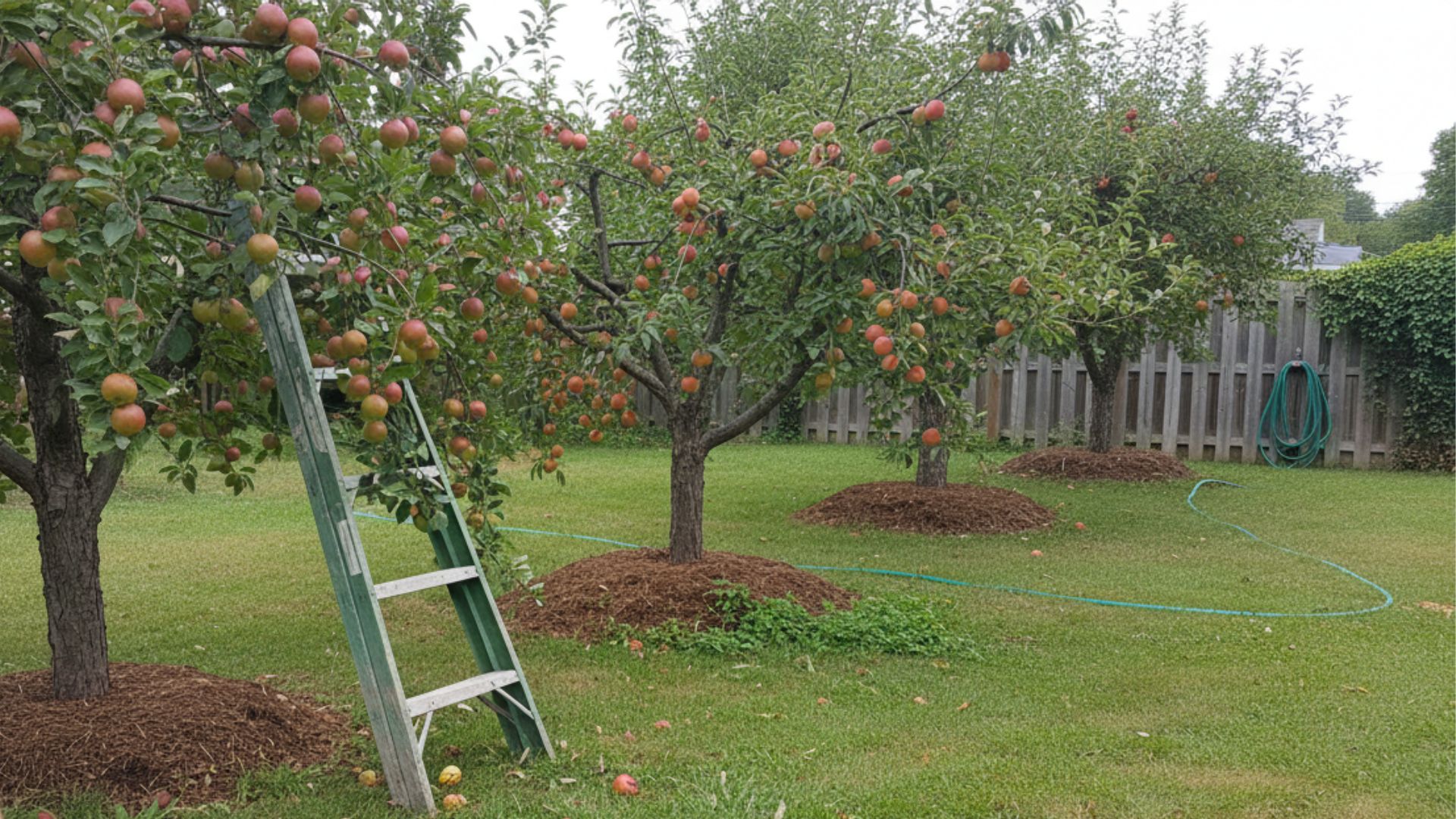
I spent years feeling a little sorry for myself as a Zone 5 gardener. My neighbors in Georgia were picking peaches in July while I was still waiting for my last frost. My sister-in-law in California bragged about her citrus trees, and I’d nod politely and change the subject. Then, one autumn about thirty years ago, I stood in my backyard with a bushel basket full of Honeycrisp apples, a flat of Reliance peaches still warm from the afternoon sun, and a row of Bartlett pears blushing yellow on the branch — all from trees I’d planted myself — and I thought: I’ve had this completely backwards. Living in Zone 5 isn’t a consolation prize. It’s the sweet spot. The truth is, zones 5 through 7 are where the overwhelming majority of the world’s finest fruit trees do their very best work, and once I understood why, everything changed about how I plan my garden. Let me show you.
Understanding Your Zone 5-7 Advantage


Here is something I wish someone had explained to me forty years ago: fruit trees are not like tomatoes or zucchini. They don’t simply want warmth. They need cold — specifically, a sustained period of temperatures below 45°F measured in cumulative hours — and that cold is what tells the tree it is safe to bloom again in spring. We call these “chill hours,” and the requirement varies by variety, from as few as 200 hours for some low-chill peaches bred for the Deep South all the way up to 1,500 hours for certain heirloom apple varieties that simply will not perform south of Zone 6. Zones 5 through 7 reliably deliver somewhere between 800 and 1,200 chill hours every winter, and that range is precisely where most of the world’s beloved fruit tree varieties were selected and refined over centuries. Without sufficient chill hours, a tree breaks dormancy unevenly, produces weak blossoms, and sets poor fruit — or no fruit at all. I’ve seen it happen to people who moved beloved apple trees from upstate New York down to the Carolinas and wondered why they stopped producing. The trees weren’t sick. They were simply under-rested. In our zones, that is never a problem.
The second piece of the advantage is equally important and often overlooked: you need enough summer heat to actually ripen what you grow. This is where zones 3 and 4 sometimes struggle — they can provide the chill hours, but a short, cool summer means stone fruits and late-season apples never fully develop their sugar. In zones 5 through 7, summer temperatures regularly reach the upper 70s and 80s°F for 160 to 200 days between frosts, which is more than enough to bring Honeycrisp apples to their peak sweetness, push a Reliance peach to that yielding softness that drips down your chin, and ripen Bartlett pears from green to gold. You have both halves of what a fruit tree needs. That is the real advantage.
Apples: Your Zone 5-7 Workhorse
If I had to recommend one fruit tree category to every Zone 5-7 gardener regardless of their experience level, it would be apples without a moment’s hesitation. I’ve grown apple trees for more than five decades, and I’ve yet to find a more forgiving, more productive, or more satisfying fruit for our climate. The variety selection alone is staggering — hundreds of named cultivars have been developed and trialed specifically for the chill-hour ranges and summer lengths we experience — and that means you can choose trees for flavor, harvest timing, disease resistance, and size to suit almost any garden.
Honeycrisp
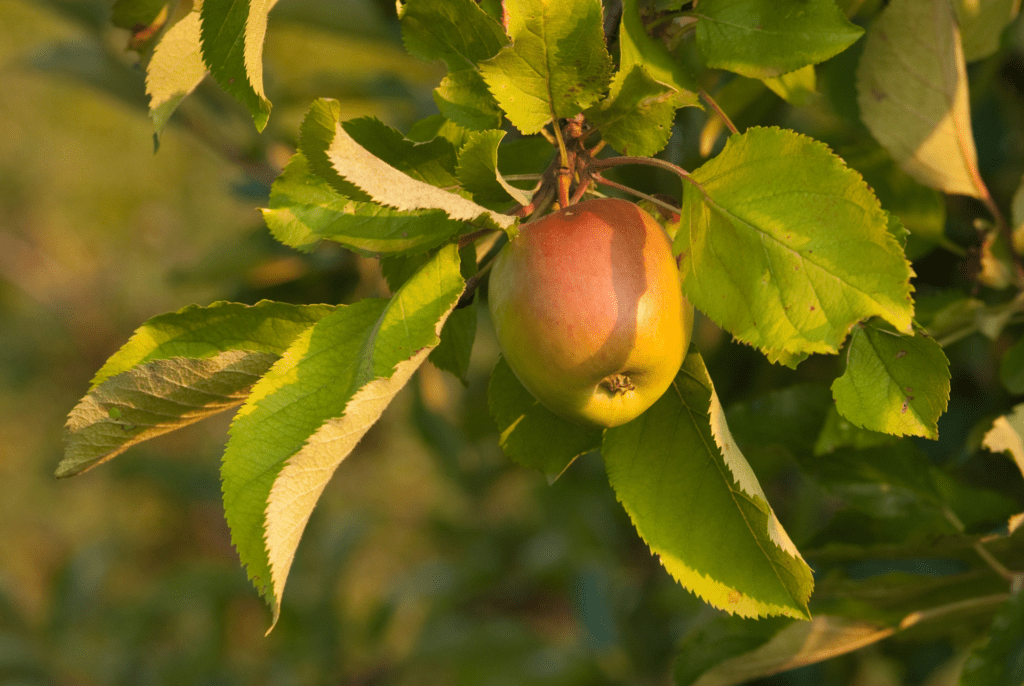
Honeycrisp is the apple that changed everything for home orchardists in our zone, and I mean that genuinely. Developed by the University of Minnesota and released in 1991, it was bred from the ground up for cold-climate performance — the breeders were working squarely in Zone 4 and 5 conditions — and the result is a variety that produces those extraordinary crisp, explosively juicy apples that now command premium prices at farmers’ markets everywhere. I planted my first Honeycrisp on M.26 rootstock in 1994 and picked my first meaningful harvest in year four: fourteen pounds from a tree barely taller than my shoulder. By year eight, I was getting close to 80 pounds. On standard rootstock, a mature Honeycrisp will reach 15 to 25 feet and produce 400 to 800 pounds annually, though most home gardeners are far happier with a semi-dwarf that tops out at 12 to 15 feet and fits between a fence and a shed. Honeycrisp ripens in late September into early October in Zone 5, a few weeks earlier as you move into Zone 7. It does need a pollenizer — plant any other apple variety within 50 feet and both trees will reward you.
McIntosh
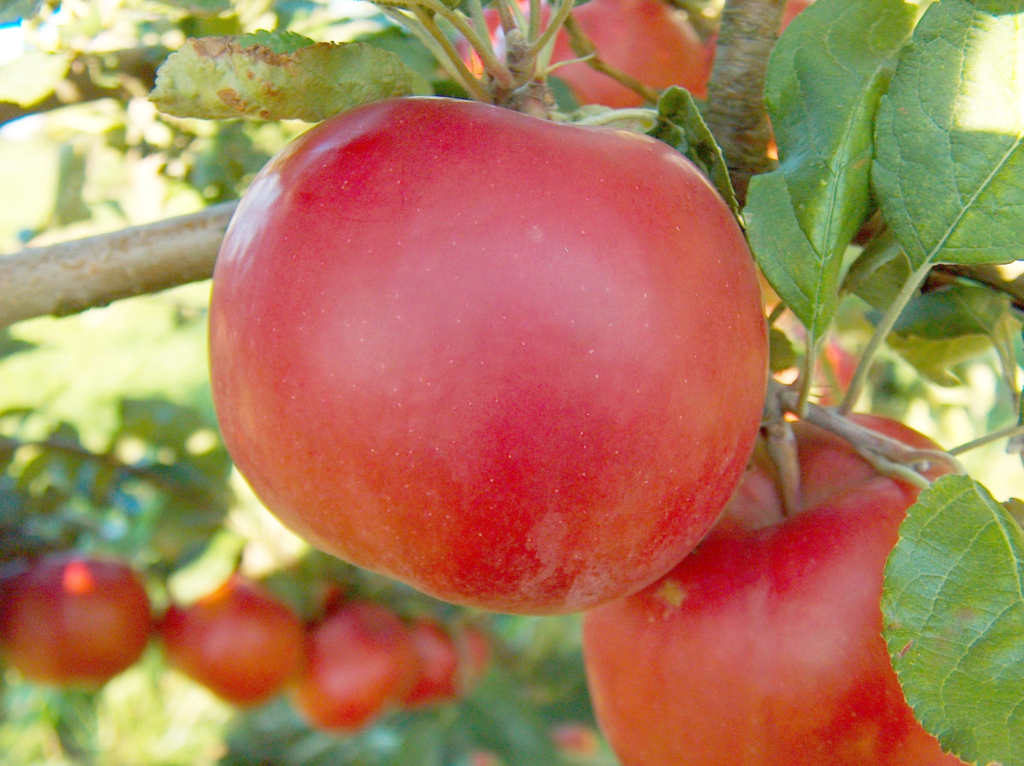
I remember when McIntosh was the apple — the benchmark by which every other variety in the northeastern United States and Canada was measured. My grandmother grew McIntosh trees in her garden in Vermont, and those red-and-green apples ripening in early September were a sign that the whole harvest season had properly begun. McIntosh is one of the finest choices for Zones 4 through 8 precisely because of its exceptional cold hardiness and its reliable, heavy bearing — a mature standard-sized tree at 15 to 20 feet will yield 400 to 600 pounds in a good year. It ripens early, typically from late August through mid-September depending on your latitude, which makes it a strategic choice for stretching your harvest season toward its beginning rather than its end. The flesh is tender and aromatic with that classic sweet-tart flavor, and it makes the finest applesauce I have ever tasted. Like Honeycrisp, McIntosh requires a cross-pollenizer, so plant it alongside any other apple variety and both will thrive.
Gala, Fuji, Golden Delicious, and Cortland
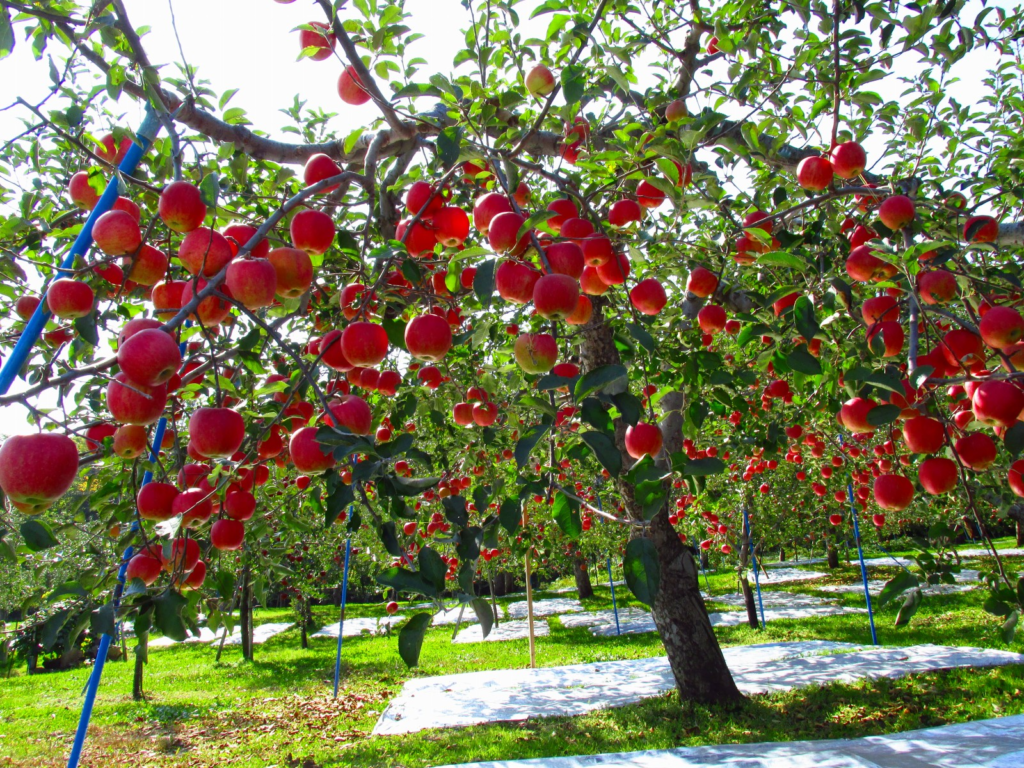
Beyond Honeycrisp and McIntosh, Zones 5 through 7 give you access to an embarrassment of riches in the apple world. Gala, originally from New Zealand but now thoroughly at home in our climate, ripens in late August to early September and produces medium-sized, mildly sweet apples with thin yellow-orange skin that are perfect for fresh eating and children who prefer less tartness. Fuji, which requires a slightly longer and warmer summer to fully develop its characteristic sweetness, performs best in Zones 6 and 7 where it ripens in October to early November and stores beautifully into December in a cool cellar. Golden Delicious is among the most versatile apples I’ve grown — it is self-fertile to a useful degree, which makes it the ideal pollenizer to plant alongside any variety that needs a partner, and it produces firm, sweet, greenish-gold fruit through September and October. Cortland, a McIntosh offspring with slightly larger fruit and flesh that resists browning for a full 30 to 40 minutes after cutting, is the apple I reach for every time I’m making a fruit salad or a cheese platter that needs to sit out for a while. All of these varieties have chill-hour requirements between 800 and 1,000 hours and are perfectly calibrated for what our winters deliver.
Peaches: The Reward of Zone 5-7 Summers
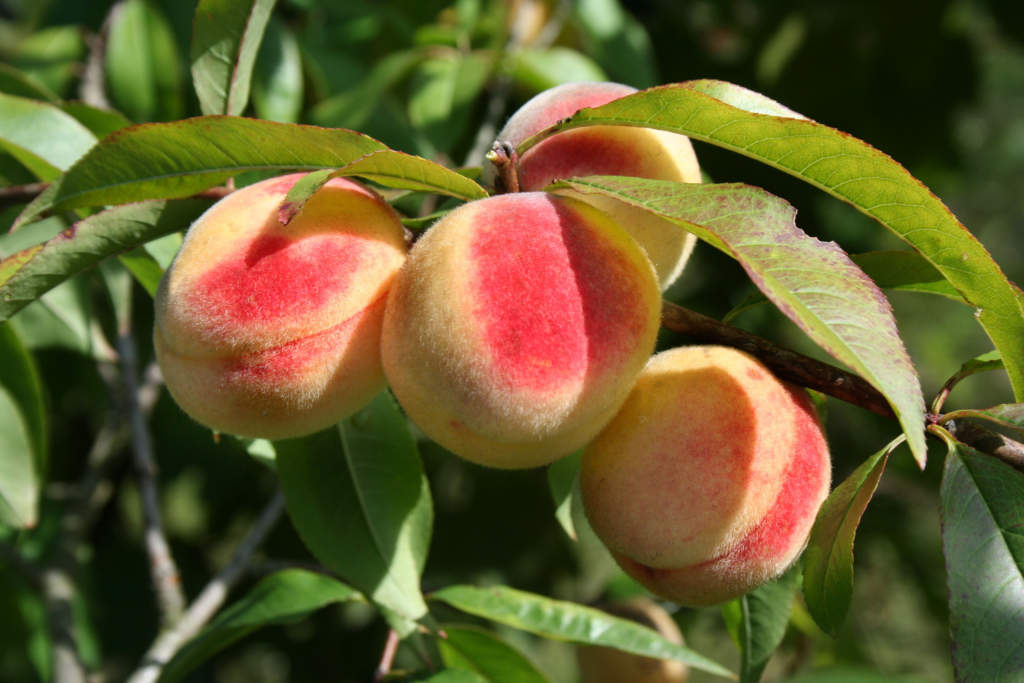
People are always surprised when I tell them I’ve been growing peaches in Zone 5 for more than twenty-five years. There is a persistent myth that peaches are a Southern fruit — that you need Georgia’s climate or something close to it — and that myth has kept a lot of northern gardeners from experiencing one of the great joys of home orcharding. The truth is that Reliance Peach, developed at the University of New Hampshire specifically for cold-climate performance, is rated for Zones 4 through 8 and has proven itself remarkably reliable even in winters where temperatures drop to -15°F for brief periods. I’ve had my Reliance peach produce fruit in years when every other stone fruit I owned lost its blossoms to a late April frost, simply because the buds on Reliance have slightly more cold tolerance than most other varieties. At 12 to 18 feet at maturity — or a compact 8 to 10 feet on a dwarf rootstock — it fits into almost any backyard, and it begins bearing meaningful crops in its second or third year. The fruit ripens in mid to late August in Zone 5, producing freestone peaches with yellow flesh and red-blushed skin that are as good fresh off the tree as anything I’ve found at any market anywhere.
The reason peaches work so well in Zones 5 through 7 comes down to the same chill-hour logic I described for apples, combined with our reliably warm and long summers. Peaches need between 850 and 1,050 chill hours depending on variety — right in our wheelhouse — and they need sustained summer warmth to push sugars into the fruit during the final two to three weeks of ripening. In my experience, a peach that ripens during a cool, cloudy August will taste flat compared to one that gets two solid weeks of 80°F afternoons before harvest. Our summers deliver that almost every year in Zones 5 through 7. Beyond Reliance, I grow Redhaven as my main-crop peach: it ripens about two weeks earlier than Reliance, in late July to early August in Zone 5, and produces very large, firm freestone fruit that is excellent for both fresh eating and canning. Madison is my late-season peach, ripening in September, with outstanding flavor and cold hardiness comparable to Reliance. Together, these three varieties give me ripe peaches from late July through mid-September — nearly eight weeks of harvest from trees that take up a combined footprint of about 35 feet of garden bed.
Pears, Cherries, and More
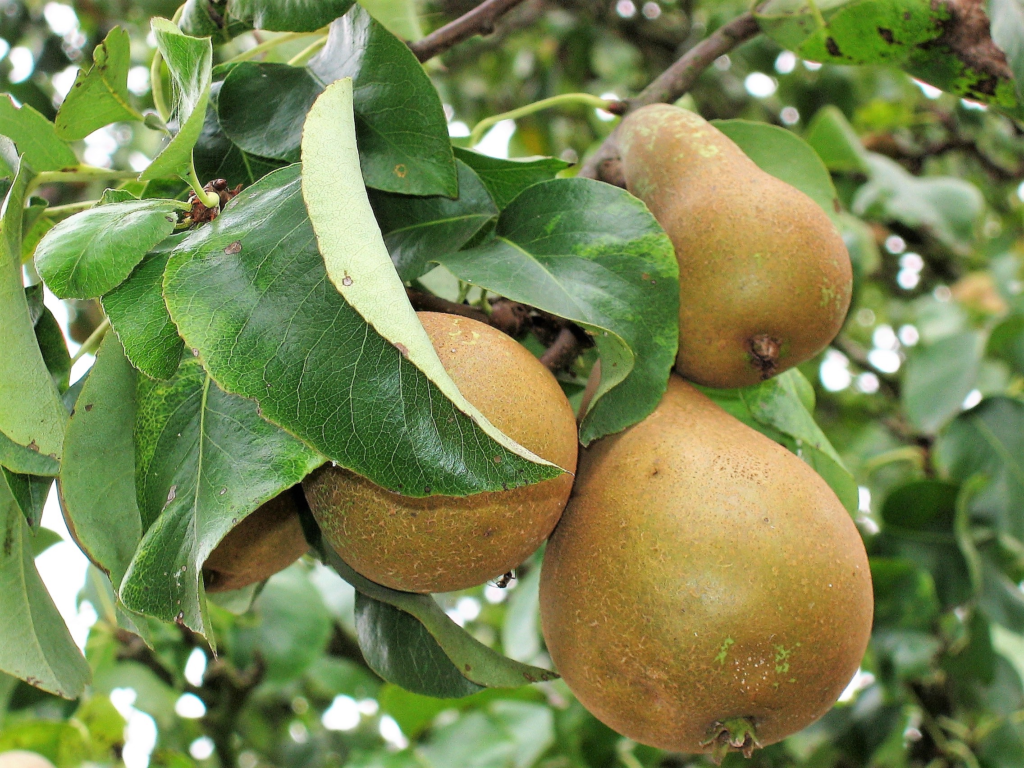
Pears are, in my opinion, the most underplanted fruit tree in Zone 5-7 gardens, and I cannot fully explain why. Bartlett, the variety most people know from canning jars on grocery shelves, is a magnificent tree for our zones — rated 5 through 7 — that reaches a stately 15 to 30 feet at maturity on standard rootstock and produces heavy crops of large, sweet, buttery-fleshed fruit from late August through September. It does require a cross-pollenizer, meaning you need at least one other pear variety within 50 feet, which is honestly a good excuse to plant Bosc alongside it: Bosc ripens two to three weeks after Bartlett, carries its extraordinary russeted skin and dense, spicy-sweet flesh into October, and stores well in a cold cellar for up to two months after harvest. Anjou, the large green pear that stores into November without much trouble, and Seckel — the tiny, intensely sweet “sugar pear” that my grandchildren eat like candy — round out a four-variety pear succession that covers more than two months of harvest.
Sweet cherries are another category where Zones 5 through 7 have a genuine edge. Bing, the large, dark-red cherry most people picture when they think of sweet cherries, thrives in our zones and produces fruit in mid to late June — one of the earliest significant harvests in the home orchard year. Stella is my personal recommendation for anyone who wants a sweet cherry but only has room for one tree: it is self-fertile, meaning it does not require a pollenizer, and it produces abundantly on its own. Black Gold, a newer release from the Cornell breeding program, combines the rich, dark flavor of Bing with better disease resistance and outstanding cold hardiness into Zone 5. All three perform reliably in zones 5 through 7, where the combination of winter chill and a warm June provides exactly the conditions sweet cherries evolved to exploit. On the more unusual end of the spectrum, Asian pears — which look like round apples but taste unmistakably of pear — carry slightly different chill-hour requirements (600 to 900 hours) that make them especially well suited to Zone 6 and 7 gardens, and quince, one of the most ancient cultivated fruits in the world, is virtually indestructible in our zones and produces large, fragrant, golden fruit in October that makes extraordinary preserves and paste.
Planning Your Zone 5-7 Orchard
After fifty years of planting fruit trees, the single most valuable lesson I can pass on is this: think in terms of a harvest calendar, not a planting list. The goal of a well-planned Zone 5-7 orchard is to have something ripe from mid-July through late October — nearly four months of continuous fresh fruit from a relatively small space. In practice, this means sequencing your varieties deliberately. I structure my orchard around four harvest windows: early apples and the first sweet cherries come in July, with varieties like Lodi apple and my Stella cherry producing from mid-July onward. August is peach month — Redhaven first, then Reliance — and it is the most abundant and fragrant time of year in my garden. September and early October bring the main apple crop: McIntosh in early September, Honeycrisp and Cortland through the month, and Fuji extending into October in warmer years. Late October is for pears: Bosc, Anjou, and the last of the Seckel pears, which hold on the tree into the first light frosts without damage.
Spacing is where I see new orchardists make the most consistent mistakes, almost always in the direction of planting too close together. Dwarf trees on M.9 rootstock need 8 to 10 feet between them — they stay compact at 8 to 10 feet tall, produce fruit in as little as 2 to 3 years from planting, and are ideal for small gardens or gardeners who prefer not to use ladders. Semi-dwarf trees on M.26 rootstock need 12 to 15 feet of spacing, reach 12 to 15 feet at maturity, and typically begin bearing in years 3 to 4. Standard trees on seedling rootstock need a full 20 to 25 feet between them, grow to 20 feet or more, take 5 to 7 years to come into bearing, but ultimately produce the largest harvests and live the longest — I have a standard McIntosh that is forty-three years old and still bearing 200 pounds in a good year. The choice between these rootstock options comes down to your space, your patience, and your physical comfort working in the canopy. For most home gardeners, semi-dwarf on M.26 is the sweet spot: productive, manageable, and reasonably quick to bear.
Soil preparation is worth doing thoroughly before you plant, because a fruit tree that goes into good soil in year one will outperform a tree planted in poor soil by year five in ways that are difficult to correct after the fact. Most fruit trees want well-drained loam with a pH between 6.0 and 6.5 — slightly acidic, which helps them access the phosphorus and potassium they need for fruit development. I test my soil every three years with a basic home kit and adjust with agricultural lime to raise pH or elemental sulfur to lower it, in small increments of about 0.5 pH units per season. If your soil is heavy clay, raise the planting bed 8 to 12 inches and work in compost at a ratio of roughly one part compost to three parts native soil across a planting area at least 4 feet in diameter. The roots will do the rest.
Quick-Fire FAQ
Q: Do dwarf fruit trees produce less fruit than standard trees?
A: Yes — a dwarf apple yields 50 to 150 pounds at maturity versus 400 to 800 for a standard, but dwarf trees bear fruit 2 to 3 years after planting and are far more productive per square foot of garden space. For most home gardeners with limited space, dwarf or semi-dwarf is the practical choice.
Q: What does “rootstock” mean, and why does it matter?
A: Rootstock is the root system your fruit tree is grafted onto, and it controls the tree’s mature size and how quickly it bears fruit — M.9 makes a dwarf that fruits in 2 to 3 years, M.26 makes a semi-dwarf that fruits in 3 to 4 years, and seedling rootstock makes a full standard that takes 5 to 7 years. Always ask about rootstock when buying a fruit tree; it matters as much as the variety name.
Q: What is the best fruit tree for a first-time Zone 5-7 orchardist?
A: A semi-dwarf apple on M.26 rootstock — Honeycrisp for a late-season harvest or McIntosh for an early one — is the most forgiving and rewarding first tree for our zones. Adding a Reliance Peach alongside it gives you a mid-August peach harvest and a September-October apple harvest, which is a genuinely satisfying start.
Q: Can you really grow peaches in Zone 5?
A: Yes, reliably — Reliance Peach, developed by the University of New Hampshire and rated to Zone 4, has proven itself in Zone 5 gardens for decades, and I’ve harvested ripe peaches in 23 of the past 25 years. Plant on a north- or east-facing slope to delay bloom by 5 to 7 days and reduce late-frost risk.
— Grandma Maggie