
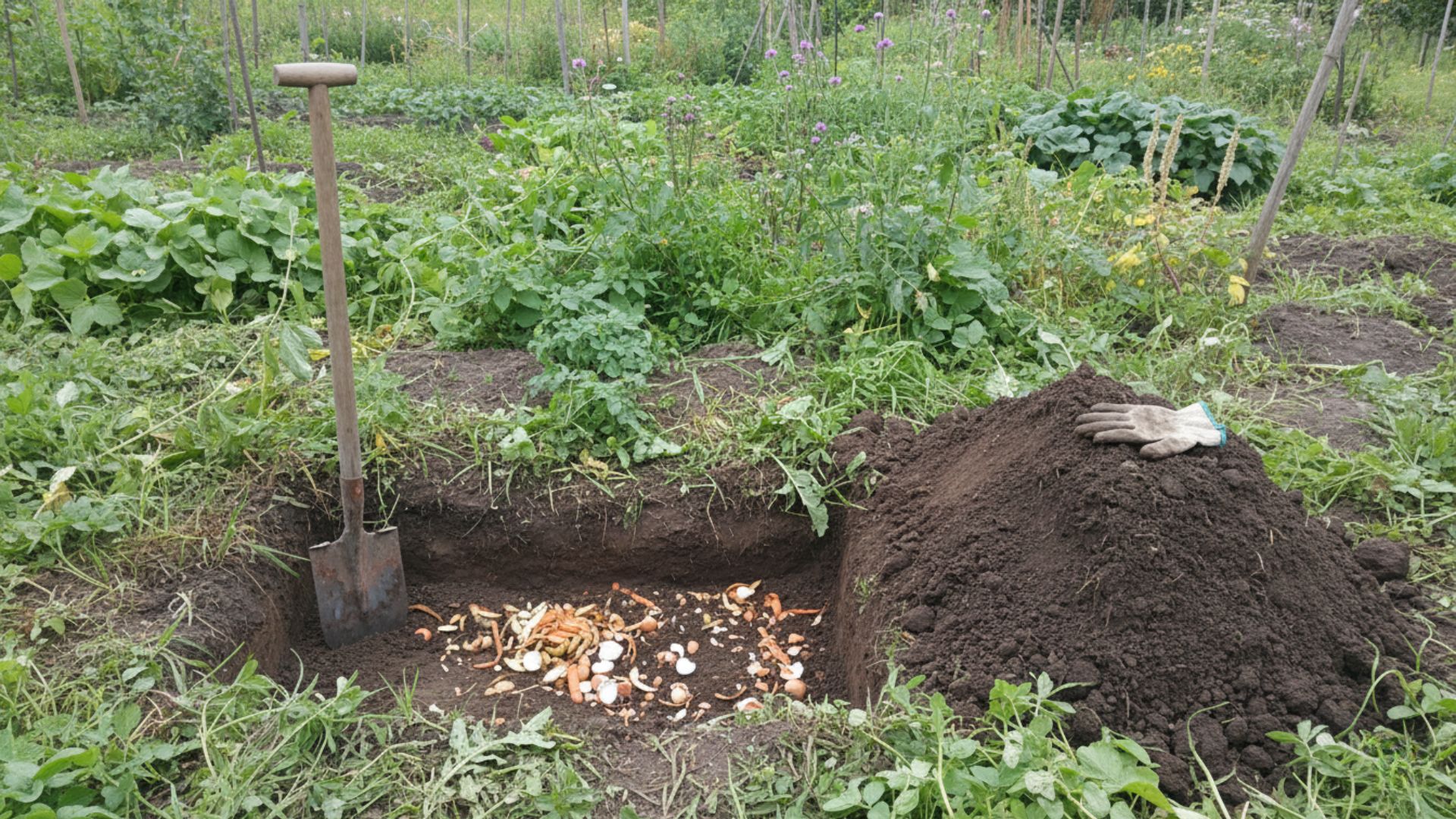
After fifty years of gardening, I’ve tried just about every composting method under the sun. I’ve turned piles until my shoulders ached, fussed over carbon-to-nitrogen ratios like a chemistry professor, and spent more money on bins, tumblers, and activators than I’d care to admit. But the method I keep coming back to — the one that has quietly produced the most fertile, alive, deeply productive beds in my entire garden — is also the simplest. Trench composting. You dig a hole, you bury your scraps, you walk away. The earth does the rest. It’s an ancient practice, one that farmers and growers have used for centuries across cultures and continents, and it remains, in my honest opinion, the most underused tool in a home gardener’s shed. Let me show you why I believe every gardener should give it a try.
Why Burying Your Scraps Works Better Than You’d Think
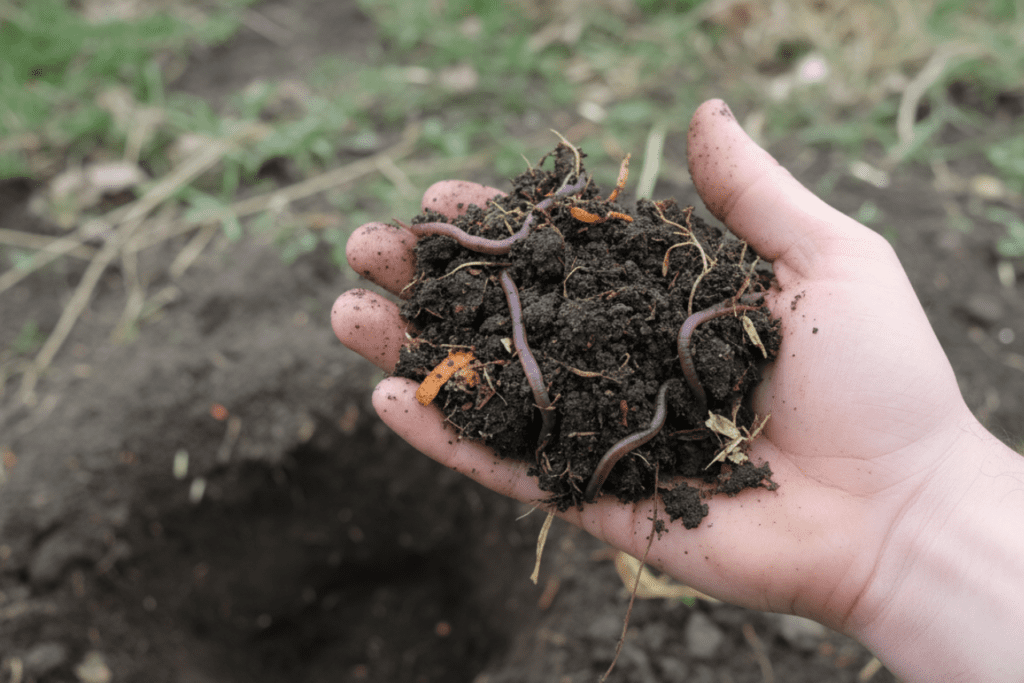


Most of us have been taught that composting requires a pile, a bin, proper airflow, and regular turning. That’s one way. But trench composting bypasses all of it. When you bury kitchen scraps and garden waste directly in the soil at a depth of 12 to 18 inches, you hand the job over to the microbes, worms, and fungi that already live there. These organisms break organic matter down right where it’s needed most — in the root zone of your plants. The soil particles surrounding the buried material hold onto the nitrogen as it’s released, which means you lose almost none of it to the air. That’s the opposite of what happens in an open pile, where nitrogen can escape as gas before you ever get the compost to your beds.
I remember the first time I tried this, probably twenty-five years ago, with a trench full of apple peels and carrot tops buried in a tired bed that hadn’t grown anything impressive in two seasons. By the following spring, the soil in that strip was darker, crumblier, and absolutely loaded with earthworms. The tomatoes I planted over it that year were among the best I’ve ever grown. That one experience convinced me, and I’ve been doing it every year since.
How to Dig and Fill a Composting Trench
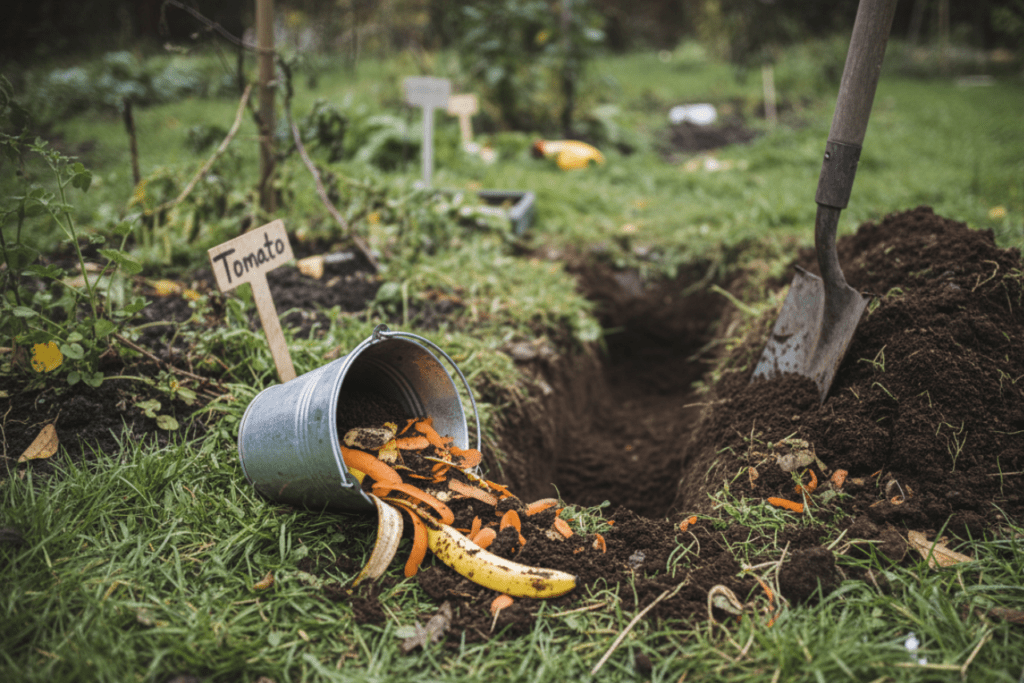
The process is almost comically simple, but a few details make the difference between success and a raccoon digging up your banana peels at midnight. Start by choosing a spot in your garden where you’d like to plant the following season — between existing rows works well, or in a bed that’s finished producing for the year. Dig a trench about 12 to 18 inches deep and roughly 8 to 12 inches wide. The length is up to you. I usually go about the length of a raised bed, but even a short two-foot stretch will do.
Fill the bottom 4 to 6 inches of the trench with your compostable materials. Vegetable peels, fruit cores, coffee grounds, eggshells, tea bags, and small garden trimmings all work beautifully. Chop larger pieces down a bit if you can — smaller scraps break down noticeably faster. Then backfill with at least 6 to 8 inches of soil on top. That depth of soil coverage is important. It keeps animals from smelling and digging up your scraps, prevents odor from reaching the surface, and gives the soil organisms plenty of contact with the buried material to do their work. I like to mound the soil slightly higher than the surrounding ground because the material underneath will settle as it decomposes over the coming weeks.
What to Bury (And What to Leave Out)
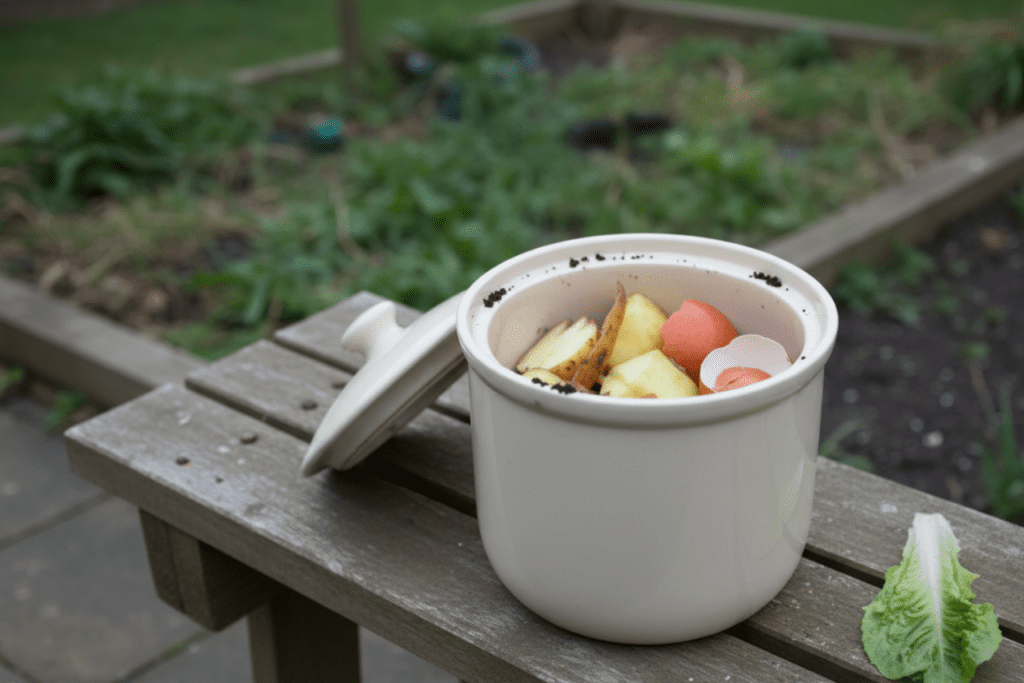
Just about any plant-based kitchen scrap is fair game for trench composting. I regularly bury potato peels, carrot tops, onion skins, banana peels, apple cores, wilted lettuce, stale bread, coffee grounds, and eggshells. Grass clippings, small handfuls of shredded leaves, and spent garden plants are all excellent additions. If you’re doing any canning or food preservation in late summer or fall, you’ll be amazed how quickly a trench fills up with fruit trimmings and vegetable ends.
There are a few things I leave out, though. Meat, bones, dairy products, fatty foods like cheese or salad dressing, and pet waste from dogs or cats should stay far away from your trench. These materials attract animals, can introduce pathogens, and break down very differently than plant matter. I also avoid burying diseased plant material. Unlike a hot compost pile that can reach temperatures high enough to kill pathogens, a trench stays relatively cool, and you risk spreading disease through your soil. Stick to clean, plant-based scraps and you’ll never have a problem.
Making Trench Composting Work Year-Round
The English Rotation Method
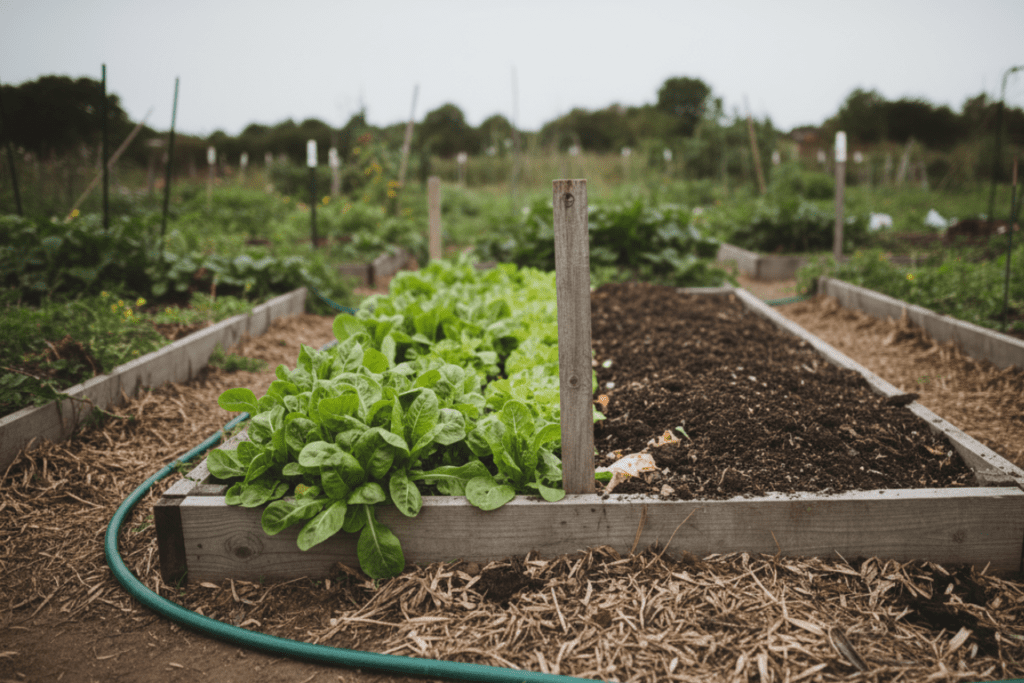
One of my favorite approaches to trench composting is the three-year rotation system, sometimes called the English method, and it’s a particularly elegant solution for small vegetable gardens. You divide your growing area into three strips. In the first year, one strip is your composting trench, one is your growing area, and one serves as a path. The next year, everything rotates: the composted trench becomes your planting bed, the growing area becomes the new trench, and the path shifts over. By the third year, every strip has been enriched, grown in, and rested. It’s a beautifully self-sustaining cycle that keeps the garden perpetually fertile with minimal effort.
I adapted this system for my raised beds about fifteen years ago, alternating which half of each bed gets trenched each fall. The results have been remarkable. The soil structure improves noticeably after even one cycle, and after three or four years of consistent rotation, the beds feel like a completely different growing medium — loose, dark, moisture-retentive, and full of life.
Winter Trenching: Don’t Let the Cold Stop You
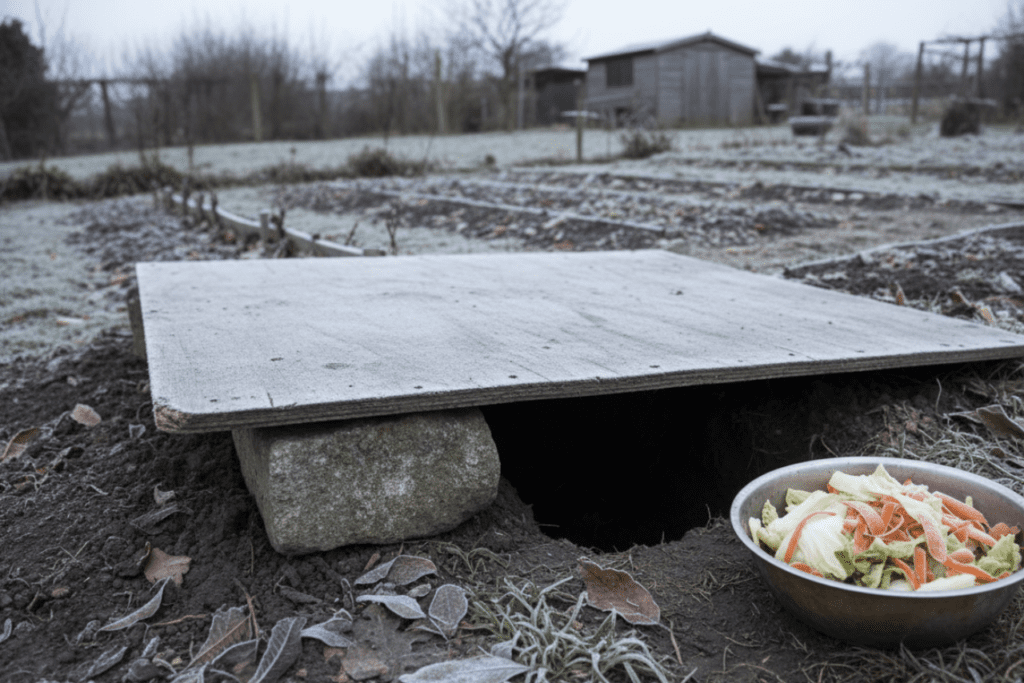
One of the biggest advantages of trench composting over a traditional pile is that it works through the winter. When your outdoor compost bin freezes solid and stops breaking anything down, buried scraps continue to decompose slowly because the soil several inches below the surface stays warmer than the air above. The freeze-and-thaw cycles actually help by physically breaking down the cell walls of the buried material, which speeds things along once the soil warms up in spring.
If you live in an area with hard freezes, the key is to dig your trenches in late fall while the ground is still workable. I usually prepare two or three holes in November, cover them with a board or a piece of plywood weighted down with a stone, and then add kitchen scraps throughout the winter by simply lifting the cover, dropping in the material, and putting the cover back. In moderate climates where the ground doesn’t freeze deeply, you can dig and fill trenches all winter long with no special preparation. I’ve buried apple waste in October and found virtually no trace of it the following April — just rich, dark, crumbly soil teeming with worms.
When Can You Plant Over a Filled Trench?
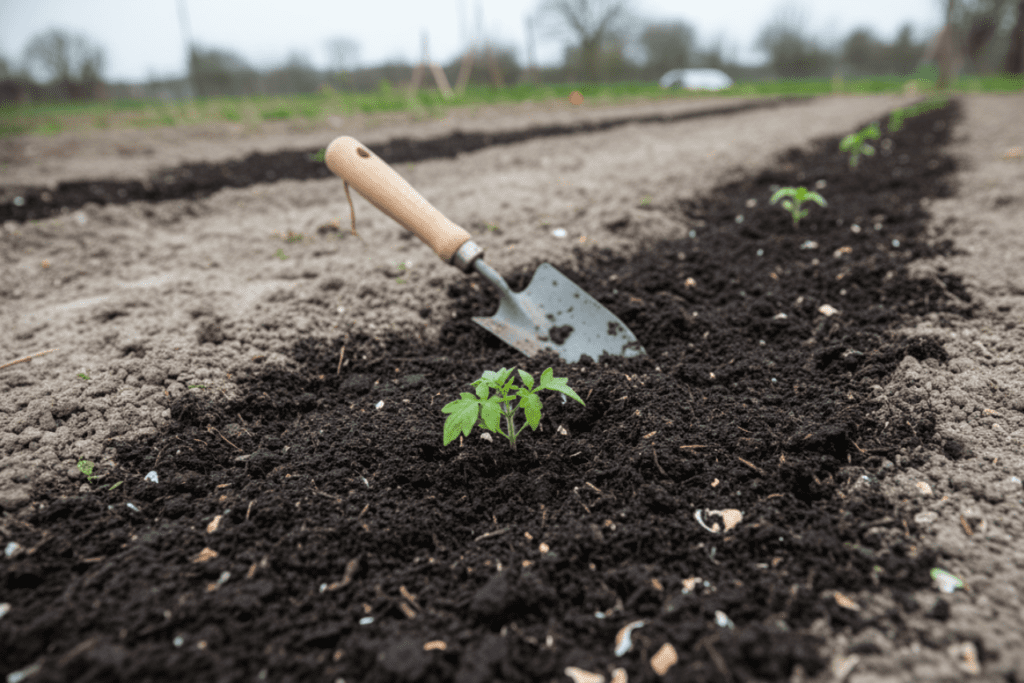
This is the question I hear most often, and the answer depends on what you buried and how warm your soil is. Small, soft scraps like coffee grounds, fruit peels, and leafy vegetable trimmings can break down in as little as two to four weeks during warm weather. Larger or tougher materials like corn cobs, melon rinds, and thick stems may take three to six months. Winter-buried material will be ready by spring planting time in most areas, especially if you filled the trench in late fall.
My general rule is to wait at least two to three months before planting directly over a trench, or simply plan your trenching so that you’re burying in fall and planting in spring. If you’re impatient — and I’ve certainly been there — you can plant around the edges of a recently filled trench and let the roots grow toward the decomposing material as it finishes breaking down. Heavy-feeding crops like tomatoes, squash, and beans are especially well suited to growing over or near a composted trench because they’ll eagerly send roots down into that nutrient-rich zone.
An Ancient Practice for the Modern Garden
Trench composting isn’t some new gardening trend. It’s one of the oldest documented methods of enriching soil. Indigenous peoples across North America buried fish beneath corn mounds to feed the growing plants as the organic matter decomposed — a practice that some historians believe was taught to the Pilgrims in the early 1600s. Civilizations around the world, from European farmers burying fish since medieval times to growers in the tropics layering food waste directly into their planting beds, have understood this basic truth: the soil is the best composter there is.
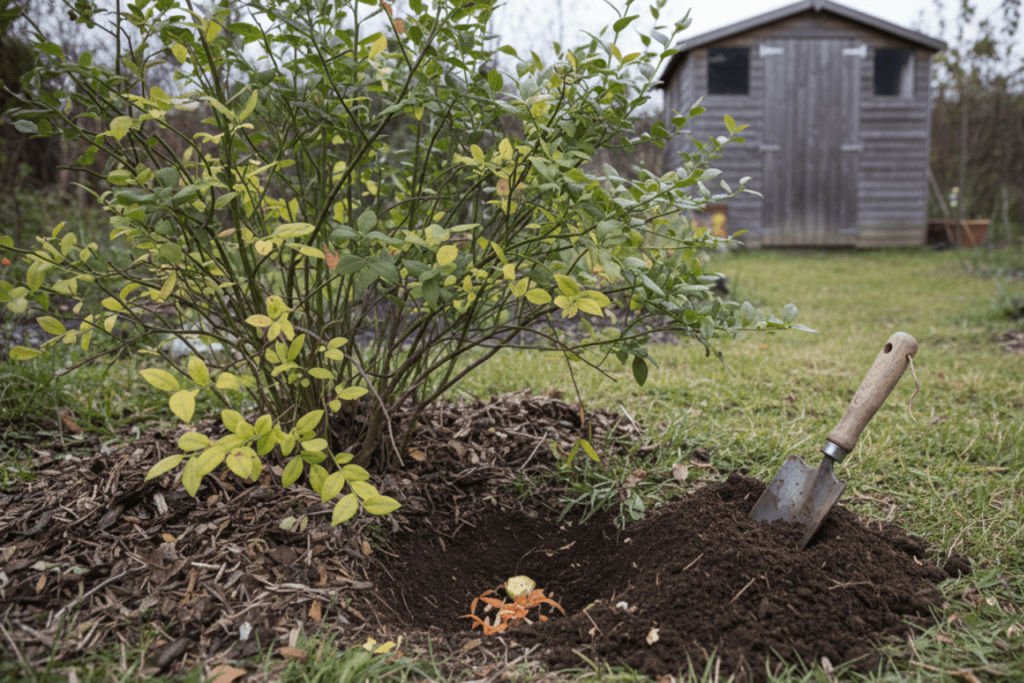
What I love about this method is that it meets gardeners exactly where they are. You don’t need a large yard, a special bin, or any equipment beyond a shovel. You don’t need to track ratios or temperatures or turn anything. There’s no smell, no mess, no pests when it’s done properly. It works in containers, raised beds, in-ground gardens, around fruit trees, and in flower borders. I’ve buried scraps at the drip line of my blueberry bushes for years, and those plants have never looked happier. If you’ve been putting off composting because it seemed too complicated, too smelly, or too much work, trench composting takes every one of those excuses off the table. Grab a shovel, dig a hole, and let the earth do what it has always done.
Quick-Fire FAQ
Q: Will trench composting attract rats or raccoons to my garden?
A: Not if you bury scraps at least 12 inches deep and cover them with 6 to 8 inches of soil. Stick to plant-based materials and avoid meat, dairy, and fatty foods, and animals won’t be able to smell anything at the surface.
Q: Can I trench compost in a raised bed without damaging the structure?
A: Absolutely. I do it every fall in my raised beds. Just dig along one side or down the center, fill with scraps, and backfill. The settling that happens as material decomposes actually gives you a good excuse to top up with fresh soil or mulch in spring.
Q: How often should I dig a new trench?
A: That depends on how many scraps your kitchen produces. Most households can fill a two-foot trench every one to two weeks. I keep a small bucket on my counter and empty it into the garden every few days during the growing season, digging a new hole each time.
Q: Does trench composting work in clay or sandy soil?
A: It works in both, and it actually improves both over time. In clay, the decomposing material loosens the structure and encourages worm activity. In sandy soil, it adds organic matter that helps hold moisture and nutrients. Either way, you’ll notice a difference within one season.
— Grandma Maggie
tetracycline 500 mg oral capsule
tetracycline 500 mg oral capsule
doxycycline for acne 100mg
doxycycline for acne 100mg
sertraline hcl 25 mg
sertraline hcl 25 mg