
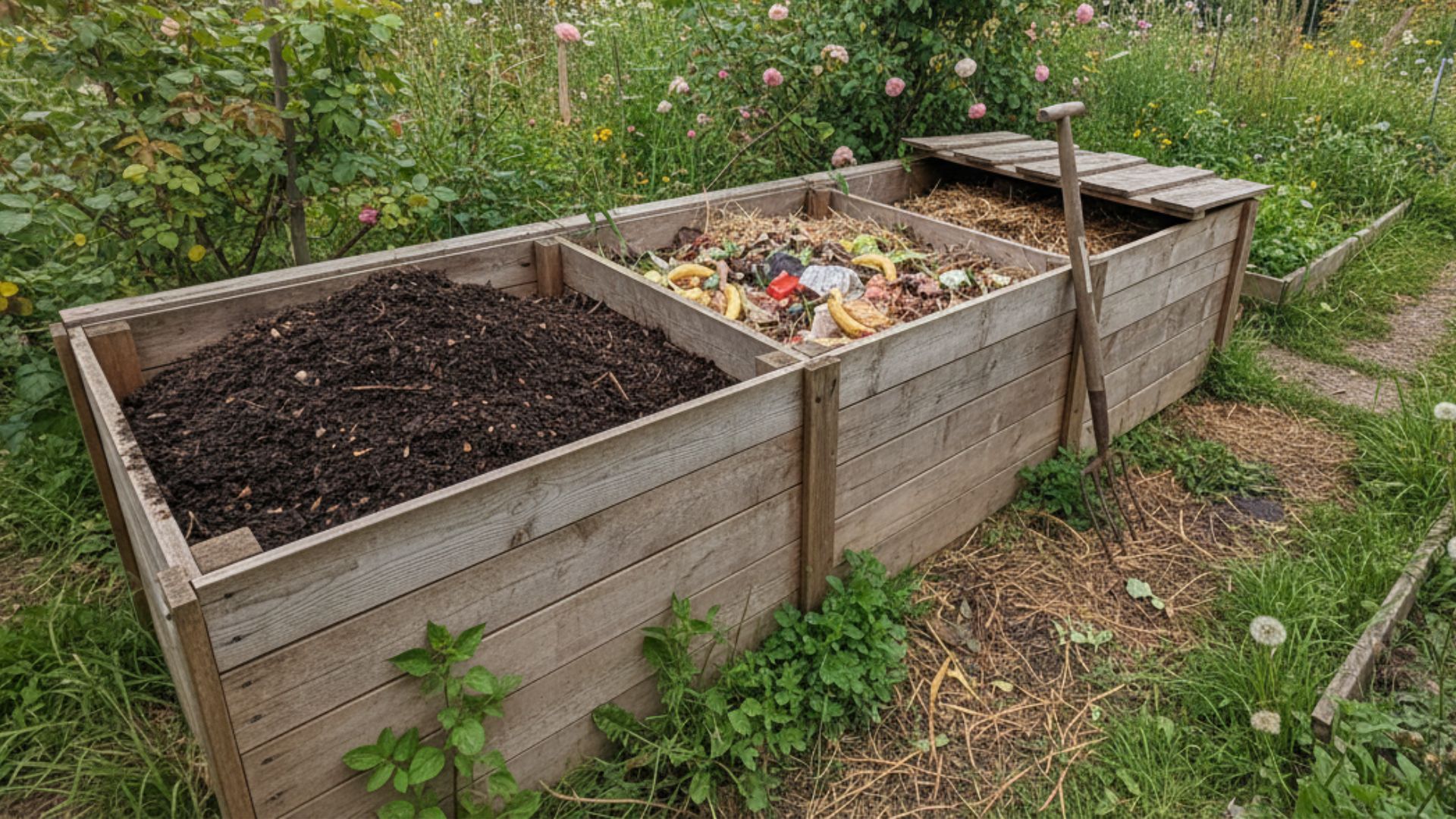
After fifty-some years of composting, I can tell you this with absolute certainty: every gardener, no matter how experienced, has stood over a compost pile at some point and thought, “Well, that’s not right.” I’ve had piles that smelled like a swamp in July, piles that sat there cold as a stone for months, and one memorable batch that attracted every raccoon in the neighborhood. The good news is that compost wants to happen. Nature has been breaking down organic matter for millions of years without anyone’s help, and most problems are just minor detours on the road to that beautiful, dark, crumbly finished product we’re all after. The even better news is that nearly every compost problem has a simple fix — once you know what to look for. Let me walk you through the most common issues I’ve seen over the decades, along with the exact adjustments that get things back on track.
Why Does Good Compost Go Wrong?
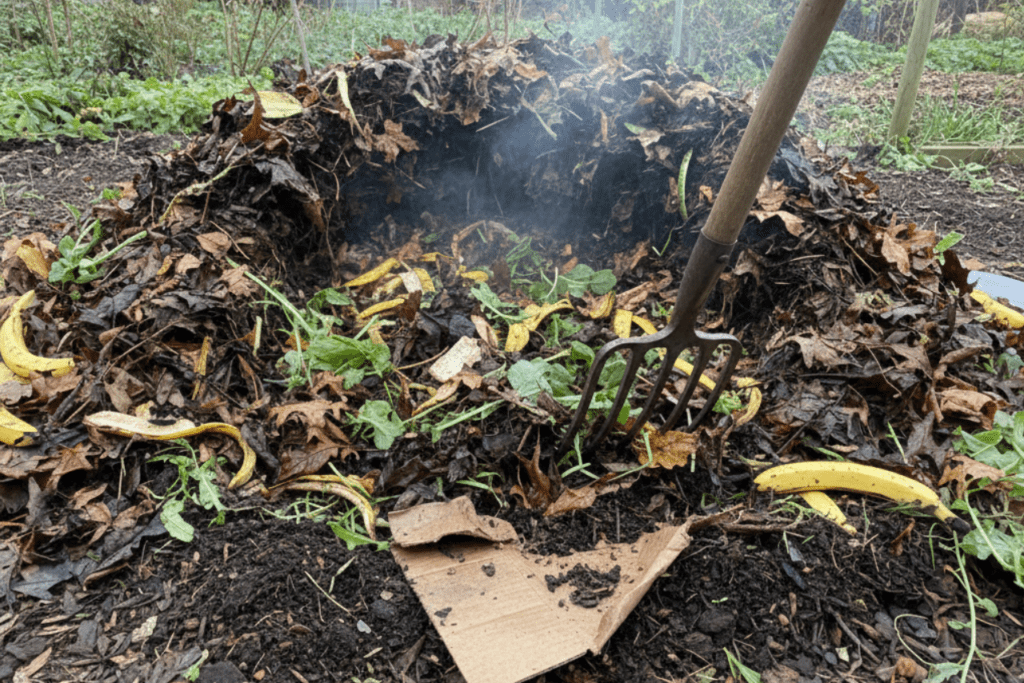


At its heart, composting comes down to giving billions of tiny microorganisms what they need to do their work: food, water, and oxygen. When one of those three elements falls out of balance, problems appear. Too much moisture and not enough air creates oxygen-starved conditions where harmful bacteria take over and produce terrible smells. Too little moisture and the beneficial microbes can’t function at all, so your pile just sits there doing nothing. Too much nitrogen-rich green material without enough carbon-rich browns, and you get a slimy, ammonia-reeking mess. Too much carbon without enough nitrogen, and decomposition slows to a crawl. I’ve learned over the years that nearly every composting problem traces back to one of these imbalances, and once you understand the basics, diagnosing the issue becomes almost second nature.
What Your Nose Is Telling You
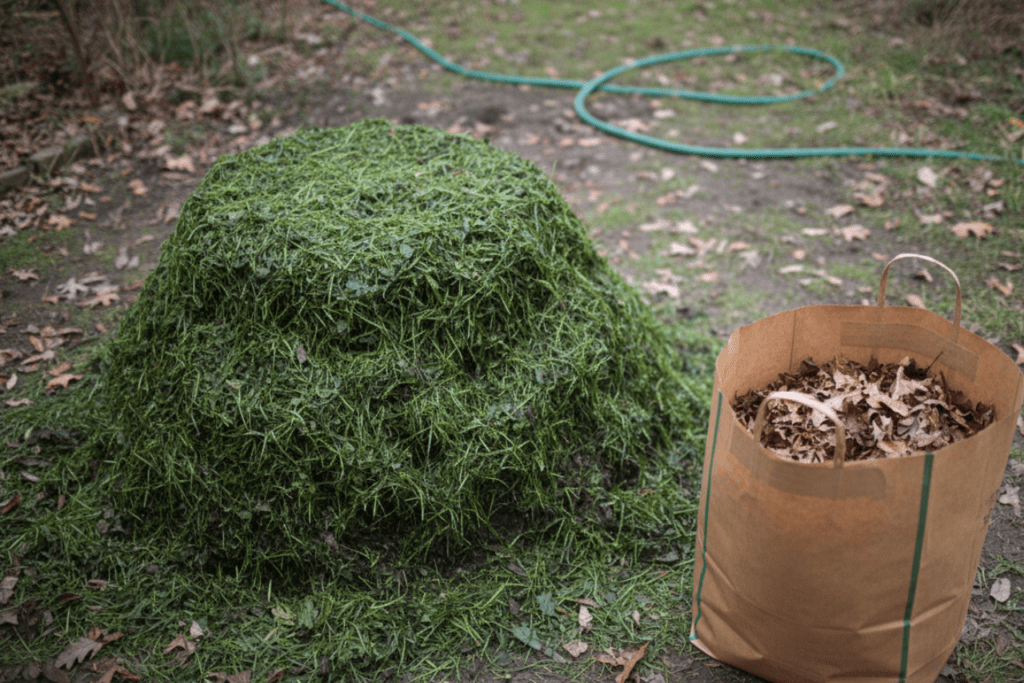
Your nose is your single best diagnostic tool when it comes to compost. Good, healthy compost in progress should smell earthy and pleasant — like a forest floor after rain. If you’re getting something very different from that, pay attention because the type of smell tells you exactly what’s gone wrong. A rotten, sulfurous odor — that sour, swampy stench — signals that your pile has gone anaerobic, meaning the interior has run out of oxygen. This typically happens when the pile is too wet, too compacted, or both. I’ve seen this most often with gardeners who add large amounts of grass clippings all at once without mixing in dry material. Those clippings mat together into a dense, soggy layer that air can’t penetrate. The fix is straightforward: turn the pile thoroughly to reintroduce oxygen, and mix in dry, coarse brown materials like shredded leaves, straw, or torn-up cardboard as you go. Aim for a ratio of roughly two to three handfuls of browns for every handful of greens. You should notice the smell improving within two to three days.
Now, if your pile smells like ammonia instead — sharp and eye-watering — that’s a different story. An ammonia smell means you have an excess of nitrogen. This happens when a pile gets loaded up with too many greens like fresh kitchen scraps, coffee grounds, or manure without enough carbon to balance things out. Add generous amounts of shredded newspaper, dry leaves, wood chips, or straw, and turn everything together well. If you can, spread the pile out for a day or so to let the ammonia gas dissipate before restacking. I keep a bag of dry leaves next to my compost bins year-round specifically for this reason — a few good handfuls mixed in after every addition of kitchen scraps keeps the ammonia issue from ever developing in the first place.
When the Heat Disappears
A Pile That Won’t Warm Up
A properly built hot compost pile should reach 130 to 160 degrees Fahrenheit within about a week. If yours barely registers above the surrounding air temperature, there are a few usual suspects to check. First, size matters more than most people realize. A pile that measures less than three feet by three feet by three feet simply doesn’t have enough mass to generate and retain heat. If your pile is on the small side, keep collecting materials until you can build it up to at least that minimum volume, then mix everything together thoroughly. I invested in a compost thermometer about thirty years ago — one of those long-stemmed models with a twenty-inch probe — and it remains one of the most useful garden tools I own. It takes all the guesswork out of knowing what’s happening inside the pile.
Second, check for moisture. Dig into the center of your pile and grab a handful. When you squeeze it, you should get a few drops of water — like a well-wrung sponge. If it feels dry and crumbly, your microbes are essentially dormant from thirst. Water the pile as you turn it, aiming for that sponge-like consistency throughout, not just on the surface. Third, your pile may simply be low on nitrogen. If it’s mostly dry leaves, wood chips, and cardboard, the microorganisms don’t have enough fuel to generate heat. Mix in fresh grass clippings, vegetable scraps, a bucket of coffee grounds from your local café, or even a few handfuls of blood meal to give the pile a nitrogen boost. I’ve found that a combination of fresh manure and kitchen scraps mixed into a sluggish pile will usually have it heating up within four to five days.
Flies, Rodents, and Other Unwanted Guests
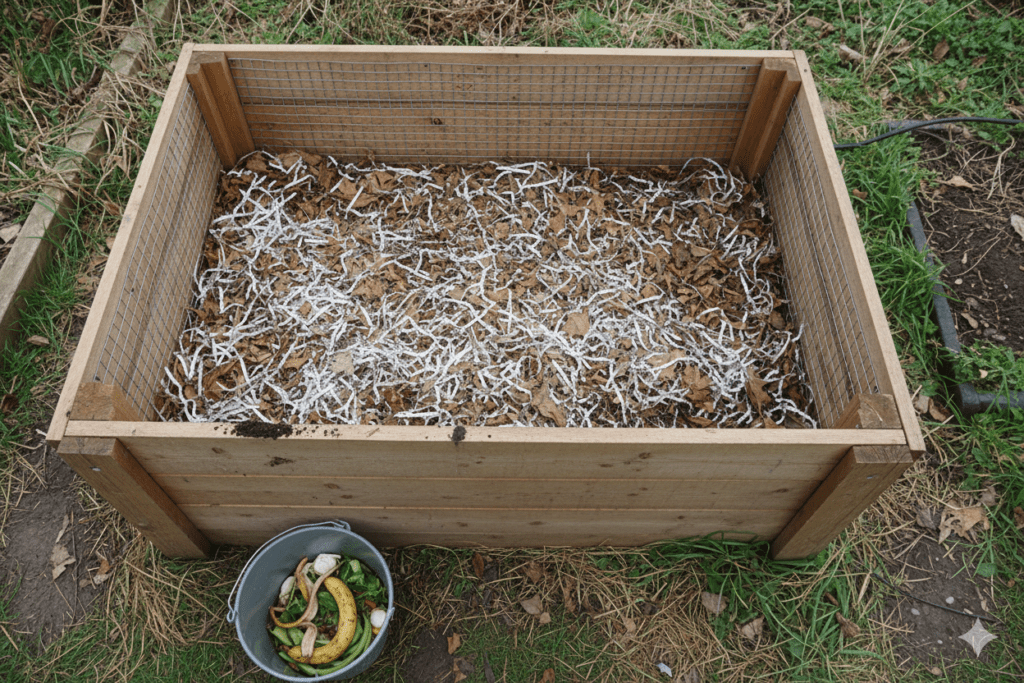
Fruit flies swarming around your compost bin are almost always a sign that food scraps are sitting exposed on the surface rather than buried inside the pile. The solution is simple: every time you add kitchen scraps, use a garden fork to tuck them at least four to six inches into the center of the pile, then cover with a layer of brown material. I keep a small bucket of dry leaves or shredded newspaper right next to my compost area, and I toss a two-inch layer on top every single time I add food waste. This one habit has virtually eliminated my fruit fly problem. If you’re composting indoors with a kitchen bin, make sure the lid seals tightly — a loose-fitting lid is an open invitation.
Rodents and raccoons are a more serious concern, and they’re almost always attracted by meat, dairy, fats, or cooked foods that shouldn’t be in a backyard compost pile in the first place. I learned this lesson the hard way in my early composting years when I tossed leftover chicken soup into the pile and woke up to find it thoroughly excavated by something with claws. Stick to fruit and vegetable scraps, eggshells, coffee grounds, and plant material. If critters remain a problem even without these temptations, line the bottom and lower sides of your bin with quarter-inch hardware cloth. A well-managed, properly covered pile that avoids animal products will rarely attract anything larger than the occasional earthworm — and those, of course, you want.
Moisture, Texture, and the Long Wait
Too Wet, Too Dry, and Everything in Between
A waterlogged pile is probably the single most common composting problem I encounter when friends ask me for help. Heavy rain, too many fresh green materials added at once, and enclosed plastic bins that don’t breathe well can all create soggy, oxygen-deprived conditions. If your compost looks more like thick mud than a healthy mix, turn it out completely if you can, spread it to dry for a day, then restack it with generous additions of dry straw, shredded cardboard, or wood chips. Going forward, cover your pile during heavy rain with a tarp or old shower curtain — it doesn’t need to be fancy, just enough to keep the worst of the downpours off. For enclosed tumblers that tend to trap moisture, leave the door open for a few hours on dry days to let excess humidity escape.
On the flip side, a pile that’s too dry will simply stop decomposing altogether. This is especially common during hot summer months or in arid climates. If you dig into the center and find dry, unchanged material, water the pile thoroughly as you turn it. I add water with a gentle hose spray between each forkful as I turn, which distributes moisture evenly rather than creating a soaked top layer over a dry interior. After watering, the pile should feel uniformly damp but never dripping. Check the moisture every week during summer and add water whenever the interior feels dry to the touch.
When Your Compost Just Won’t Finish
Sometimes you’ll find that most of your pile has turned into beautiful finished compost, but certain items stubbornly refuse to break down. Eggshells, corn cobs, avocado pits, and thick woody stems are notorious holdouts. This isn’t really a problem — it’s just the nature of these tougher materials. The simple fix is to screen your finished compost through a half-inch mesh sieve and toss the undecomposed chunks back into your next active pile. They’ll have a head start on breaking down the second time around. Going forward, crush eggshells before adding them, chop corn cobs into one-inch pieces, and run woody stems through a chipper or cut them into short lengths. The smaller the pieces going in, the faster everything breaks down.
If the entire pile seems stuck and nothing is decomposing — not just the tough bits — your compost may simply need a jumpstart. I’ve had success adding a few shovelfuls of finished compost or good garden soil to a stalled pile, which reintroduces the beneficial microorganisms that drive the process. Mix this in thoroughly along with a dose of nitrogen-rich material and adequate water, and you should see activity resume within a week or two. Patience is part of composting, but a pile that shows zero progress after six to eight weeks definitely needs intervention. After all these years, I’ve come to think of troubleshooting compost as a conversation — the pile tells you what it needs, and your job is just to listen and respond.
Quick-Fire FAQ
Q: How often should I turn my compost pile?
A: For hot composting, turn the pile every five to seven days for the first month, then every two to three weeks after that. If you’re cold composting and not in a rush, turning once a month or even less is perfectly fine.
Q: Can I add citrus peels and onions to my compost?
A: Yes, but in moderation. Large amounts of citrus can make the pile overly acidic and slow things down, so I chop citrus peels into small pieces and keep them to no more than a handful per batch.
Q: My finished compost has a lot of white fuzzy stuff in it — is that mold a problem?
A: Not at all — white fungal threads, called mycelium, are actually a sign of healthy decomposition. They’re beneficial organisms doing exactly what you want them to do, so there’s no need to worry.
Q: How do I know when my compost is truly finished and ready to use?
A: Finished compost is dark brown to black, has a pleasant earthy smell, and you shouldn’t be able to recognize any of the original ingredients. It should crumble easily in your hand and feel cool to the touch, meaning microbial activity has slowed down.
— Grandma Maggie
buy antibiotics online for tooth infection
buy antibiotics online for tooth infection