
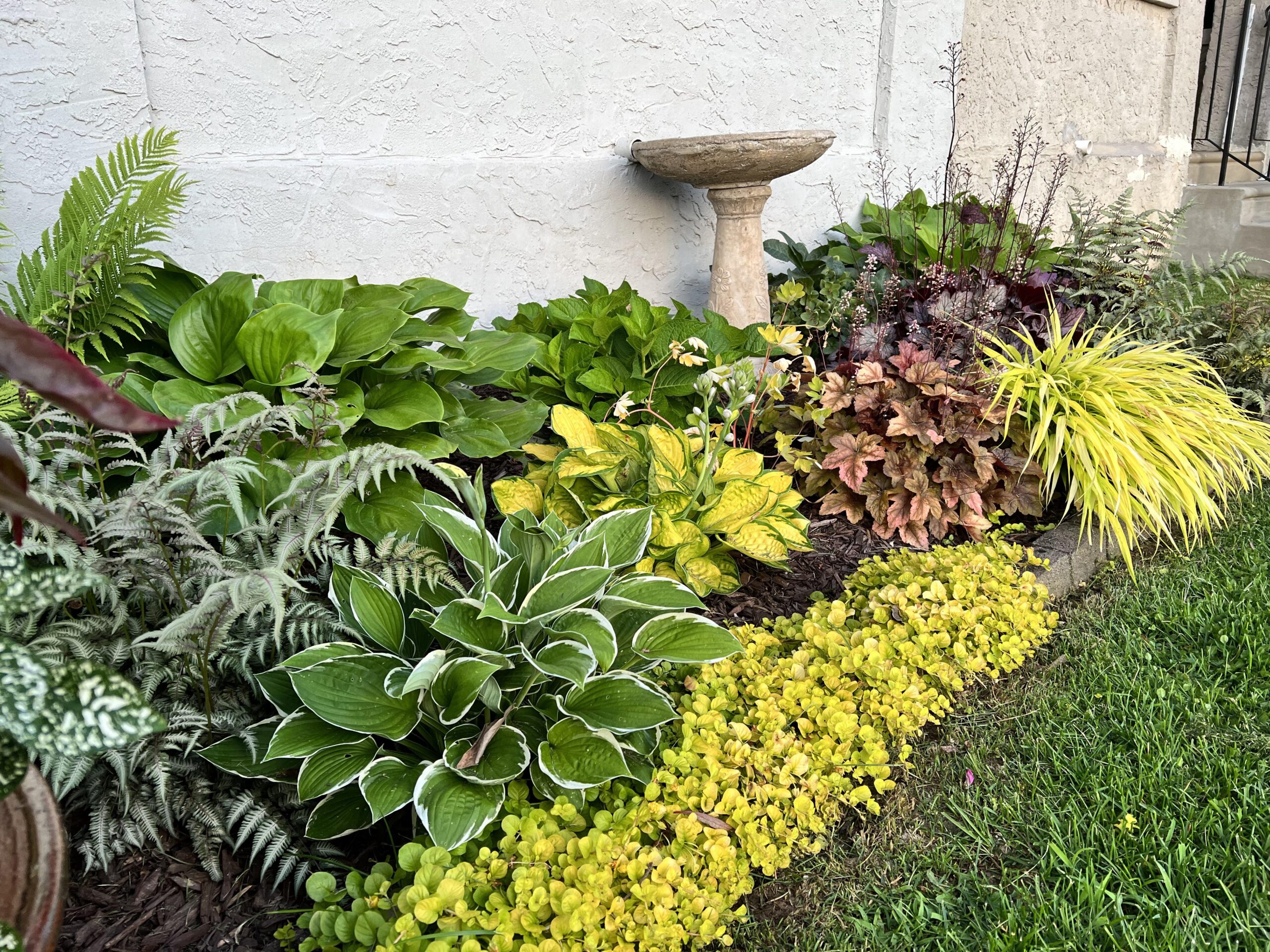
Why Choose Easy, Colorful, Non-Invasive Perennials?
Because you want the show without the struggle. These lovelies are clump-forming, so they stay where you tuck them, and most shrug off heat, lean soil, and a bit of drought once they’ve settled in. They also roll out the welcome mat for bees and butterflies. Pair them with a few regionally native, water-wise friends and you’ll have a resilient border that looks thoughtfully curated with very little fuss.
1. Catmint (Nepeta × faassenii): Soft gray-green foliage and waves of lavender-blue flowers
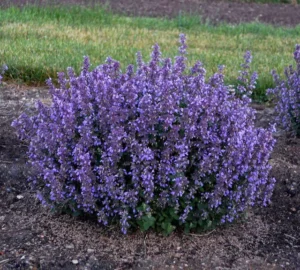
Catmint nepeta border in full sun

Soft gray-green foliage and waves of lavender-blue flowers knit a border together from late spring into fall. Pollinators adore it; deer and rabbits usually pass it by. Shear by one-third after the first big flush to jump-start a second round of bloom. Skip heavy fertilizer—too much pampering makes catmint flop.
2. Coreopsis ‘Moonbeam’ (Coreopsis verticillata ‘Moonbeam’): Pale lemon daisies float above fine, airy foliage
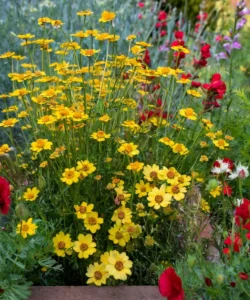
Pale lemon daisies float above fine, airy foliage for months, weaving color through the middle of a bed. It stays neatly clump-forming and thrives in average, well-drained soil. Light deadheading keeps it blooming; or give it a gentle midsummer shear to refresh the show.
3. Russian Sage (Salvia yangii, syn. Perovskia atriplicifolia): Silvery stems and airy lavender spires add movement and glow
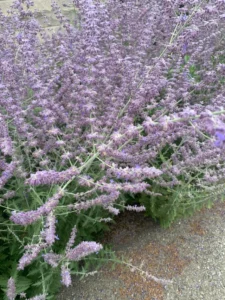

Silvery stems and airy lavender spires add movement and glow in hot, dry places where fussier plants pout. Aromatic foliage is deer-resistant, and the long season pairs beautifully with grasses. Cut back hard in early spring to 6–12 inches and give it full sun plus sharp drainage to prevent flopping.
4. Sedum ‘Autumn Joy’ (Hylotelephium ‘Herbstfreude’): Fleshy blue-green leaves carry domes of pink buds
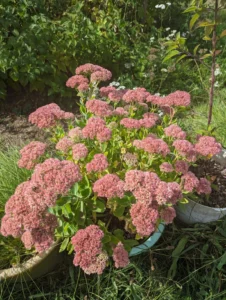
Fleshy blue-green leaves carry domes of pink buds that deepen to coppery rose in fall—then feed the birds in winter if you leave them standing. A tidy, drought-wise clumper that loves lean soil. Pinch stems in late spring for stockier growth. Rich soil and extra water just make it lanky.
5. Lamb’s Ear ‘Silver Carpet’ (Stachys byzantina ‘Silver Carpet’): A soft, silvery ribbon for edging paths and front borders that stays low and neat
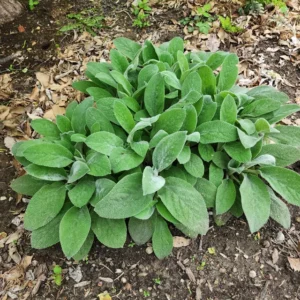

A soft, silvery ribbon for edging paths and front borders that stays low and neat. This selection rarely flowers, focusing on dense, fuzzy foliage and not self-seeding around. Soggy winters are its downfall—plant slightly high or in raised beds, and trim tatty leaves in spring.
6. Daylily ‘Stella de Oro’ (Hemerocallis ‘Stella de Oro’): Compact, cheery, repeat blooms from early summer to fall
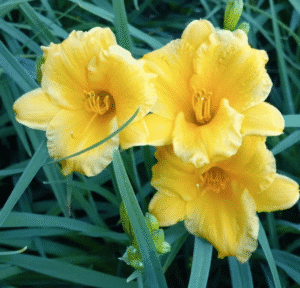
Compact, cheery, repeat blooms from early summer to fall make ‘Stella’ a set-it-and-smile stalwart. It tolerates many soils and light levels (best in full sun) and stays politely clump-forming. Snip off spent blooms and scapes to keep flowers coming; divide every 3–4 years to refresh clumps and share with neighbors.
7. Lavender (Lavandula angustifolia): Fragrant purple wands on silvery mounds
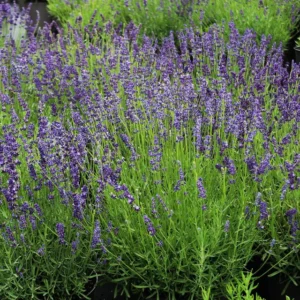
Fragrant purple wands on silvery mounds delight both you and the bees. Think rock-garden conditions: full sun and sharp drainage. Prune lightly right after bloom—never into old wood—and water sparingly. Wet feet are lavender’s biggest complaint.
8. Globe Thistle (Echinops ritro): Steel-blue orbs hover above spiky foliage for bold contrast and fabulous cut flowers

Steel-blue orbs hover above spiky foliage for bold contrast and fabulous cut flowers. Tough, drought-tolerant, and bee-mobbed, it still stays clump-forming; deadhead if you’d like zero volunteers. Full sun and very well-drained soil bring the richest blue.
9. Yarrow (Achillea millefolium hybrids): Flat-topped clusters in sherbet shades rise over ferny foliage
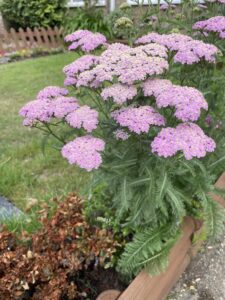
Flat-topped clusters in sherbet shades rise over ferny foliage from early to high summer. Choose modern clumping cultivars like ‘Moonshine’, ‘Paprika’, or ‘Saucy Seduction’ for best behavior. Shear by one-third after the first flush for a tidy mound and possible rebloom. Easy on the water to avoid flop.
10. Blue Fescue (Festuca glauca): Icy-blue tufts add year-round texture at the front of the border
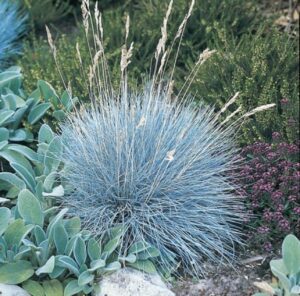
Icy-blue tufts add year-round texture at the front of the border and love sharp drainage. In hot, humid summers, a quick division keeps it looking perky. Comb out dead blades in early spring and divide every 2–3 years to maintain that tidy dome.
11. Bergenia (Bergenia cordifolia): Bold, glossy, evergreen leaves anchor the border and blush burgundy
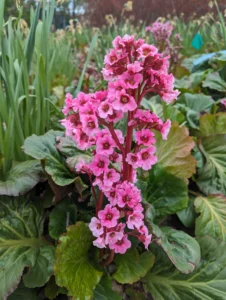
Bold, glossy, evergreen leaves anchor the border and blush burgundy in cold weather; spring brings pink clusters on sturdy stems. It’s a handsome, clump-forming edger for paths and part shade. Give afternoon shade where summers sizzle and trim winter-tattered leaves in early spring.
Planting & Care Cheatsheet
- Soil: Prioritize drainage. Mix in grit or compost for heavy clay, and keep mixes lean for drought lovers.
- Water: Water deeply the first season to establish; after that, most of these sip, not guzzle.
- Mulch: Use 2–3 inches of shredded bark or gravel, but keep it off the crowns.
- Feeding: Go light. Overfeeding encourages floppy growth in catmint, coreopsis, sedum, and yarrow.
- Pruning: Shear rebloomers midseason (catmint, coreopsis, yarrow). Cut Russian sage back hard in early spring; prune lavender lightly after bloom.
- Spacing: Give each plant its mature width to prevent crowding and mildew.
- Wildlife: Leave sedum seed heads for winter birds; deadhead globe thistle if you want zero volunteers.
Quick-Fire FAQ
Happy planting, dear—your border is about to look like you’ve been fussing for ages (without all the fuss)!
— Grandma Maggie